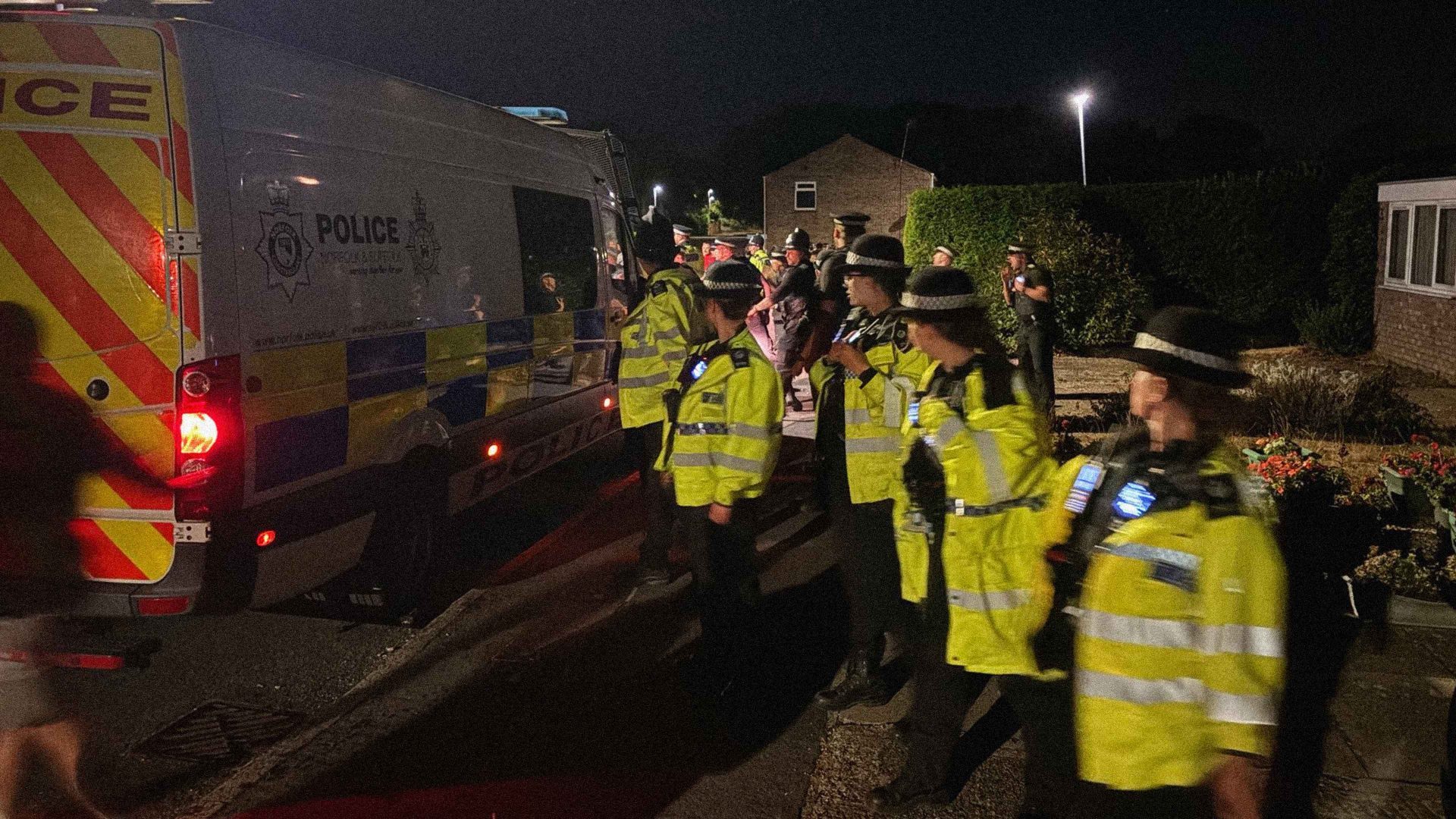
There was a tell in the caption beneath the image of a house attacked by rioters in Thetford. The BBC News report initially coupled the photo with the line: “A large group stormed three properties, including this one on Bracken Road, amid fears they were used to house asylum seekers.” The key phrase there is “amid fears”.
Fears from whom – and why was the BBC giving such implicit legitimacy to those fears? The implication was that the very presence of people seeking asylum is a reason for fear.
The following morning, after the wording had been picked up on social media, BBC News had changed the caption. It now read: “A large group stormed three properties including this one on Bracken Road, which protesters believed was being used to house asylum seekers.” That was a marginal improvement but the broadcaster did not note that the change had been made.
Language matters in reporting. Small details matter. Notice that I wrote “rioters” in the first paragraph of this article. Once you launch an attack on someone’s home, you lose your purchase on the term “protester”.
Suggested Reading

The patriotic protester… with a conviction for knife possession
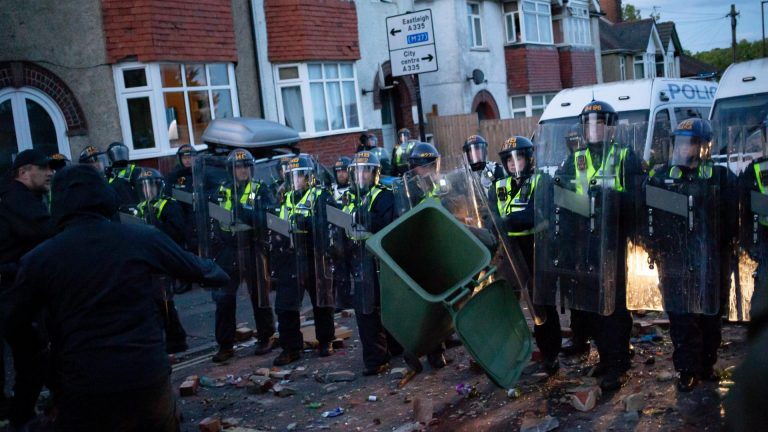
In the Sun, those who attacked that house remained ‘protesters’ in both its copy and its headline: “Thetford braces for 3rd night of disorder with heavy cop presence after protesters ‘tried to break into migrant homes’”. Those quote marks are load-bearing: using the words of others, they allow the Sun to push the impression that somewhere housing asylum seekers was attacked, while in the story that follows it admits that the houses “allegedly” hosted people seeking asylum. The implication again is that if asylum seekers do live there, it is somehow understandable that people would attack them.
Two men were arrested on suspicion of public order offences, harassment, and possession of an offensive weapon during the violent disorder. One police officer was seriously bitten, another was struck with a rock, while a third was allegedly spat on. While the Sun referred to a “baying mob”, the framing of events remained one about protest. The detail that another group “removed a resident from his home and stole his mobile phone” was reported free from the paper’s usual hyperbole and horror.
In the Sun’s nominally more highbrow sister paper the Times, claims from protesters were presented without any attempt at fact-checking. Its reporters wrote, “Numerous people told the Times that the property [which was attacked] was a few hundred metres from two schools and that the council was failing to tell them when asylum seekers were being housed”. The council was not quoted.
The catalyst for the disorder in Thetford is ongoing protests over Home Office plans to use RAF Barnham – which is about two miles away from the town – to house people seeking asylum. Reform UK leader, Nigel Farage, has said the proposal will leave locals feeling “very worried and very scared”. That doesn’t sound like just a prediction, but a fervent hope.
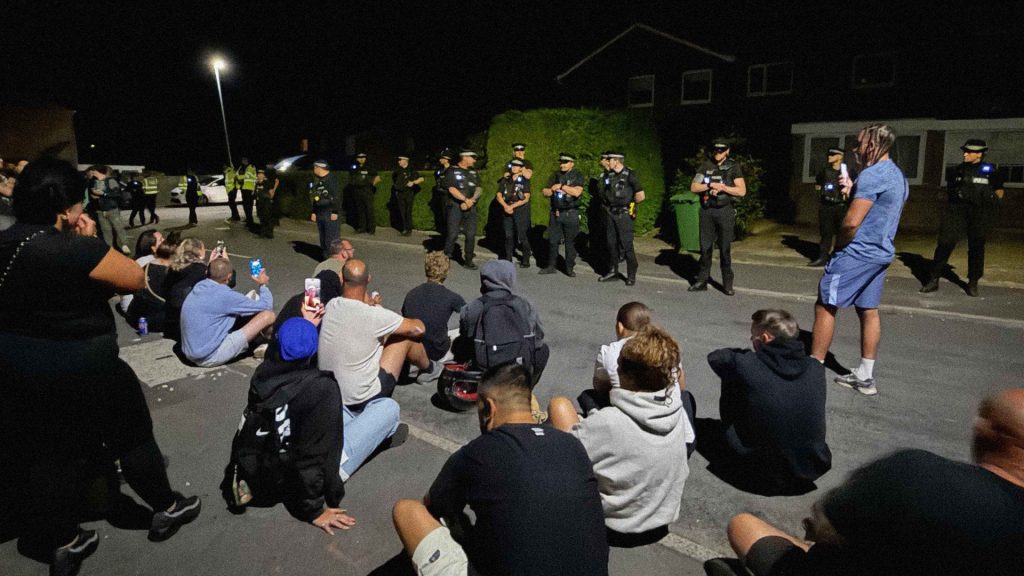
Reform politicians in the area stoked and exploited local fears but the party’s newly elected police and crime commissioner for Norfolk, Colin Sutton, refused to talk to the local newspaper, the Eastern Daily Press, about the events in Thetford.
Reform is much keener to speak to the Daily Telegraph. Scott Hussey, deputy leader of the Reform UK group on Breckland Council, claimed in a Facebook post that a “group of young male asylum seekers” had been moved into a three-bed house in Thetford by the Home Office.
He told the paper: “It’s a smallish three-bed terraced house which I understand was converted around two months ago into a [house in multiple occupation]… It’s on a housing estate popular with young families, right around the corner from a primary school. To make matters worse, one of the neighbours is an elderly woman who lives alone.”
Reform UK’s deputy leader, Richard Tice, appeared on Times Radio, saying that the disorder was proof that “local people are furious that large numbers of illegal migrants are being dumped in their towns”. He continued: “Those local communities should be allowed to express that concern and anxiety without being instantly smeared and labelled as being bigots in some way.”
Tice, of course, made it clear that violent protest “has no place in the United Kingdom”, which came off a little like one of those speedily delivered lists of side effects in an American pharmaceutical advert.
Over at the Daily Mail, the rioters retain their designation as protesters. Here they were described as “angry locals [who] tried to storm homes believed to house asylum seekers”. That use of the word “locals” is key; it puts them in direct opposition to those seeking asylum, who can be presented as invaders.
In none of these reports is there any evidence that those housed in the buildings that were attacked did anything wrong. The only proof required is their mere existence.
There’s another telling juxtaposition later in the Mail’s report. After mentioning the police officers who were bitten and spat on, it shifts to explaining that “frustration spilled out at [the] three properties in Thetford…”
Suggested Reading
Does a new PM mean a general election? The Mail can’t decide
If the Mail didn’t have political sympathy for the protesters, would it ever describe the violent storming of houses – remember, this is the Mail where home ownership is a form of religion – as mere “frustration”? Similarly, it’s only when the paper feels empathetic that rioting is downgraded to “angry scenes”.
For a long time, we’ve understood the weasel phrase “legitimate concerns” to be a handy euphemism for racism considered electorally unavoidable. Consuming reports on events like those in Thetford, we should be alive to the many other linguistic tricks deployed to downplay their severity.
There’s a risk that summer race riots end up being treated like just another yearly tradition.