It’s been eight years since I visited Rwanda. Not sure I’d have got a press visa. The country isn’t exactly known for its media freedom.
Luckily, all I wanted was to see gorillas in the Virunga Mountains. And no, 10 days there didn’t turn me into David Attenborough, let alone an east Africa expert.
But now Rwanda is again making headlines for a migration deal – this time with Germany – the memories come flooding back. The mille collines, seemingly endless rolling hills. The gorillas, slowly recovering from the brink of extinction. Hot-water bottles caringly tucked into our hotel beds. No plastic littering the streets.
My strongest memory, though, is an evening in Kigali’s football stadium. No match, but a commemoration ceremony. We held candles, listened to survivors’ accounts and then, suddenly, heart-wrenching cries erupted in the stands. “The widows”, a woman next to me explained.
We’d arrived during Kwibuka, the annual remembrance of 800,000 people, predominantly Tutsi, but also moderate Hutu, murdered in just 100 days in 1994. “World’s Fastest Genocide”, a headline on a newspaper in the lobby of Hotel Rwanda said. You may know the film.
The speed of the slaughter was, among other factors, made possible by journalists who had spent years dehumanising the Tutsi as cockroaches. Then, when the killing began, they provided real-time targeting instructions over the radio.

What stayed with me was the fierce pride in having overcome this horror – on their own. The Kwibuka TV coverage, the songs, the explanatory texts in the memorial museum all spell out who stood by and watched: France, the US, Belgium, the UN Security Council and the so-called international community.
The man who effectively stopped the genocide was Paul Kagame, major general of the Rwandan Patriotic Front, and the country’s de facto ruler ever since. Authoritarian, undemocratic and brutal towards opponents, he nevertheless presides over a country that is thriving economically and offers its citizens stability – provided they don’t criticise his regime.
So what’s my point here? Frankly, I find it hard to judge.
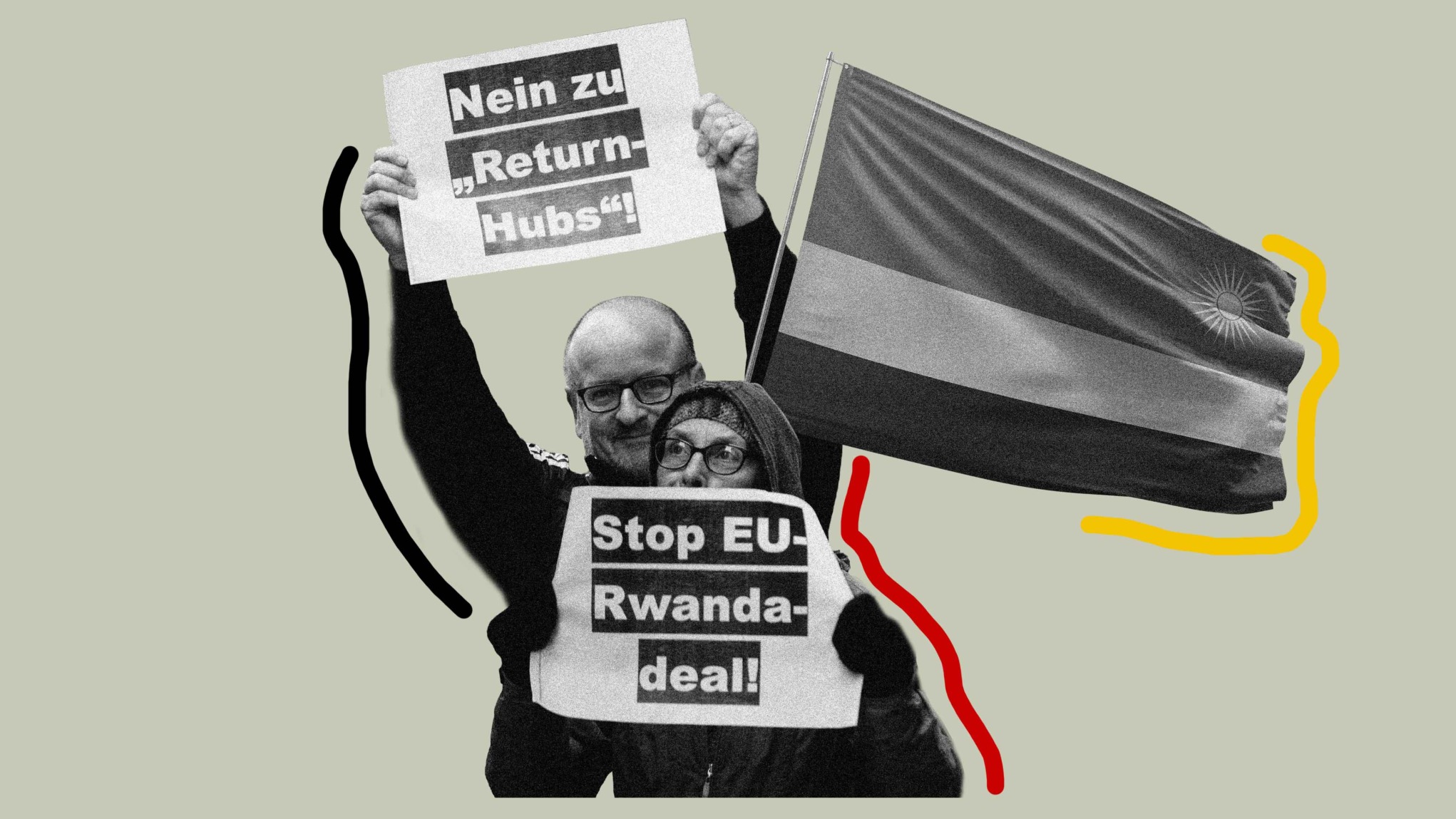
Germany, Austria, the Netherlands, Greece and Denmark have just agreed with Rwanda to establish return hubs there from 2027. The financial details remain unclear.
Suggested Reading

The ancient Germans were all black – and the hard right can’t stand it
The scheme targets people whose asylum claims have been rejected. In other words, it outsources the enforcement of deportations, not the asylum process itself. Legally, this could make all the difference from the defunct UK scheme.
Green Party leader Felix Banaszak still calls it a “sell-out of European values.” The SPD, too, is voicing human rights concerns despite being a junior partner in the government, while the CDU-led interior and foreign ministries insist it is a breakthrough.
What it certainly is, is an act of desperation. Across the EU, only 20-30% of people ordered to leave actually do so. The result is pressure on welfare and justice systems and fuel for political extremism.
Meanwhile, the United Nations High Commissioner for Refugees (UNHCR) has officially used Rwanda as a small-scale refugee hub since 2019. Its Emergency Transit Mechanism brings refugees, who are in danger in Libya, to Kigali. Some have even been resettled in Germany.
Watching Tagesschau, our main evening news show, interviewing people on the streets of Kigali made me think. “It was always in our culture to accept refugees. Why should it suddenly become a problem?” one man asked. Another said: “We ourselves have been refugees in other countries.”
Not sure we’d still hear that in Germany, once famous for Willkommenskultur.
True, the deal is a bad solution. But I struggle to see any good ones.
Rwanda hasn’t suddenly met European standards. But Europe no longer meets its own when it comes to enforcing the law.