German public broadcaster ZDF is currently airing a 10-part-history lesson that might not go down particularly well among those who judge a person’s right to belong by the colour of their skin.
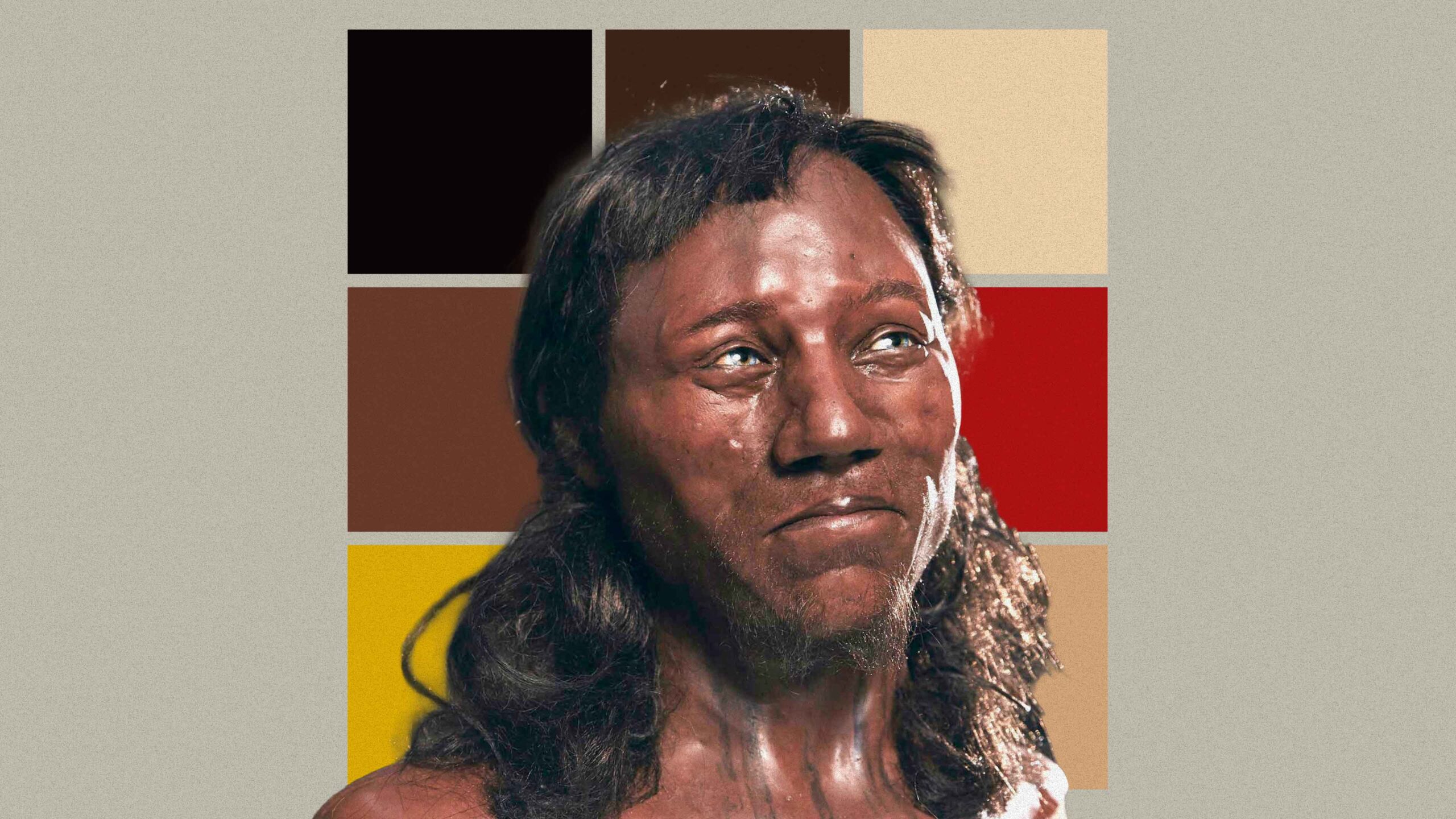
The first episode of the new documentary series Die Geschichte der Deutschen (“The History of the Germans”) is, rather appropriately, called Bones and Genes. In the opening shot, narrator Matthias Brandt – actor and son of the former chancellor Willy Brandt – is standing in a cave inhabited by prehistoric hunter-gatherers. Everyone but him is black.
“Until 7,500 years ago, all people in Europe had dark skin,” says the prehistorian Philipp Stockhammer, a Munich-based professor who advised the makers of the series.
No great surprise, perhaps: the first modern humans to reach what is now Germany, around 45,000 years ago, came as hunter-gatherers from Africa, travelling via south-eastern Europe along the Danube River to the Swabian Jura.
Suggested Reading


The awkward friends of Berlin’s aspiring mayor
One of their refuges, the Hohle Fels (Hollow Rock) cave, is a Unesco World Heritage Site, thanks to its extraordinary archaeological finds. Among them is the oldest musical instrument ever discovered: a flute carved from the bone of a griffon vulture some 40,000 years ago. Also discovered was a voluptuous Venus figurine that may have served as a pregnancy calendar – the earliest example of figurative art depicting a human.
What I learned through the series is where our light skin was imported from: during the Neolithic period, around 7,000BC, farmers and herders from Anatolia began arriving in central Europe.
Their fairer complexion was essentially down to bad weather and a veggie diet. The hunter-gatherers already living here obtained most of their vitamin D from fish and raw meat. Farmers and herders, by contrast, lived largely on grain and beans. To produce sufficient vitamin D despite the uncooperative climate, they needed lighter skin, which allows more UV radiation to enter.
Even so, people with very dark skin continued to live in Europe until 4,000BC. And even in the third millennium, some still carried dark-skin variants in their genetic makeup. They weren’t as dark as people in Africa today, but not yet as fair as most Europeans are now, Stockhammer explains.
Suggested Reading

A German spy chief was arrested – but who was he spying for?
The third major wave of prehistoric migration brought Eurasian steppe herders, horses and the Indo-Germanic language from the region between the Baltic and present-day Ukraine.
Presumably, established farming communities would not always have appreciated the newbies using their grazing land. Particularly moving evidence of the violence of the period comes from Eulau, near the famous Naumburg Cathedral, from around 2,500BC, in which 13 people were killed. Their remains, including smashed skulls and arrowheads embedded in bones, were discovered in four graves in 2005 and are now on display in the Halle State Museum of Prehistory.
One grave contains what is regarded as the oldest known nuclear family: two adults and two children – buried in such a way that they appear to be embracing and looking at one another for eternity. Genetic analysis shows that the mother belonged to the established farming community, while the father descended from the steppe migrants.
The Eulau family is only about 180 generations removed from us. Relatives, one may say.
And, according to Stockhammer, all three genetic components are still present in every one of us today: “We are all descended from Anatolian farmers, we are all genetically steppe herders, and we all still have a little hunter-gatherer in us.”