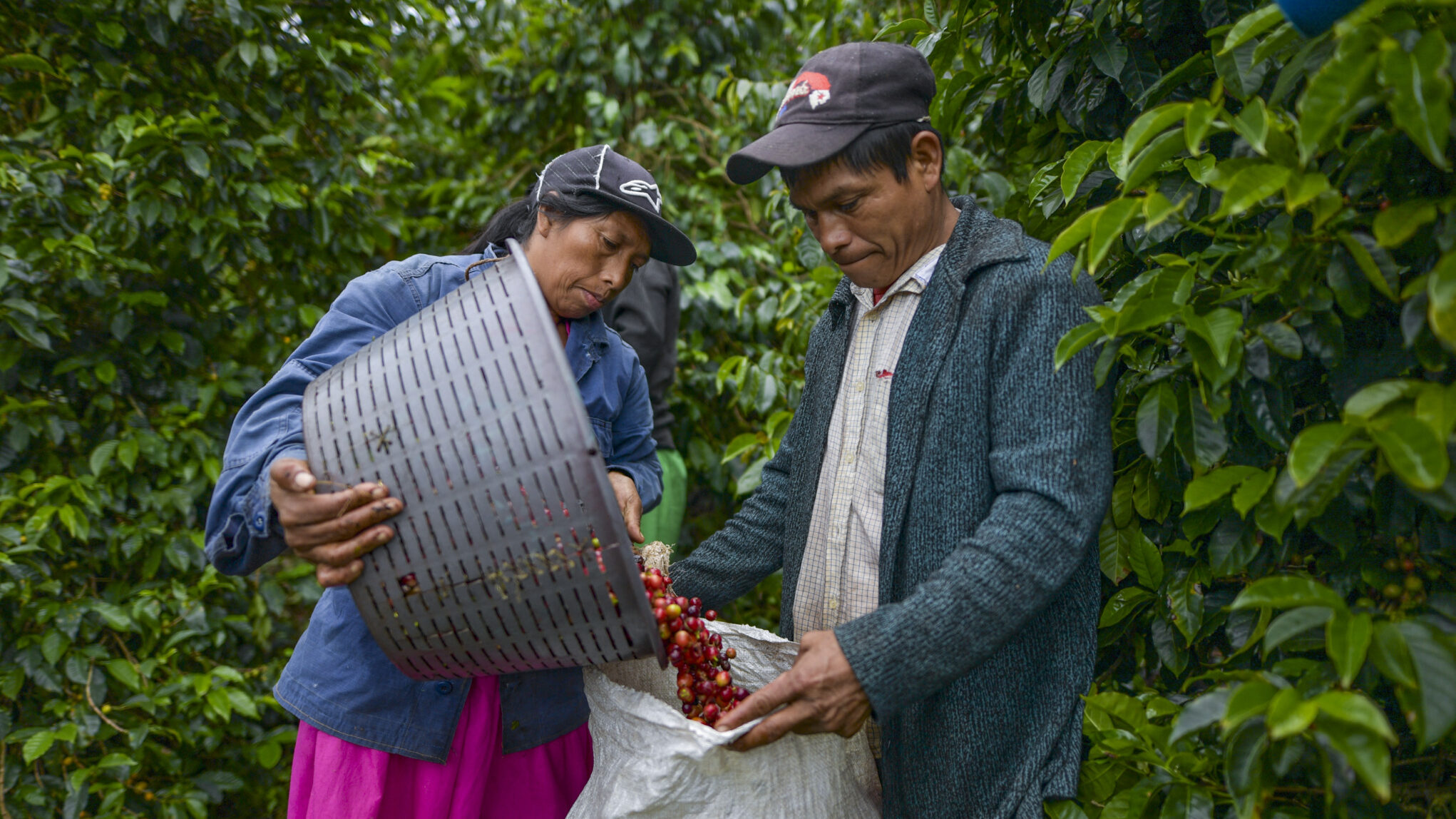
“Yikes,” said the coffee farmer Daniel Peterson, as he sat alone in his office. Outside were fuchsia bougainvillea bushes. Wispy clouds circled the peaks of an extinct volcano in the distance. “It tastes nothing like our coffee.” But then he swirled the cup and took another sip. “A floral bomb… delicate, acidic.”
Daniel was experiencing Panamanian Geisha coffee. And as I jittered my way around the vast World of Coffee event hosted in Panama last weekend tasting cup after cup of Geisha from various farms, I understood his reaction. It is like no other coffee. It tastes more like a delicate jasmine tea, with hints of sun-kissed peaches. It’s nuanced and multilayered with undertones of light red wine. And it can cost up to $30,000 a kilo.
The wine comparison is instructive. Geisha has transformed Panama from a barely known, small producer into “the Bordeaux of coffee”. The coffee itself has become increasingly popular: at a tasting competition, one judge announced that he’d “seen the face of God in a cup of coffee”.
It’s also the most expensive coffee in the world. As Yannis Apostolopoulos of the Specialty Coffee Association said: “Panama changed what people thought a cup of coffee could be and the price you’d pay for it.”
The Petersons are one of seven families farming in Boquete, near Panama’s border with Costa Rica. Their ancestors came to build the canal, settled in the cooler highlands, and for decades they grew cheap coffee. When prices crashed in the 1990s, people began to worry they’d lose their farms.
“We were nobodies, and we had no money,” Peterson says. They formed the Panama Specialty Coffee Association together, following an old family motto: “If you want to go quickly, go alone. If you want to go far, go together.”
Panama’s reputation in the coffee world was helped by a major coffee-based fraud that took place in Kona, Hawaii. The producer Michael Norton had been buying Panamanian beans and repackaging them as Kona, which was then considered the most desired in the world. He sold his phoney coffee to Starbucks and others and made millions – until a worker blew the whistle and Norton went to jail.
For the Panamanians, this was an epiphany. “We didn’t really understand coffee,” says Peterson. Perhaps that’s why they hadn’t noticed what else was growing on their farms. In the 1930s, a British soldier named Richard Whalley found Geisha coffee in Ethiopia’s highlands, while looking for disease-resistant strains. Geisha seeds first reached Boquete in 1963. “One year,” Peterson said, “it rained for three weeks straight, and the plants looked like someone had thrown boiling water at them.” But the Geishas were taller and still green. “I didn’t even know they were there.”
This led to experimentation. Boquete’s coffee grows in the rich soils of the extinct volcano Barú, and from its 3,474m peak you can see both the Caribbean and the Pacific. Panama’s narrowness means crossing winds create a large number of microclimates.
Suggested Reading


Coffee, cake and fascism: welcome to Trump’s America
“A lot of what we are doing in coffee is looking at the world of wine and its centuries’ worth of experience, to see what it can teach us,” Peterson says. If grapes are different thanks to their terroir, so are coffee beans.
The farmers called on a Brazilian neuroscientist, Dr Fabiana Carvalho, to help them create an aroma wheel of the kind used by sommeliers. Everyone agreed that Geisha was unique, but they needed to establish what it should taste like.
And it worked. Geisha first hit the market in 2004, and it stunned everyone. One grower told me that, since then, Panama has become a kind of “university for coffee”, and the majority of their product is now sold to Japan.
You can also find Geisha in cafes in London, Bath and Edinburgh where it sells for £15-35 a cup. People tend to drink it without milk. But thirty quid for a cup of coffee is a lot. Surely it can’t go any higher? Peterson is not so sure. “Some bottles of wine,” he points out, “sell for tens of thousands.”