Guinea pigs are having a moment. The traditional childhood pet once confined to a hutch at the bottom of the garden are now breakout stars of social media.
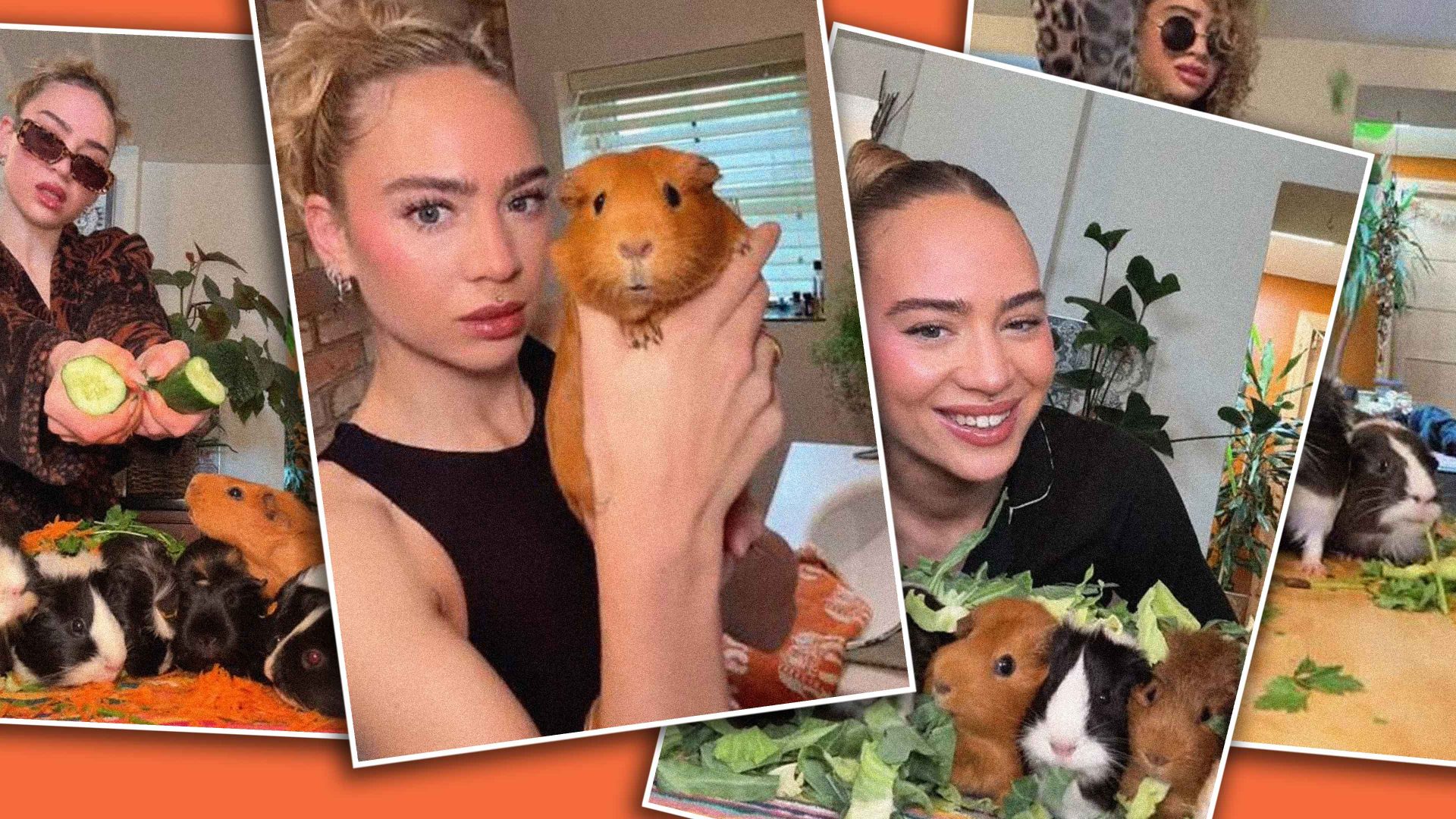
One post shows a woman dancing to Sean Paul’s hit Temperature. She’s miming along and throwing colourful handfuls of grated carrot and chopped cucumber towards the camera. Gathered around the lens, almost seeming to chew in time with the music, are six guinea pigs. The human is the Instagrammer Remy Gumbs and these are the photogenic rodents that have helped her build a following of almost 600,000 fans.
Other pigfluencers share daily cleaning routines or showcase the exotic salads they serve their pets. Live cameras show guinea pigs busily living their best lives, which mostly involve eating, making a squeaking noise that sounds like an 1980s computer game and eating while making a 1980s squeaking noise. The content is in demand with viewers who want cuteness, viewers who want that ASMR oooh sensation as the creatures noisily munch carrots and, of course, viewers who want guinea pigs as pets themselves.
That last group are increasingly lucrative. Companies sell enormous cages in aesthetically pleasing pastel colours, which some owners decorate with fairy lights. Forget simple sawdust, there’s a boom in business for pricey special fleece cage liners, styled with seasonal themes. One company sells a daisy design fleece for £52 or two ‘Pigcasso’ styled fleeces for £86.40 (if you want the whole cage to match, there’s a bundle deal of fleeces, toys and cushioned beds for a mere £153).
Owners can subscribe to have the finest Timothy hay delivered, so their pets get more fibre and nutrition. There are treat subscription boxes where, for a mere £22 a month, they can have a rotating round of healthy snacks. Guinea pigs are big business, which leads to even more influencer content online, driving even more people to buy them as pets.
“Social media was an interesting window into the guinea pig community,” says Rik Cridland, cofounder of HayPigs!, which provides advice on care and sells a wide range of cages and accessories, from cheap treats to wooden hideaways made to look like cafés and nail bars. His business was one of the first to create themed accessories to meet the growing demand.
Suggested Reading


TikTok say they’re safe for kids. Our investigation says otherwise
“I saw a guinea pig in California called Fuzzberta and she had 2,500 followers on Instagram… I’d had some experience in the film industry so I was quite into doing ranges of things, doing a lot of merchandise and giveaways and gifting and stuff. I saw there was a gap in the market.”
Rik initially launched a circus-themed range of Guinea pig products and quickly found that his buyers did the marketing for him, sharing pictures and videos online of their pets doing circus tricks. “We have a bright, colourful treat ball, where you can place treats that they like inside and they have to move the ball around with their nose to get it out, so they’re chasing the ball,” he explains. “There’s a piggy weightlifter, which is like a vegetable kebab skewer but with two rubber weights on the either end, and they can lift it about and pull it about and try to take these dumbbells through doorways that were too wide and all of that sort of thing, which is all just stimulation for them.
“Probably the most famous one early doors was a cavy cannonball, a tunnel with a tilting axle that made it look like a human cannonball. But with guinea pigs, obviously.”
Lesley Shakoor tells me she fell in love with guinea pigs after becoming disabled and wanting a therapy pet. That was three years ago, but she tells me she has expanded her herd somewhat. I ask how many she has now and there’s a beat. “Forty-eight,” she says. FORTY-EIGHT?
Lesley has her own pets but is also fostering for a local rescue and shares their stories on Facebook under the name LSPG Cavies. I challenge her to name all 48 and she immediately begins: “Tilly and Elle, Dean and Ralph, then we’ve got Rusty and Tintin, Bruce and Bruno…”
Some are in large, open cages in her home, filled with soft cushioned bedding and matching fabric curtains; the rest live in a dedicated shed in her garden. “Stu and Benji, Ted and Turby, Terence and Stripe…”
She says her guinea pig habit costs her around £350 a month, once hay, wood shavings, fruit and veg, treats and toys are all factored in. “Diesel and Charlie, Mallow, Lily, Pearl, Bear…” I interrupt before the list uses my entire word count and ask if she thinks her pets have an unusually good life. She replies: “People say to us, ‘God, you spoil them’. I mean, we do, they live better than we do, to be honest. They eat better than us as well.”
Sarah Lee also has a social media profile for her own 14 guinea pigs, Danum Cavies. She thinks that the explosion of social media content can do good and educate people about what these complex animals need. But she is concerned it can be misleading, partly because they don’t show the truth of what she, Rik and Lesley all call “little poo machines”.
“I regularly see freshly cleaned-out cages with beautiful fresh fleeces, not a wee or a poo in sight. And those videos say to people, ‘this is what guinea pigs are like’, and I think ‘yeah, it looks like that because you’ve just cleaned it out’.
Suggested Reading

Ricky Gervais’s Alley Cats is even worse than you thought
“They portray them as lovely pets that like to sit on cuddle sacks, sit on your knee while you’re watching telly. And actually, they don’t want to do that, they want to jump around in the hay. And yes, you can hold them, they don’t bite. But I don’t think that they are the pets they portray them to be, which is what is causing a problem with the rescues.”
Rescues are certainly seeing a guinea pig boom of their own. Last year the RSPCA reported a 40% increase in the number of the animals coming into their centres. The charity said that overbreeding, the cost of living crisis and a lack of owner knowledge was contributing to the rise, which has also overwhelmed specialist rescues.
However, for the luckiest pigs, there’s a growing number of dedicated, maybe obsessive owners spending hundreds of pounds on curating their pets’ lives. Perhaps there’s also another driver. In a changeable, frightening world there’s a real pleasure in being able to control one thing and make a simple creature very happy.
Sarah says: “I don’t need to listen to the news. I can just enjoy my own little world in the guinea pig shed.”
“They make us smile, right,” says Rik. “They have these silly little ears, they have these silly little mannerisms, they waddle around. They’re just funny. There’s been a lot of doom and gloom in the world, and these animals are pure escapism.”
 Most popular

The uncomfortable truth about Ariana Grande


A certain lack of Self-awareness


Why can’t Britain be a bit more Mark Carney?


Face it: Trump’s going mad