
TikTok is facing a formal Ofcom investigation over concerns it is failing to do enough to stop children accessing harmful content, after the regulator said it had “serious doubts” about the effectiveness of the platform’s age verification systems.
The social media giant insisted it is “confident” it complies with the Online Safety Act, saying it uses “advanced age inference technologies” to protect young users.
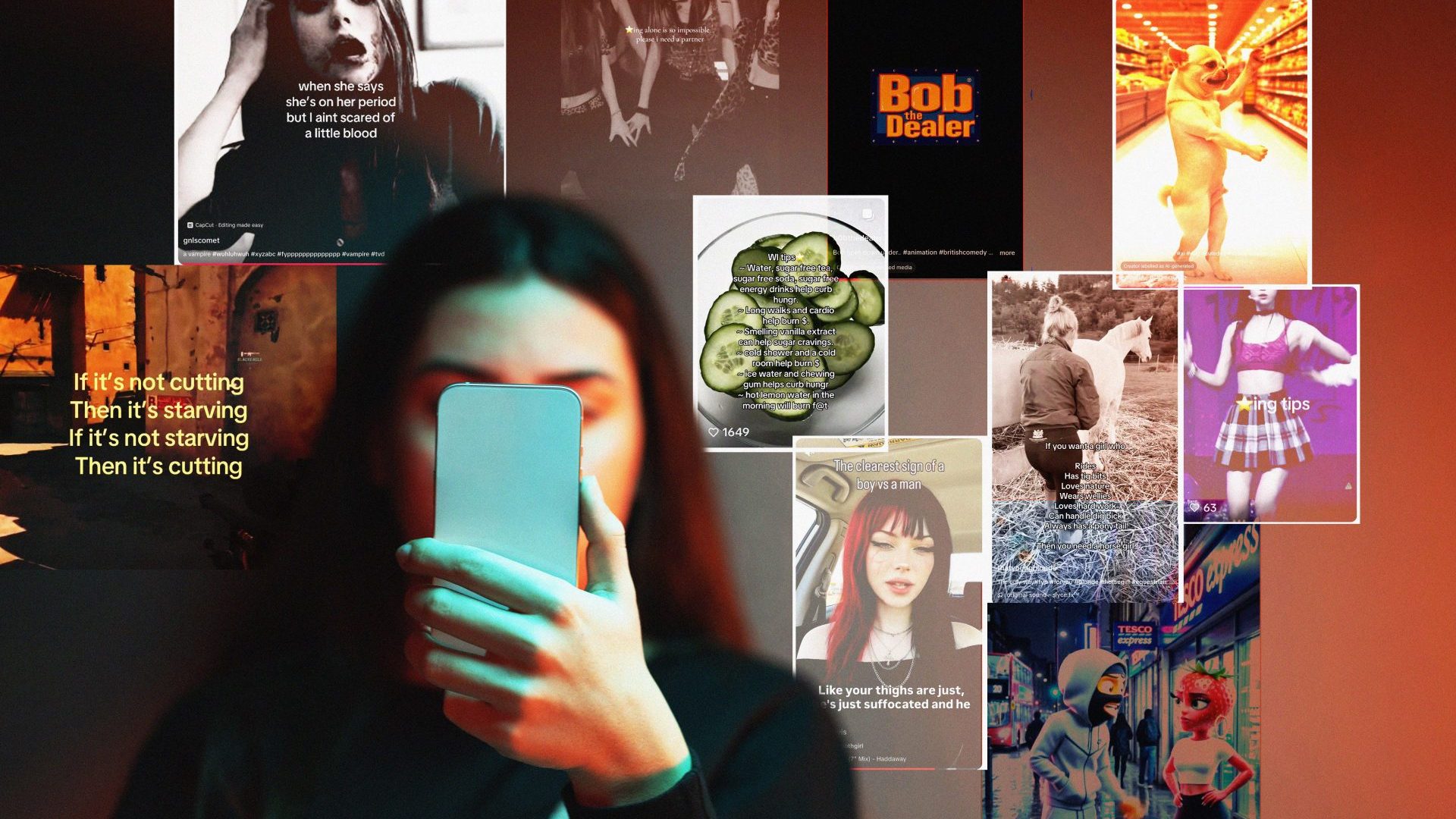
But a recent New World investigation has revealed just how easy it is for young teens to access disturbing content relating to sex, pornography, drugs, eating disorders, self-harm and misogyny on TikTok – the most frequented social media platform in the UK for young teens – despite the tech giant’s claim their platform is a safe space.
Our investigators created a profile on TikTok for a 13-year-old girl in the UK, named “Emily”, and then spent 127 minutes – the exact average time it is estimated British children spend per day on TikTok – exploring the content that was freely available to her.
This is the content “Emily” was served by TikTok:
*Hardcore pornography
*Depictions of children’s characters as drug dealers
*Pro-eating disorder content, including advice on how to starve yourself
*Self-harm content, including references to “cutting”
*And abundant examples of severe and overt misogyny.
None of the content was difficult to discover, and there appeared to be no barrier or guardrail from TikTok.
TikTok appears to be singularly poor at protecting young teens. We applied the same tests with phoney profiles on Instagram and although some of the material was borderline, there was nothing like the overt X-rated content we found on TikTok.
This despite the fact that TikTok is a dominant social media platform amongst the vulnerable age group 13-17. Research published by parental controls company Qustodio found British children spent an average of 127 minutes a day on TikTok in 2023, more than children in any other country they studied, and almost double the 70 minutes recorded in 2020.
Suggested Reading

Don’t ban kids from social media – the real problem are the over-60s
Our investigation reveals just how simple it is for young teens to disable TikTok’s so-called online safety tools, and also how young teens have found simple ways to bypass supposed guardrails. The content we were able to discover in little more than two hours on TikTok makes a mockery of the tech giant’s claim to be a safe space for children.
Around half of British children in the study used the app, with TikTok outpacing Instagram, Snapchat and YouTube for daily engagement. Globally, children aged between four and 18 spent an average of 112 minutes per day on the platform.
TikTok claims it is committed to making the platform “a safe and positive experience” for under-18s. The company says users must be at least 13 to hold an account, and that younger users are protected through restrictive default privacy settings, content filtering, and age-based feature limits. TikTok also says it blocks or restricts harmful content involving self-harm, eating disorders, drugs, sexual content, and graphic violence from younger audiences.
But in reality, this could not have been further from the truth.
Immediately after creating an account, a banner appeared at the top of the screen announcing that, because it belonged to a 13-year-old, it would automatically be set to private. It took less than 30 seconds to disable those protections and make the account public, meaning that a 13-year-old’s posts could hypothetically be viewed by anyone, or any age, in the world.
At first glance, the freshly generated algorithm served “Emily” a familiar stream of child-friendly content: Roblox characters, Minecraft gameplay, and livestreams seemingly hosted by other teenagers. But woven through it was a constant stream of AI-generated videos.
Some were absurd but harmless, such as dogs dancing like humans, and meme clips. Others quickly veered into darker territory. Within the first 20 minutes, the feed served multiple AI-generated storylines depicting children’s TV characters as drug dealers. One video showed Bart Simpson conducting a drug deal. Another, seemingly part of a recurring series titled “Bob the Dealer”, featured Bob the Builder and Wendy smuggling drugs while on holiday.
Another recurring trend was the bizarre “Fruit Love Island” genre – AI-generated humanoid fruit characters acting out relationship drama. The third such video shown to “Emily” revolved around a husband discovering he had been cheated on.
Infidelity and gender resentment appeared to be central themes, not just within these clips, but across much of the feed itself. Vast stretches of the timeline – despite no interaction, likes or searches from the account – focused obsessively on relationships, often portraying women as manipulative or inherently unfaithful. For example, one post sharing how women act “24 hours before they cheat on you” or that the current dating market for men is filled with “young hos” and “man haters”.
More disturbing still was the volume of overtly sexual and misogynistic content pushed onto the account. Clips from the “Whatever” podcast repeatedly appeared on the feed, including one segment in which a guest claimed that an average-looking woman could be a “massive slut”, while a man in the same position would be a “fucking virgin”. Other videos featured street interviewers approaching women to “rizz them up” – Gen Alpha slang for flirting – while openly mocking women’s weight and appearance.
From the outset, TikTok aggressively pushed relationship content. Some of it was relatively innocent: depictions of teenage flirting embedded in Roblox and Minecraft edits. But the tone escalated quickly.
The algorithm repeatedly promoted videos carrying the hashtag #wlw (“women loving women”), despite the account never having searched for or engaged with lesbian content. Within just 30 minutes, the feed had shifted toward explicitly sexual material.
One meme joked that “horse girls” have “big bits” and can handle a “dig bick”. Another featured a woman graphically explaining the difference between a “boy and a man” based on how they perform oral sex, acting out the comparison on camera.
Suggested Reading


Has TikTok killed the critic?
At that point, our investigators decided to test how easily genuinely explicit material could be accessed. Searching obvious terms like “sex” or “pornography” returned warnings claiming no such content existed.
But searching “gooning” – Gen Alpha slang for compulsive masturbation – opened an entirely different side of the platform. Within five minutes, by following instructions shared in comment sections by what appeared to be other teenagers, investigators were able to access outright pornography.
In comment sections, users openly traded stickers and GIFs depicting nude images or explicit sexual cartoons. One profile titled “Goon account”, with more than 24,000 followers, had amassed millions of views by directing users toward seemingly innocent “filters”.
Normally, TikTok filters are visual effects applied to photos or videos. These, however, acted as gateways to explicit pornographic content. Investigators even encountered light sexualised material involving a dog, disguised behind a filter marked only with a dog emoji.
Yet pornography was not the most alarming content uncovered.
As with explicit sexual material, TikTok blocks direct searches for terms such as “anorexia” or “starving”, instead redirecting users toward mental health resources. But the safeguards were easily bypassed. By simply searching the star emoji – commonly used online as shorthand for “starving” – the 13-year-old account’s feed rapidly became saturated with pro-eating disorder content.
Videos asked users whether they would rather “eat a bag of chips” or “wear a bikini without being embarrassed”. Others offered advice on how to starve, shared tips for suppressing hunger, or romanticised the euphoric “high” of not eating.
Some posts sought “starving partners”. Others joked about alternating between starvation and self-harm, or laughed about not caring if their eating disorder killed them. Many of the creators appeared to be teenagers themselves, referencing school, parents, homework and exams throughout their videos.
The scale of this problem has already been documented by researchers and campaigners. The Molly Rose Foundation found that TikTok and Instagram were recommending suicide and self-harm content to teenagers “at industrial scale”. Its research described a “tsunami” of harmful material flooding the feeds of under-16 users who interacted with mental health content.
Suggested Reading

Denmark’s social media ban for kids is a tragedy. But it’s right
Testimonies featured in the documentary Producing Pain, produced by The New World digital production journalist Ruby Mitchell, illustrate how TikTok’s algorithm can intensify eating disorders by normalising extreme thinness and restrictive eating. Across the documentary, young women describe how seemingly harmless content — “What I Eat in a Day” videos, body checks, fitness trends and wellness influencers — gradually reshaped the way they saw themselves.
Student Nelly says she “never massively cared” about body image until TikTok began influencing her perception of beauty. Frankie describes the app amplifying the “voice” in her head and pushing her toward unhealthy habits: “You see other people look the way you want to look.” Nourhan recalls watching “ultra-skinny” creators surviving on “an apple and a coffee”, leaving her feeling guilty about her own eating habits and body.
Psychology researcher Scott Griffiths explains that users vulnerable to eating disorders are shown significantly more harmful material even without heavily engaging with it.
According to his research, TikTok’s algorithm disproportionately promotes dieting, appearance-focused and toxic eating disorder content to vulnerable users, creating what he describes as an “echo chamber” of thinness and restriction. Griffiths found that every video shown to users with eating disorders was “4,000% more likely” to contain toxic ED-related material than the videos served to healthy users.
These findings echo concerns raised this week by Ofcom, which warned that TikTok and YouTube are still “not safe enough” for children despite the Online Safety Act now being in force for almost a year. The regulator said there had been “little change” in children’s overall exposure to harmful content online. And perhaps even more concerning, the regulator found 84% of children aged eight to 12 were still using at least one major service with a minimum age of 13, meaning this type of harmful content is also available for children even younger than that of the fake account created by our investigators.
Our investigation appears to prove Ofcom’s point. In little more than two hours, a freshly created TikTok account registered to a 13-year-old girl was exposed to pornography, misogyny, pro-eating disorder content, self-harm references and drug-related material – often without searching for it.
A TikTok spokesperson insisted to The New World that the company was committed to providing a safe platform for everyone, and especially teens. It added of our investigation: “This experiment was designed to reach a predetermined conclusion, and does not represent the typical teen experience. We use the latest technology and robust systems to remove more than 99% of violative videos before they’re ever viewed.”
Yet the only object of TNW‘s “experiment” was to determine if TikTok’s so-called effort to provide a safe online experience for young teens was worthy of the name. The evidence speaks for itself.
Earlier this year, Ofcom demanded TikTok, YouTube, Instagram, Snapchat, Roblox and Facebook explain what steps they were taking to strengthen age checks and prevent children being exposed to dangerous content. But while Meta, Snap and Roblox agreed to introduce stronger protections, Ofcom said TikTok had failed to commit to any significant changes, instead insisting its feeds were already safe for children.
The question now is what Britain’s online safety regulator intends to do next. Ofcom has repeatedly acknowledged the scale of the problem, yet TikTok continues to ride roughshod over both the spirit and apparent intent of Britain’s online safety regime, while young users remain exposed to inappropriate and potentially dangerous content on a vast scale.