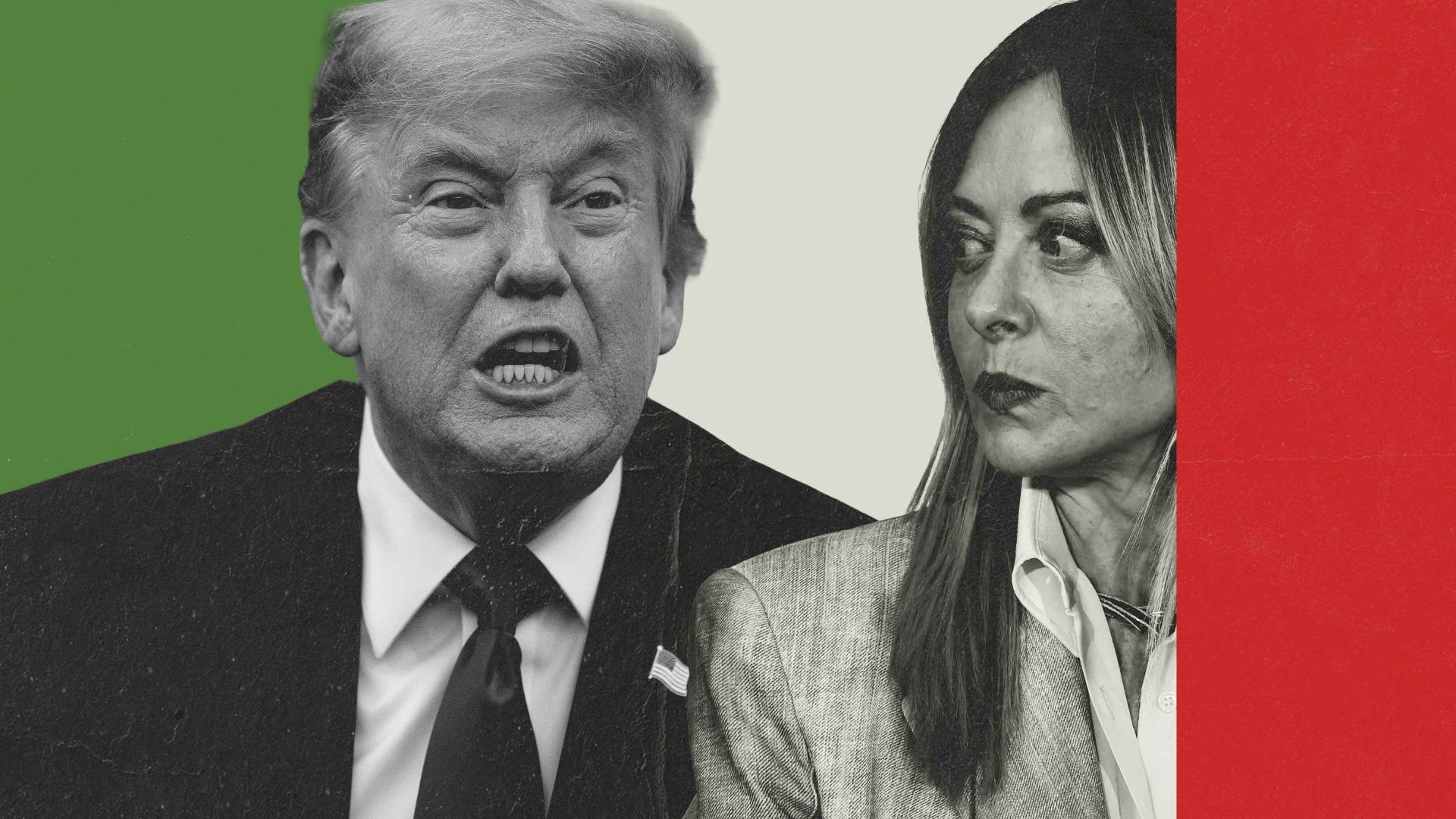
Had it been a TV sitcom about a bickering couple, it would have been hilarious. But the final collapse of the relationship between Donald Trump and Giorgia Meloni was ridiculously dramatic.
In Italy we call what happened between the two of them “il teatrino della politica”, “political theatrics”, as a spiral of newspaper articles and TV news reports were fed by colourful accusations and undiplomatic statements. But the row between Trump and Meloni, as theatrical as it seemed, was more than just a show.
The show opened at the recent G7 meeting in France, when Trump made it clear he was frustrated with Meloni for her failure to support his war in Iran. The Italian decision not to allow the US president use of Italian air bases was, he declared, a “great logistical inconvenience”. He followed this with the Trumpian claim that Meloni was “doing poorly in Italy with her level of popularity”.
Suggested Reading

The birth of tropical Europe
Meloni then did what few other leaders have done when faced with a Trump insult – she bit back. “As for my popularity,” she wrote on Instagram, “being your friend has certainly not helped it, nor does it depend on my relationship with you. My popularity is none of your concern. I suggest you focus on yours.”
It demonstrates the shallowness of much of current international diplomacy, a substantial portion of which revolves around Trump’s narcissistic delirium. And it was almost certainly narcissism that led the US president to claim that Meloni “begged” him for a selfie and that he felt “sorry for her”. Meloni replied: “Neither I nor Italy ever beg.”
It was like an argument between teenagers – but there’s no doubt that Trump has done her a huge favour. By attacking her, he has given her popularity a boost, just when she needed it.
Meloni is up for re-election next year, and the rift with Trump might allow her to lure a combination of centrist voters, and also the right wingers who have never liked Trump.
As well as this, Trump’s attack on Meloni has achieved something close to a miracle in Italian politics: he has united Italy’s political parties in defence of their prime minister. Even her sworn Democrat opponents and the mainstream left wing media have taken her side.
Some parts of the media described Trump’s outburst against Meloni as a “humiliation”. But Sergio Mattarella, the Italian head of state, sided with his prime minister. It’s clear that she took a wise decision not to bend the knee to Trump on Iran.
Nobody really knows exactly what happened between Meloni and Trump (only they do). Even though Meloni denied “begging” for a selfie, it’s true that, in the past, she has used Trump to increase her visibility, as she did when she put herself forward as a “bridge-builder” between Europe and the US.
Suggested Reading

The American right’s war on Britain
But when you make those overtures towards someone with no sense of diplomacy, and with a team that can’t restrain his comments in any way, you are taking a gamble. Trump, it should be remembered, has attacked almost every major world leader except Vladimir Putin.
And now, many Italians I speak to, even those who did not vote for Meloni and dislike her Brothers of Italy party, say they are proud of her. They believe she has spoken on behalf of Italy’s sovereignty.
This is in sharp contrast to a notorious episode during Silvio Berlusconi’s rule, when he invited Muammar Gaddafi to Rome. The Libyan leader slept in a lavish tent set up in a public city park, and a huge ceremony was held at the capital’s main police station featuring Libyan horses. But the crucial moment came when Berlusconi was photographed kissing Gaddafi’s hand. His popularity collapsed.
There could be a rapprochement between Meloni and Trump if the US president were to change his tune. Meloni will know that no good can come from being on his bad side. So they might stage some kind of reset. After all, most politicians tend to be turncoats.
Silvia Marchetti is a Rome-based freelance reporter