Open Der Spiegel‘s homepage and there it sits, proudly wedged between the Headlines and World Cup Football sections: “Nazi Index” – a searchable register of members of the Nationalsozialistische Deutsche Arbeiterpartei (NSDAP), Adolf Hitler’s Nazi Party. Not to be outdone, rival publication Die Zeit runs a banner promising “Discover your family’s Nazi past – browse millions of documents,” search bar conveniently included.
What both outlets are offering is 12 million digitised NSDAP membership cards recently made available by the US National Archives – that’s 80 to 90 per cent of the actual figures – and many Germans are now busy fact-checking grandpa’s (and grandma’s) tales of quiet resistance. Or, more satisfyingly, their neighbours’ and colleagues’ family tree entanglement. Unusual surnames pay off handsomely.
Call it confronting the past, curiosity or obsession. Either way, another generation is having uncomfortable conversations about just how deep their family involvement went.
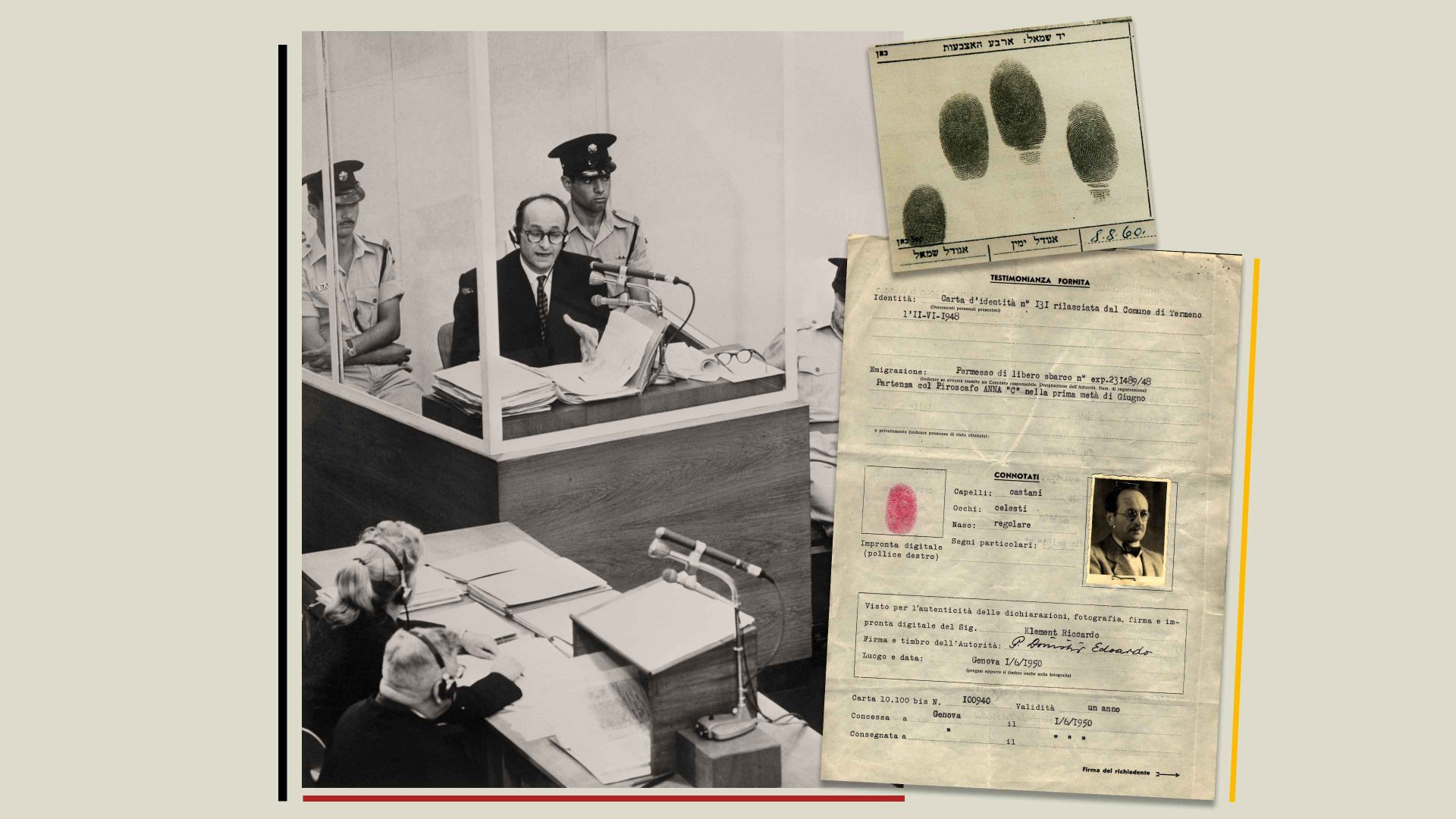
Adolf Eichmann’s involvement was never in question. The SS officer organised the Holocaust’s logistics. He was captured by Israeli agents, tried in Jerusalem, and executed in 1961.
Sixty-five years on, however, German authorities still seem determined to protect information relating to him – or rather, to protect themselves. Which makes this less a story about Eichmann than about what the German state still won’t let go of.
Suggested Reading
The Nazi who hated Hitler
This month, the historian and journalist Gaby Weber lost her case before the Federal Administrative Court over access to Federal Intelligence Service files on Eichmann’s arrest in Argentina. She had challenged the Federal Chancellery – the supervisory authority of our foreign intelligence agency the Bundesnachrichtendienst (BND) – which had issued a non-disclosure declaration. The files, Friedrich Merz’s Bundeskanzleramt argued, could shed light on today’s intelligence-gathering methods and contained personal data requiring continued confidentiality.
Weber’s lawyer, Christoph Partsch, wasn’t surprised. In 2011, he had helped a Bild reporter win access to other BND files on Eichmann. When the court ordered the BND to grant access, “they buried us in paper”, he tells me. “We were handed more than 7,000 pages, swamped in material – in the hope we won’t find anything”. They also tried fobbing them off with barely legible copies.
Once a better set arrived, finally, “6,999 of those pages were essentially irrelevant”. What they did show, though, was just how closely Konrad Adenauer’s government, and his key aide Hans Globke in particular, had monitored the case and the trial. “They were afraid of what Eichmann might say about Globke and his connections.”
The one page that mattered was an index card noting that “Standartenführer EICHMANN is not in Egypt, but is staying in Argentina under the false name CLEMENS.” Operation Gehlen, the BND’s predecessor, knew the war criminal’s address as early as 1952 – years before the Mossad.
Weber’s research thesis is that Eichmann was put under massive pressure to keep quiet about his network. That’s why she seeks access to further archive years.
Since those first revelations, though, the law has changed. In 2017, under Angela Merkel’s government, so-called “methods protection” was introduced. According to Partsch, “it was smuggled into the legislative process with an explanation that sounded completely harmless, so that CDU and SPD said, sure, there’s a legitimate interest in secrecy.”
Ever since, he says, the court has treated “even the faintest suggestion” from the BND that its methods could be revealed as grounds for refusal. True to form, that was the BND’s reasoning this time, too.
Quite which 1960s espionage tradecraft still needs guarding is unclear. Dead drops, codes, double agents, microfilm, a healthy paranoia about who’s tailing whom – in essentials the intel toolkit has barely changed, and any Bond fan would recognise most of it.
What makes things worse, from a transparency standpoint, is the court procedure.
In Britain, a closed-circuit procedure kicks in to decide whether sensitive material can or cannot be used in litigation: security-vetted lawyers examine the documents in question and represent their clients, who never see the material.
In Germany, there’s no representative for the claimant – just a separate panel of judges, the so-called “in-camera” senate, who decide whether the BND’s arguments hold up.
In Weber’s case, the BND also invoked the “third-party rule”, the principle that material obtained from a foreign intelligence service can’t be disclosed without that service’s permission. Whether permission was asked for is unclear.
Partsch’s view: “This third-party rule isn’t laid down in any law. In other words, some gentleman’s agreement between intelligence services – a contradiction in itself – has been turned into grounds for an exception to a statutory right.”
And so the in-camera senate, in a heavily anonymised decision, nodded off the BND’s line of defence and told the court and the parties: carry on. From there, Partsch says, any lawyer is “firing shots in the dark, completely blind” – arguing without knowing what they’re arguing against.
At the hearing, he adds, every point bounces off because “that’s already been decided by the in-camera senate”. In effect, the claimant no longer gets a hearing: “I consider this procedure unconstitutional, because it defeats the right of access to the courts.” He has a separate complaint pending before the Constitutional Court over another in-camera ruling, also involving the BND.
Suggested Reading
Is Thomas Tuchel the German that England always needed?
Why all the secrecy? Partsch recalls a 44-page classification notice from the Federal Chancellery in the 2011 Eichmann case, justified on grounds of “danger to public safety and order” – a wonderfully elastic phrase – and potential harm to the Bundesrepublik‘s reputation.
None of those fears ever materialised.
Years later, he says, a Chancellery lawyer even admitted to him: “That wasn’t our best brief.” And yet in Weber’s case a similar notice turned up, “again arguing that it would harm the Federal Republic.”
It helps to know that, in the early days of Operation Gehlen and the BND, an active NSDAP role could actually work in your favour when applying for a career in spy-dom. Hiring, Partsch explains, ran along hierarchical, family lines: if grandpa was reliable, the thinking went, so would the grandson be.
Keeping 1950s and 60s files under wraps, presumably, spares today’s BND staff with such family ties from awkward questions – though Partsch argues it leaves them open to blackmail. “I think this BND attitude is simply unwise – disastrous for their public image, and a catastrophe for historical scholarship.”
With Nazi-era material especially, he concludes, “the authorities should be a bit more open. A bit more confident, even.”
PS: Regarding the NSDAP search tool – one of my two grandfathers turned up: he became a member in 1937, when the party reopened its doors after the 1933 stampede had forced them temporarily shut. It seems my father had unearthed this years earlier, however, but only after his own father passed away. Family secrets…