There is something unsettlingly ordinary about watching an American murder trial in 2026. You can watch someone give evidence in the dock while you’re brushing your teeth, follow a cross-examination on your way to work and read conspiracy theories from armchair investigators over lunch. By dinner, someone else’s tragedy has been clipped, captioned and picked apart for content.
The trial of Lindsay Clancy has been no different.
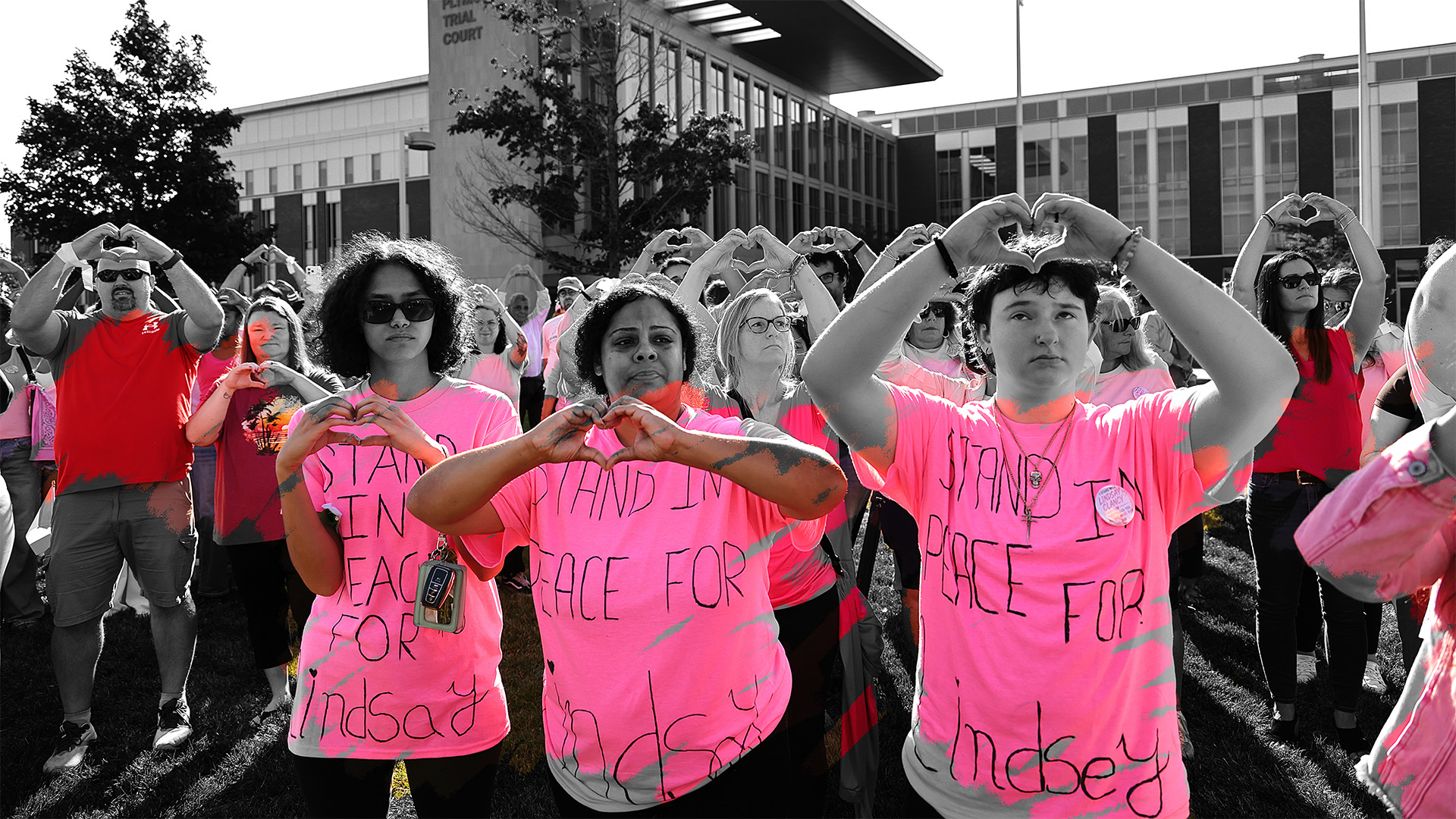
Except outside Plymouth Superior Court in Massachusetts, the road leading to the courtroom has been lined with people in pink T-shirts, holding signs and protesting in silence.
Hundreds, overwhelmingly women, have gathered in solidarity with Clancy. Across their T-shirts are the words “Believe”, “She Needed Help” and “Peace For Lindsay”. Many have been following the trial online; some have experienced the same postpartum mental health problems that are the focus of Lindsay Clancy’s defence.
Inside, the woman they have come to support is on trial for killing her three children. On January 24, 2023, Clancy killed Cora, five, Dawson, three, and eight-month-old Callan at their family home in Duxbury, Massachusetts. She then attempted to take her own life, jumping from a second-storey window, suffering injuries that left her paralysed.
Prosecutors argue that Clancy, a former labour and delivery nurse, intentionally strangled her children after sending her husband, Patrick Clancy, out to collect dinner and medication. Her attorney, Kevin Reddington, does not dispute that Clancy killed her children, but argues she was overmedicated and suffering from postpartum psychosis at the time, and therefore was not criminally responsible.
The fundamental facts of what she did aren’t really disputed. Her state of mind is.
In the four months leading up to the killings, Clancy received more than 30 prescriptions for 13 different psychiatric medications, though court evidence showed she frequently changed drugs and did not take them all at once. During the same period, she repeatedly sought medical help as her mental health deteriorated, receiving both inpatient and outpatient care and twice calling a suicide hotline. “I want help. I want to be well,” she wrote in a notebook.
Some of the strongest evidence for the defence came from psychiatrist Paul Zeizel, who testified that Clancy had bipolar disorder and postpartum psychosis. “She had no appreciation for the wrongfulness of her act,” he told the court. Prosecutors, however, argue that Clancy was not psychotic and deliberately planned the killings.
Suggested Reading

Alpine divorce and the dangers of falling for a bastard
While the jury considers Clancy’s state of mind, women watching the same evidence unfold online have seen something entirely different in the case.
Outside the courthouse in Massachusetts, women stood in tears, held hands and formed hearts above their heads. When the police vehicles escorting Clancy approached, the crowd broke into applause. Her lawyer, Kevin Reddington, said he was speechless at the sight of them.
“It should not take tragedy for people to start paying attention to mental health,” Renee Kimball, one of the organisers of the Stand in Peace for Lindsay demonstration, told the crowd.
The protests have brought together women and men in support of Clancy, but also to raise awareness of postpartum depression, postpartum psychosis and the mental-health crises women can experience after childbirth.
Some have experienced postpartum depression, anxiety or psychosis themselves. They do not see themselves in what Clancy did, but in parts of what came before: the deteriorating mental health, the medication and the attempts to get help.
For weeks, women have watched testimony about Clancy’s mental health unfold through the trial’s livestream. They have heard about the doctors she saw, the medication she was prescribed and the help she sought. They heard her mother-in-law tell the court that she had been “begging for help”.
This trial has put postpartum mental health under an extraordinary spotlight, prompting women across social media to share their own experiences.
Haley Ashcom is one of them. Now 34, she has been using TikTok to talk about developing postpartum psychosis after the birth of her first child five years ago.
It began with anxiety, an overwhelming sense of dread and an inability to sleep. At first, she thought she was experiencing intrusive thoughts. But they soon developed into voices.
Initially diagnosed with postpartum depression, she was prescribed Zoloft, an antidepressant that Clancy had also been prescribed. But her condition continued to deteriorate. The voices became louder and increasingly violent, telling Ashcom she was failing as a mother. Eventually, she became suicidal.
It was only after admitting herself to a psychiatric hospital that Ashcom was diagnosed with postpartum psychosis and later bipolar disorder. With specialist treatment, she recovered. She has since had three more children without experiencing psychosis again.
At the height of her illness, Ashcom says she would have obeyed the voices she was hearing, even if they had told her to harm her children. While her story is not Clancy’s it does help explain why this trial has struck such a nerve. Their message isn’t simply “Free Lindsay”. It is a demand that women’s mental health concerns be taken seriously before they reach crisis.
Affecting around one to two in every 1,000 women after giving birth, postpartum psychosis is rarer and more severe than postpartum depression, and has been linked to the stress, sleep deprivation and hormonal changes that follow childbirth. It is a psychiatric emergency that can involve hallucinations and delusions.
Suggested Reading

Are you over 45 and female? Sorry, you’re not getting a job
But postpartum mental illness more broadly is far from rare. According to the American College of Obstetricians and Gynecologists, around one in seven women experience postpartum depression. Perinatal mental health conditions are among the most common complications of pregnancy, it says, yet frequently go unrecognised or untreated.
The attention now being paid to postpartum mental health has come in the most uncomfortable of circumstances. The same livestream that has allowed women to recognise their own experiences in Clancy’s has also turned the deaths of three children into an online spectacle.
The distance between spectator and courtroom has almost disappeared. You don’t have to travel to Massachusetts or even turn on the television. The trial is already in your hand.
Clips are dissected on TikTok, misinformation multiplies, and strangers construct theories about people they have never met. But this is not a true-crime mystery waiting to be solved online. Clancy killed her children; the question for the jury is whether she was legally responsible when she did so.
The reality is more complicated than a viral clip allows: Clancy was described as a devoted mother, and she was also a woman who killed her three children while, her defence argues, severely mentally ill.
Yet that accessibility has also allowed women who might never otherwise have heard Clancy’s story to sit through hours of testimony about her mental health and recognise parts of their own experiences. That does not mean they recognise what she did. They recognise what came before.
No doubt, this tragedy will appear on our screens again in the next few years, repackaged as a four-part Netflix docuseries. The trial will reach a verdict and the livestream will end.
But that verdict cannot undo the deaths of three children, nor can it resolve the uncomfortable questions this case has raised about postpartum mental healthcare in America. How does a woman repeatedly ask for help and still reach such an unimaginable crisis?
 Most popular

My truly deranged encounter with Trump apologist Kellyanne Conway


The moral depravity of Robert Jenrick


Is this the real reason Trump keeps falling asleep in public?


Suella Braverman’s book has sold only 106 copies. This is why