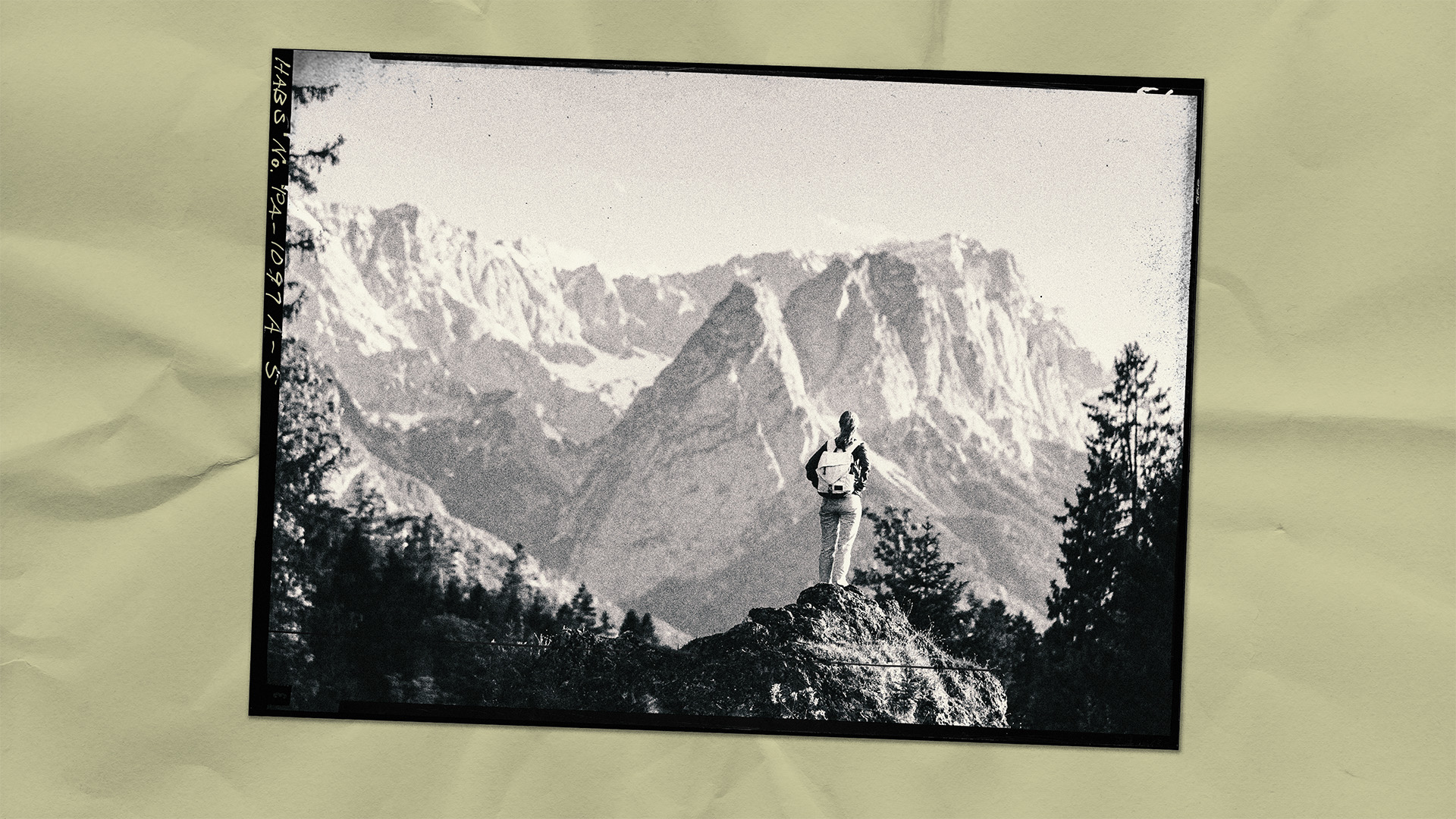
In 1893, the Scottish-Canadian writer Robert Barr wrote a short story called “An Alpine Divorce”. The plot involved an unhappily married businessman who takes his wife into the Alps intending to kill her and pass it off as an accident. But in a twist, it turns out that the wife knows his plan. She has informed the authorities that he plans to kill her, and having told him so, she jumps, as Barr describes it, “shrieking and whirling down the awful abyss.”
It’s a grim story – and now the idea of alpine divorce has made an unwelcome appearance in the mainstream, fuelled by a combination of viral social media posts and high-profile court cases. Not all cases involved a fall from an alpine peak, but all contain the bleak combination of male treachery and a woman in extreme danger. In one recent incident, a woman was left alone on a hiking trail by her boyfriend. Another woman was abandoned in the desert. A third was forced to find her own way off a mountain after her partner disappeared.
What gives alpine divorce its power is that it seems to describe something much deeper. At its heart is a question as old as relationships themselves: when things begin to fall apart, who gets to walk away and who is left to bear the weight of it? Invariably, it seems, the burden falls on the woman.
Across TikTok, Reddit and hiking forums, women began sharing strikingly similar stories about alpine divorce. One TikTok video, viewed 19 million times, reads: “POV: You go on a hike with him in the mountains, but he leaves you alone by yourself and you realise he never liked you to begin with.”
In the video, a woman sobs as she stumbles down a rocky path, shocked that her relationship has ended in such a frightening way. “He left me by myself. I should have never come with him.”
The comments quickly filled with women recounting their own, similar experiences. One described being left behind on a hike out of the Grand Canyon. She only made it back with the help of “a very nice man from Norway”. Another said her boyfriend abandoned her in the desert before later admitting he had expected her to get lost.
The discussion around a viral social media trend became something much more serious earlier this year. In April, a doctor in Hawaii was found guilty of attempting to kill his wife during a hike. Two months before that, a criminal case in Austria had focused on a mountaineering expedition that ended in death. Thomas Plamberger, 37, was found guilty of gross negligent manslaughter after abandoning his girlfriend, 33-year-old Kirstin Gurtner, on Austria’s highest mountain, the Großglockner. She died of hypothermia.
The couple had become stranded near the summit in freezing conditions. Plamberger told the court he was “endlessly sorry”, but prosecutors questioned why he had failed to even wrap his freezing girlfriend in an emergency blanket when he went to get help.
The case drew particular attention because a former girlfriend of Plamberger testified that he had also left her behind on the same mountain during an expedition in 2023 after her head torch failed. While the judge accepted that Plamberger had not acted with malicious intent, the case attracted huge attention.
Suggested Reading


Please stop asking me when I’m going to get married and have a baby
As the stories spread online, the meaning expanded. For some women, alpine divorce refers to being physically abandoned on a hiking trail. For others, it describes a partner who storms ahead during an argument, ignores their safety, or leaves them to navigate a difficult situation alone. Depending on who you ask, alpine divorce can now describe anything from inconsiderate hiking etiquette to much deeper relationship problems.
Dr Jess Carbino is a sociologist and former researcher at Tinder and Bumble. “What’s interesting about alpine divorce is that so many of these ruptures in relationships happen in much more discrete and everyday ways,” she says. “The alpine divorce is quite dramatic. Someone is leaving you on a mountaintop. But there are subtle ways that’s happening every day.”
Carbino points to partners who walk away from difficult conversations, leave the room when they feel overwhelmed, or emotionally withdraw rather than address conflict. In that sense, alpine divorce is less a unique phenomenon than the most extreme expression of what is a familiar relationship dynamic.
“It happens often, and it happens in much more everyday, subtle kinds of ways,” Carbino says. “This person is distancing themselves from you, and then you go about pursuing them, to make sure the relationship is repaired.”
What resonates with so many women is not necessarily the idea of being stranded on a mountain, but the feeling of abandonment. “The act of being left by your partner when you are vulnerable and not understanding why is really quite universal,” she says.
Aila Taylor is a climber, canyoner, caver and writer based in the Lake District and the online discussion around alpine divorce put a name to something she had experienced herself.
Taylor says a former boyfriend would regularly leave her behind during hikes and expeditions when he became frustrated. “He kind of left me on the side of a mountain and just walked off,” she says. “He was just frustrated that I was walking a bit slower than him. He used to do it quite a lot.” On one occasion in the Lake District, she says, he “fully just ran off the mountain” and left her behind.
Suggested Reading


Looksmaxxing: The male crisis, now with a skincare regime
Reflecting on those experiences now, Aila says, “I definitely don’t think the problem starts on the mountain. I think what we see is kind of a playing out of a relationship dynamic that’s definitely already existed.”
Instead, she believes extreme environments amplify tensions that are already there. Hikers and climbers are often tired, hungry, dehydrated and dependent on one another, creating conditions in which existing frustrations can quickly escalate. “I think you do really see people’s true selves come out in these environments,” she says.
That disregard, Aila says, extended beyond the trail itself. She was alone in the Canadian Rockies when her boyfriend sent a text message ending the relationship. “I remember replying back to him and I was like, ‘Can we talk about this? It would be great to call later but I’m on the side of a mountain right now. This really isn’t a good time’,” she says. His response, she says, was blunt: “Well, there’s never a good time.”
Though it’s a nasty story, Barr’s original “An Alpine Divorce” was notable for the fact that in the end, the wife outwitted the husband. It’s a shame that to do so she had to jump off a cliff to her death, but she made sure her scheming husband didn’t get to walk away without any consequences. In that one respect at least, the fiction of alpine divorce is more morally satisfying than the reality.