In the end, my father only had to endure a few weeks of visits from carers before the bloodstains on the bed and the rotting food made me realise I must find him a care home. Poorly paid, rushed, sent to visit him three times a day – though they rarely turned up that often – they did the bare minimum.
Hundreds of thousands of Britons have experienced the failings of social care. They are at the mercy of an unfathomable, underfunded system which constantly tries to push the responsibility for care onto someone else.
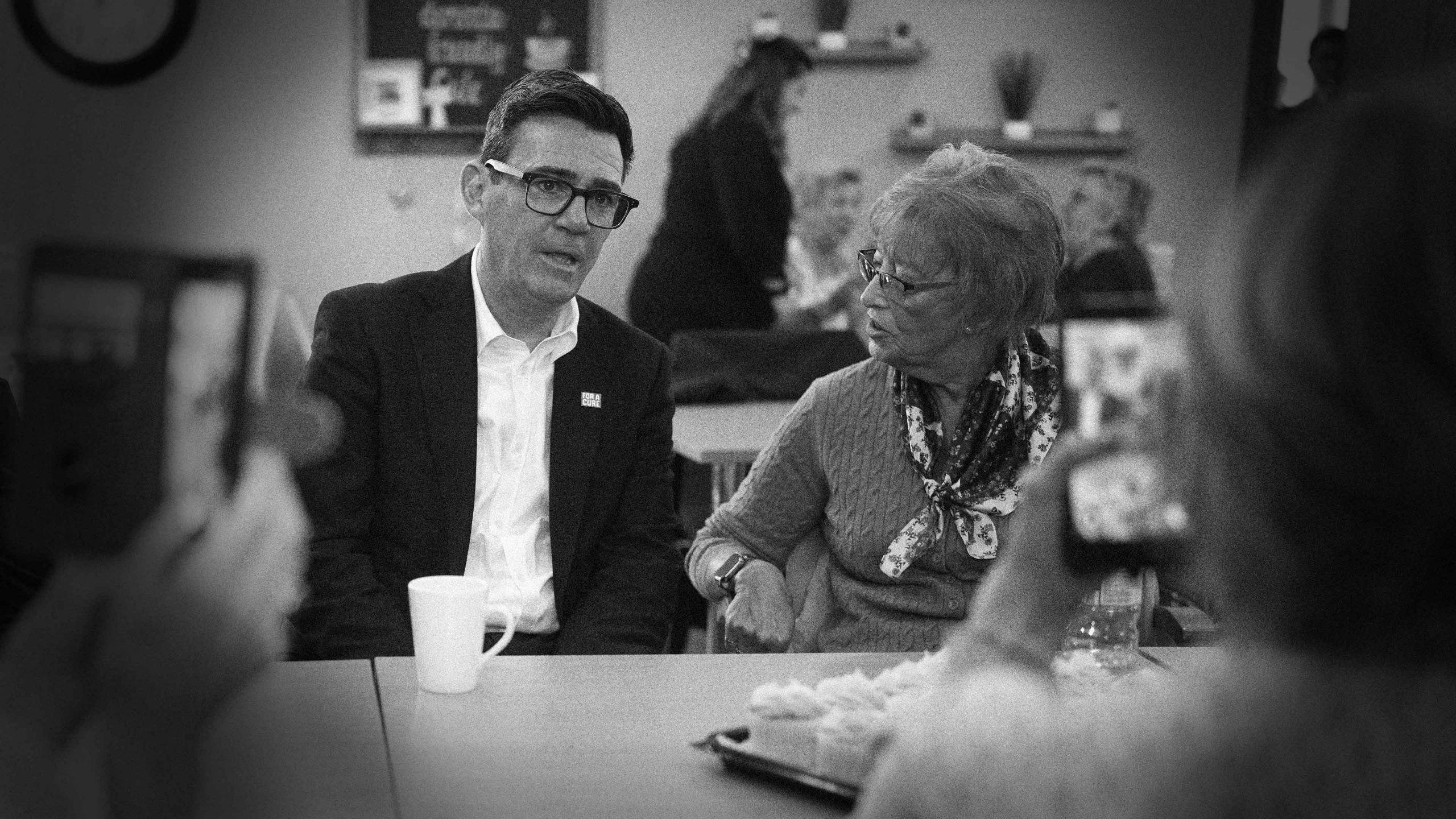
So when Andy Burnham told the Labour party conference that the National Care Service he wants would be “about people, not profit” and would protect “people’s homes and their savings”, he was not the only person choking up in the hall.
But what would a British NCS look like? Expectations are high. Yet even Denmark, which has the most generous social care system in the world, does not provide everything free at the point of use. People still pay for accommodation in residential care.
The PM is waiting for the chair of the Commission on Social Care, Louise Casey, to report back next year. Baroness Casey, who led the grooming gangs inquiry, is a force of nature: plain-speaking and determined, she told a King’s College London event in the summer that it was time for reformers to put their differences aside and pull together. So far, the Commission’s website is just an invitation for people to share their experiences. But the PM has already hinted at limits to the state’s generosity when he said the NCS would be for “older people”.
Around 300,000 younger disabled people also have personal care needs. “They represent about half the council spend,” says Camilla Oung, a fellow at the Nuffield Trust. When Scotland first introduced free personal care, it did not include under-65s, but that changed in 2019 after a campaign led by the widow of Frank Kopel, a Dundee United footballer who suffered from vascular dementia. “It did feel like it was an inequity in the system,” says Oung.
In his speech, Burnham said care would be “free at the point of use” with “no care charges paid out of your basic state pension.” That goes considerably further than previous promises. The Conservative government had planned to limit the amount anyone spent on personal care at £86,000, but that cap was postponed in 2023 and scrapped by Labour the following year.
Suggested Reading

It looked like a mental health victory. The truth was different
At this point we get into an awkward issue that Scotland has also had to confront. What exactly is personal care, and what isn’t? In Scotland, Oung explains, “‘personal care’ refers to all the activities that pertain to your personal hygiene” – bathing, continence and providing food. But support outside the home doesn’t count, and nor does laundry or housework. Taking someone shopping or to a community centre is not part of the free offer and is still means tested. Yet most people receiving personal care will also be unable to do these things on their own.
Then comes the question of how an NCS would be organised. If everyone is entitled to free personal care, a national body will need to set standards and assure it. But a radical rethink might ask whether councils are best placed to deliver it, or if new local bodies like NHS trusts should take it over. Would it be sensible to align the geography of NHS districts with care bodies so they can work together better?
A centrally funded system might reduce the pressure on councils, which spend more than 70% of their budget on social care. But Burnham is a fan of devolution and will probably not want to take responsibilities away from them. “A lot of that is in the hands of Louise Casey,” says Oung.
If Burnham makes personal care at home – however he chooses to define it – free at the point of use, what about the huge sums people currently spend on care and nursing homes? Would they be capped? Residential care costs an average of £1,535 per week in England if you are paying for it yourself, as everyone with capital of over £23,250 (£50k in Wales) must. Nursing homes are even more expensive.
People who are fully funded by the local council hand over all their state pension, apart from a personal allowance of £30 a week. The rest may have to sell their home to pay for care, depriving their family of much of their inheritance. Other people drop dead without needing a penny of social care. The outcomes are deeply unfair.
Capping the amount people spend on care homes would cost a lot more. But as Simon Bottery, a senior fellow in social care at the King’s Fund points out, it is a popular policy.
“England is extremely unusual in that people who are above a certain level of income get no help at all,” he says. “Only the US and us operate that kind of system. There’s nothing particularly radical in wanting the state to take on that level of funding responsibility.”
So if the state pays more towards residential care, should it become more involved in providing it – or at least managing it? “Burnham pointed to… an NCS that would be focussed on people not profit,” says Oung. “There might be a question about whether there ought to be a stronger approach to managing providers. There’s no regulation and no transparency about how costs are set in care homes. Private funding tends to be about 40% higher.”
Suggested Reading

The NHS has let women down. Now, social media is taking advantage
Bottery cautions against getting “caught up in the debate about profiteering. The great majority of care homes are not large conglomerates, they’re family businesses. The typical care home has 35 beds.” He says that in state-built homes in the US and Canada there are “very low levels of investment and provision”.
Crucially, abolishing the triple lock is not going to pay for free personal care at home, let alone a cap on residential care costs. The Institute for Fiscal Studies points out that the triple lock was unfunded anyway. Casey’s job is not just to establish what people want from an NCS, but how they might be prepared to pay for it.
“At the moment, the state system in England essentially spends all of its money on providing support for the people with the very highest needs and the very lowest assets,” says Bottery. If it offers more care, “then should we ask people with moderate assets to contribute? One way is an inheritance tax.” Another way, common in richer countries, is “some sort of levy on wages which is ring-fenced to go into a pool”.
In other words, another tax. “Designing that to be fair across generations and different population groups will need careful thought,” the Nuffield Trust’s Natasha Curry wrote recently, which is an understatement.
Still, Bottery says Burnham has made an “excellent start” by grasping the nettle. He now needs to stop it degenerating into “the kind of mudslinging” that has scuppered every previous attempt to care for people at the end of their lives.
 Most popular
Suella Braverman’s book has sold only 106 copies. This is why
The Brexit majority has gone for ever – rejoin now has a majority of 9 million

The mask has slipped – now we can see the real, shameful face of Reform

The riots in France are being stoked by Russia and Iran