We think we know how the 1960s changed Britain: the Beatles, miniskirts, the World Cup and sexual intercourse in 1963. Pop culture, fashion and sex are easy ways to imprint a decade in the imagination. But what were the ’60s like if you were not young, and didn’t live in a flat in Chelsea?
Most Britons led hard and often dull lives 60 years ago. But that does not make David Kynaston’s Deep into the Sixties any less absorbing. He pulls us into the minutiae of thousands of lives, some famous and others completely unexceptional. It is riveting.
The latest instalment of the Tales of a New Jerusalem series on postwar Britain covers just 18 months between January 1965 and the World Cup victory of July 1966. We see a society undergoing profound changes – some of which are already largely forgotten.
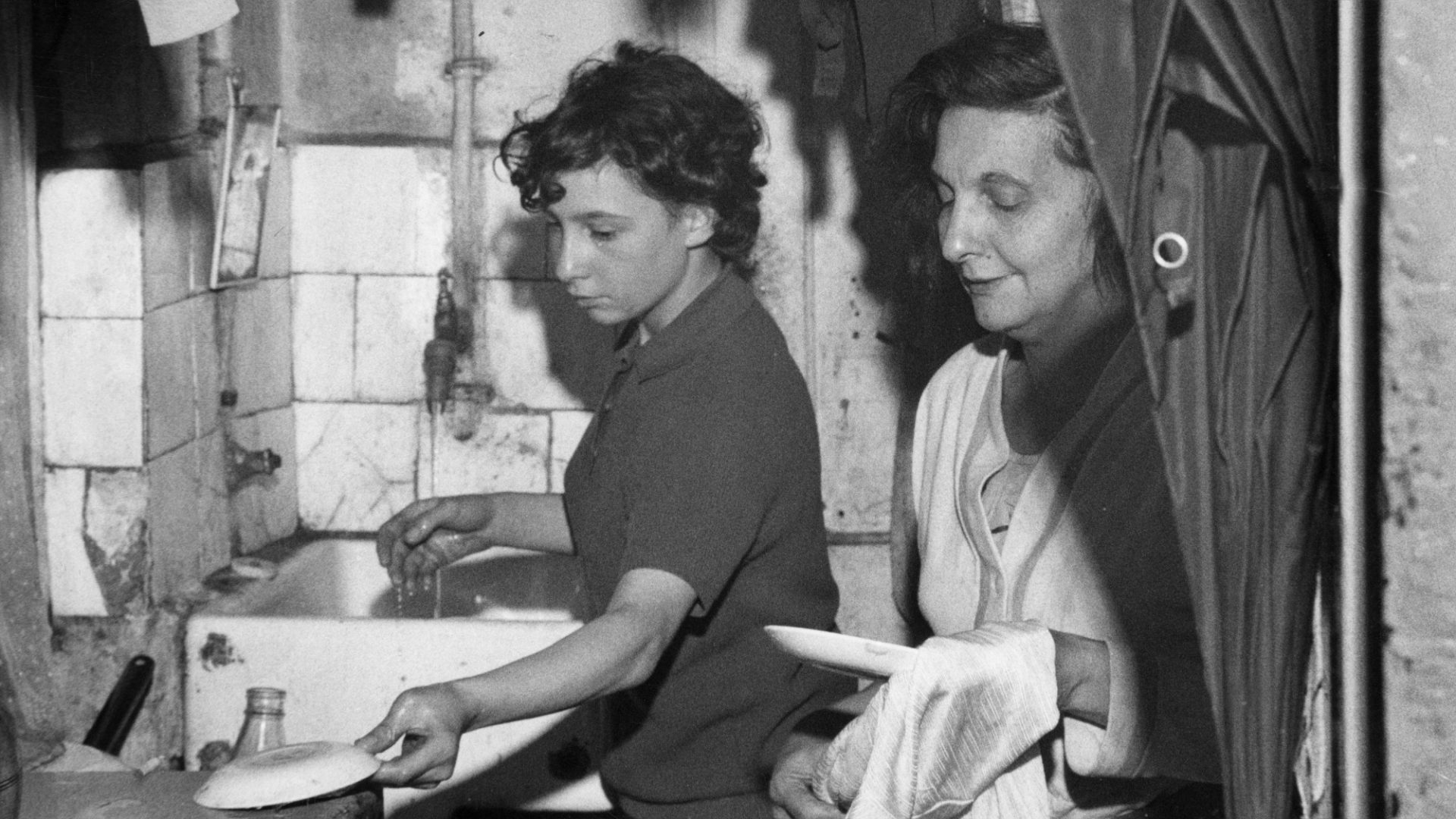
Damp and dingy terraced houses were razed to the ground and tower blocks sprang up to replace them. The long shift away from manufacturing was beginning. Grammars and secondary moderns became comprehensives, even as politicians carried on sending their kids to private schools. Immigrants from the Caribbean, India and Pakistan continued to arrive, and it became clear that many of them would stay.
“Some did treat us well at first but as more and more of us came here they grew less friendly,” a West Indian emigrant to Nottingham told a researcher. “And now most of them are against us.”
It was two years before Enoch Powell made his “rivers of blood” speech but Labour, to the disgust of some of its supporters, was already tightening immigration controls. “Shirley [Williams] thinks that race is going to be the dominant issue at the next election and is rather pessimistic,” wrote Tony Benn.
The racism of the mid-1960s was unapologetic and almost ubiquitous, the tropes that are hinted at today voiced openly (“Coloureds stick together like flies”, said a London bus driver).
Suggested Reading

Sky’s The Wargame might be prescient – but it’s also propaganda
These are not the stories we like to tell ourselves about those years. In an era when history is increasingly told through photos, film and even deepfakes, Kynaston still believes that words matter. He draws on hundreds of diaries, reviews, speeches and reports, piling quote upon quote to extraordinary effect.
The effect is impressionistic, like turning the dial through long-wave stations on an old radio. Readers who find the semicolon annoying should avoid this book.
Pop music was changing British culture, but other kinds of entertainment were shifting too. In 1966 the Lord Chamberlain still had to approve every new play on the stage. Kynaston recalls the BBC’s determined attempts to introduce modern themes into TV and radio without disgusting some licence fee payers.
“I feel it would have been better to leave something to the imagination,” complained a receptionist after watching Up the Junction, a play about an abortion – illegal, as all of them were at the time. Nonetheless, 10 million people watched it.
London was sometimes swinging, the north much less so. Some people, like the agony aunt Virginia Ironside (“an endless round of miserable promiscuity… it often seemed more polite to sleep with a man than chuck him out of your flat”), were having a lot of sex, others hardly any, and the Pill was only for women in long-term relationships.
Some of the most affecting parts of Deep into the Sixties are about the suffering inflicted on gay men. A psychiatrist persuaded Peter Price to admit himself to hospital for “treatment”, where he was shown pictures of men in bathing costumes and repeatedly injected with a drug that made him vomit. When he was told that the next step was electric shocks, he fled.
But there was plenty of joy, too, and the final chapter is about England’s World Cup victory against West Germany, which would not even have made it to the front page of the next day’s Observer if a young journalist had not insisted on writing about it.
“People are crying. Grown men. Girls are removing their clothes and climbing up Eros,” said Laurence Marks.
And yet, looking up my then 27-year-old mother’s diary, the euphoria was not universal. She had gone to Manchester to watch the cricket.
“Old Trafford a fiasco. Only 1¼ hours’ play and no [Fred] Trueman in sight.” (She was fond of the Yorkshire bowler.) “Ground almost deserted and very wet. Listened to World Cup – Engl. won.” And that was it for the football. My father sulked on the way home.
One person’s trauma was another’s liberation, Kynaston reminds us. Some slum-dwellers couldn’t wait to move into a flat with central heating and running water. Others found it deeply painful to be uprooted from the streets where they were born. “I am against flats. Once you’re locked in, you’re locked in… Your privacy has gone… I’m frightened of heights.”
Some of the blame for the worst high-rises should go to modernist architects, who were more interested in creating new landmarks than in the people forced to live in them. But Kynaston, like Margaret Thatcher, argues that the planners of new city centres like Bradford were even more guilty. They barely thought about how people moved from place to place, and cared especially little for women’s lives.
All this was happening as the UK faced new competition for exports, inflation rose and Harold Wilson agonised over whether to devalue the pound. There were strong arguments to do so, but the influential papers were persuaded not to discuss it, “in effect a conspiracy of silence”, says Kynaston. Wilson ended up doing it anyway in 1967.
Suggested Reading

The strangely comforting Britain of Strictly Come Dancing
Poignant, revelatory and enormous fun to read, Deep into the Sixties melds the cultural and the political in a way very few historians manage. “The old certainties are never coming back,” writes Kynaston (who was born in 1951) in the preface, “but it is indeed only human to regret the loss of the reassurance… an underlying stability, they once provided.” It is a rare lapse into nostalgia from an author who rarely allows himself to indulge in it.
And speaking of sexual intercourse in 1963, it is good to be reminded that Philip Larkin, brilliant poet though he was, held views about immigrants that would make Nigel Farage wince. No wonder there are so many things we prefer to forget about the ’60s.
Deep into the Sixties is published by Bloomsbury