It’s the kind of validation that only happens in Venice. Uzbek artist Vyacheslav Akhunov looked out from the balcony of the Palazzo Franchetti, where an exhibition celebrating his decades of work is being staged as part of this year’s Biennale, and watched a vaporetto emblazoned with his name puttering down the Grand Canal.
Why does Akhunov warrant such an accolade? His work is not the main event in the Uzbek pavilion. That is a multimedia exhibition called The Aural Sea, which examines the scandal of the Aral Sea, reduced from being one of the world’s largest inland lakes to a barren waste thanks to the then Soviet regime’s scheme to divert water to support the cotton industry.
But if that is the official exhibition, Akhunov is the story. For the best part of 50 years, his work went largely unrecognised, censored not just by the communist authorities but for many years after the country’s independence in 1991 by the autocratic first president, Islam Karimov, who ruled until 2016.
Only relatively recently has he been acknowledged as one of Uzbekistan’s seminal artists, a conceptualist, an illustrator and a subversive. The kind of original who made a video in 2007 using a toothbrush to clean the facades of institutions such as Tate and the Royal Academy to expose how poorly immigrants are treated.
Now, here he is at last, in a 16th-century palace once owned by an Austrian archduke, where his work, a catalogue of contempt for the “cadaverous smell of stagnation” that overshadowed so much of his life, is given full expression.
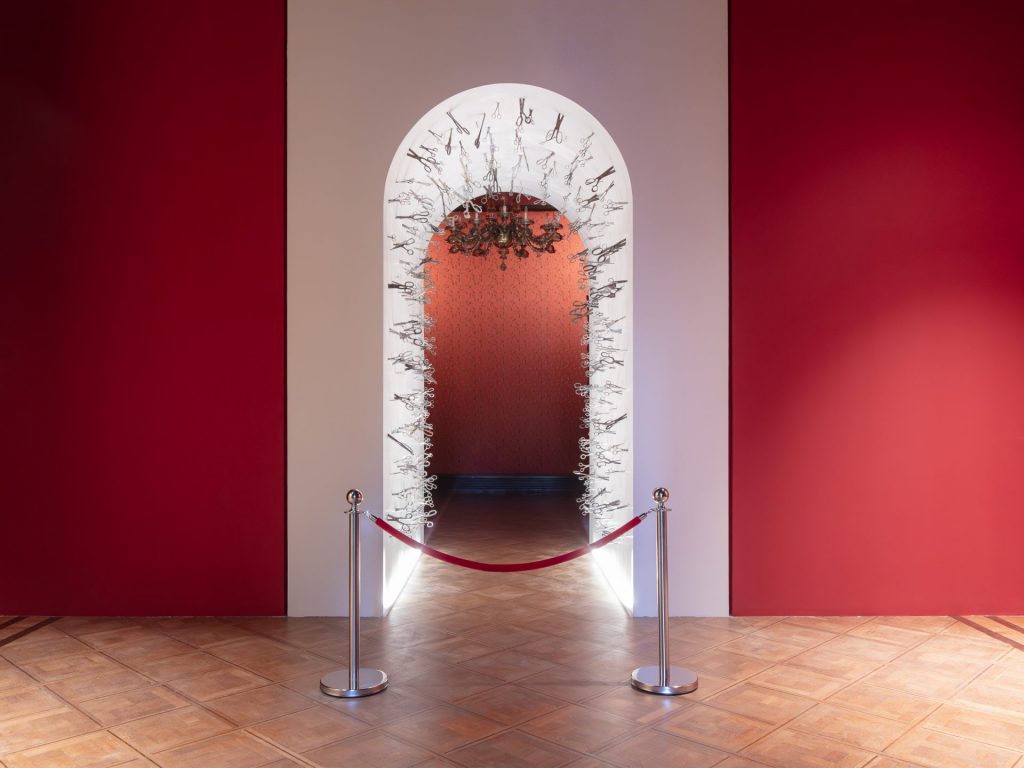
Images: ACDF/Andrey Arakelyan
It is ironic that Akhunov is getting his due in the year Russia has participated in the Biennale for the first time since 2022. Even a raucous protest by Russian anarchist group Pussy Riot failed to close down their country’s revived pavilion. Akhunov’s protests were altogether more subtle – they had to be – but just as effective.
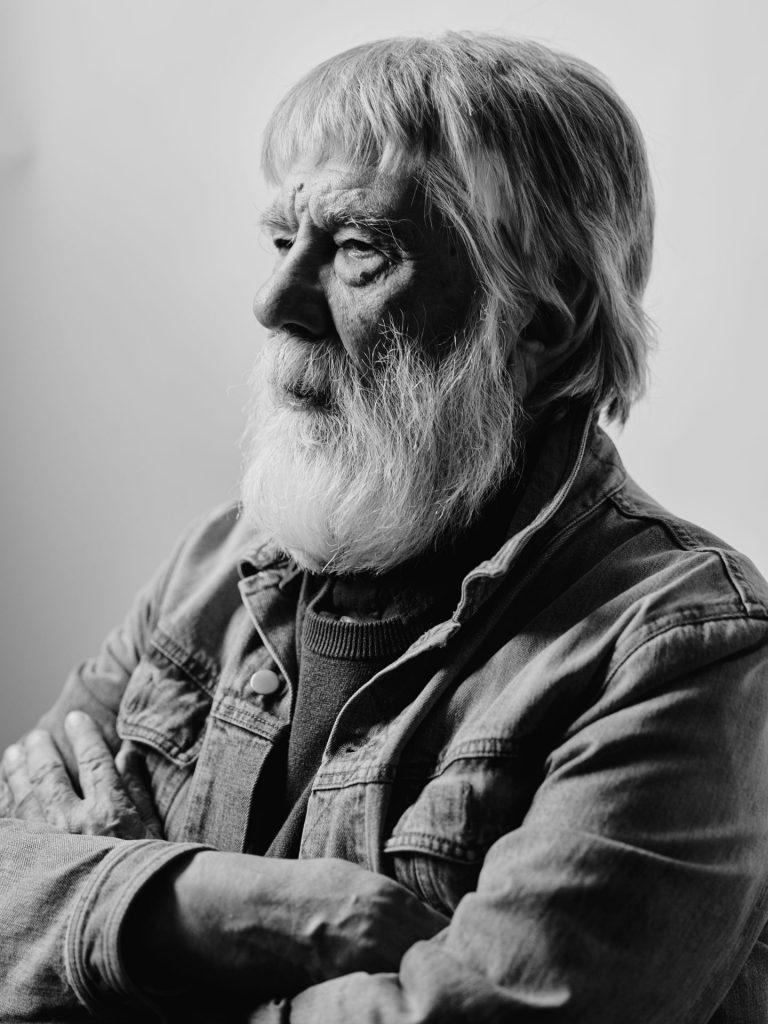
An exuberant 78-year-old, deep-bearded and with an infectious guffaw, he began his career at the Academy of Arts in Moscow in the early 1970s, where Socialist realism was the only school of art permitted. In his studio in a Soviet-era block in Tashkent, stacked high with canvases and drawers full of sketches and with the help of his protégée Ester Sheynfeld as translator, he recalled his early days with sardonic amusement.
Like most aspiring artists, his early work followed the party line – landscapes and stirring scenes of workers united in a common cause. After all, one has to eat.
He says that all changed one dramatic night in Moscow when he fought off a man trying to rape a woman. Akhunov and the woman later fell in love. She was older and wiser, an “updated woman” from Helsinki, who opened his eyes and ears to the freedoms of the west, like the Beatles, Jimi Hendrix and Bob Dylan.
She introduced him to the non-conformist artists who founded the Moscow Conceptualist group and gave him a glimpse of the possible by taking him to one of their exhibitions held in the Pavilion of Beekeepers, an event reluctantly permitted by the authorities who nonetheless used all sorts of intimidation to discourage participants, including entry regulated by the police.
Suggested Reading
Quentin Blake’s marvellous museum
Drafted into national service, he spent his time decorating the barracks and dutifully churning out propaganda posters, a marked improvement on the square-bashing his comrades endured. A grubby uniform hangs in the studio in ironic testimony to those dark days.
The work that mattered to him, the work that would be censored, he hid “under the desk”, only sharing it with those he trusted. Now he is sharing the work from those years of resistance with the world, an inspiration to a new generation of Uzbek artists who are beginning to find their voice after decades of suppression.
Leading the renaissance is the Art and Culture Development Foundation (ACDF), founded in 2017 under the leadership of Gayane Umerova. Uzbekistan’s first biennial was held in Bukhara, a city of gleaming domes and blue-tiled minarets, which was razed to the ground when the Bolsheviks invaded in 1924. A new Centre for Contemporary Art opened last year in a converted tram depot in Tashkent, though an exhibition planned for this year had to be postponed because of war in Iran.
The ACDF is developing young artists and has launched a programme run by the British King’s Foundation School of Traditional Arts to revive the ancient skills that over centuries transformed Uzbek mosques, palaces and tombs into glorious works of art that the Soviets did their best to obliterate, using white paint to obscure references to Islam.
Akhunov is at the pivot of that defining moment. A creative force whose life and work confounds the dismissive judgment of his professor all those years ago that “there is no art in Uzbekistan”.
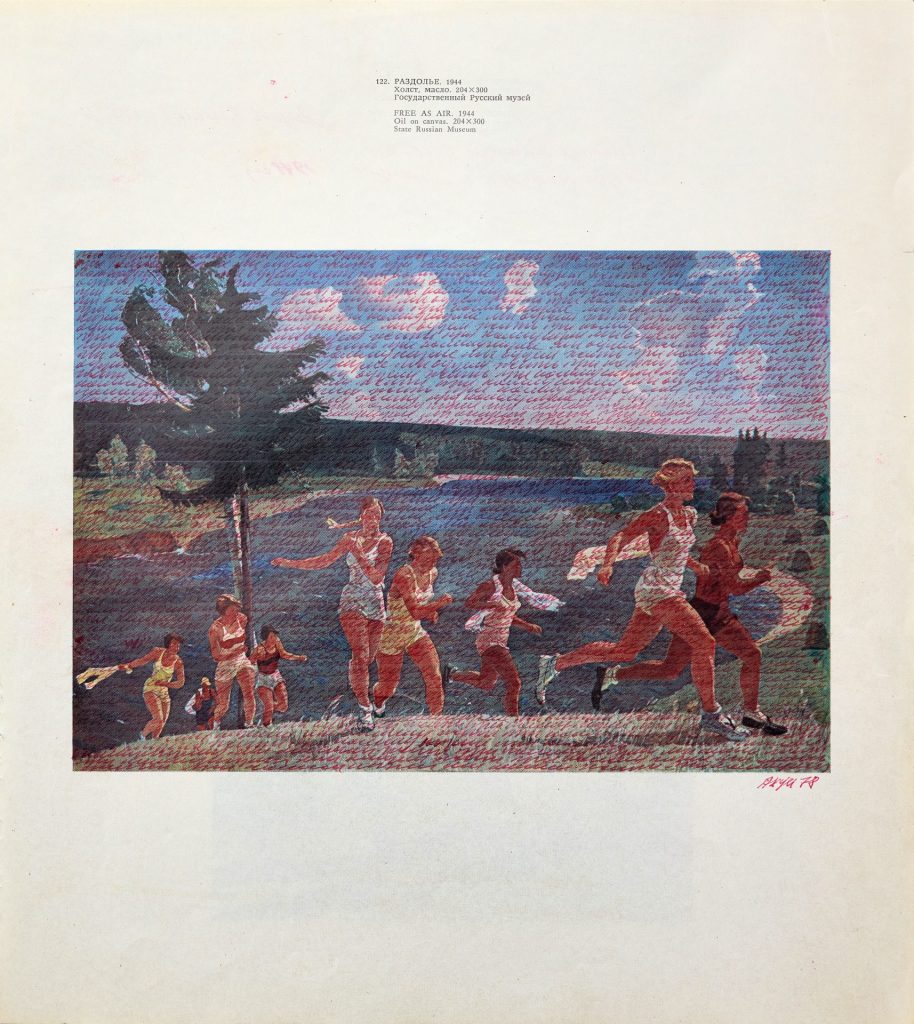
Take the vaporetto: on its sides and on the roof, young girls in the shorts and singlets typical of Soviet youth organisations run against a backdrop of lines of cursive calligraphy that read “We Will Live Under Communism”. This is just one of hundreds of “mantras” that Akhunov drew to satirise the portentous rhetoric of 1970s communism by taking images of Lenin and company urging the proletariat into permanent revolution, and superimposing them against their own slogans: “The Communist Party is the mind, honour and conscience of our era.” Or: “We can and must combine the methods of ruthless retribution against the capitalists and raise the revolution to the true threshold of socialism.”
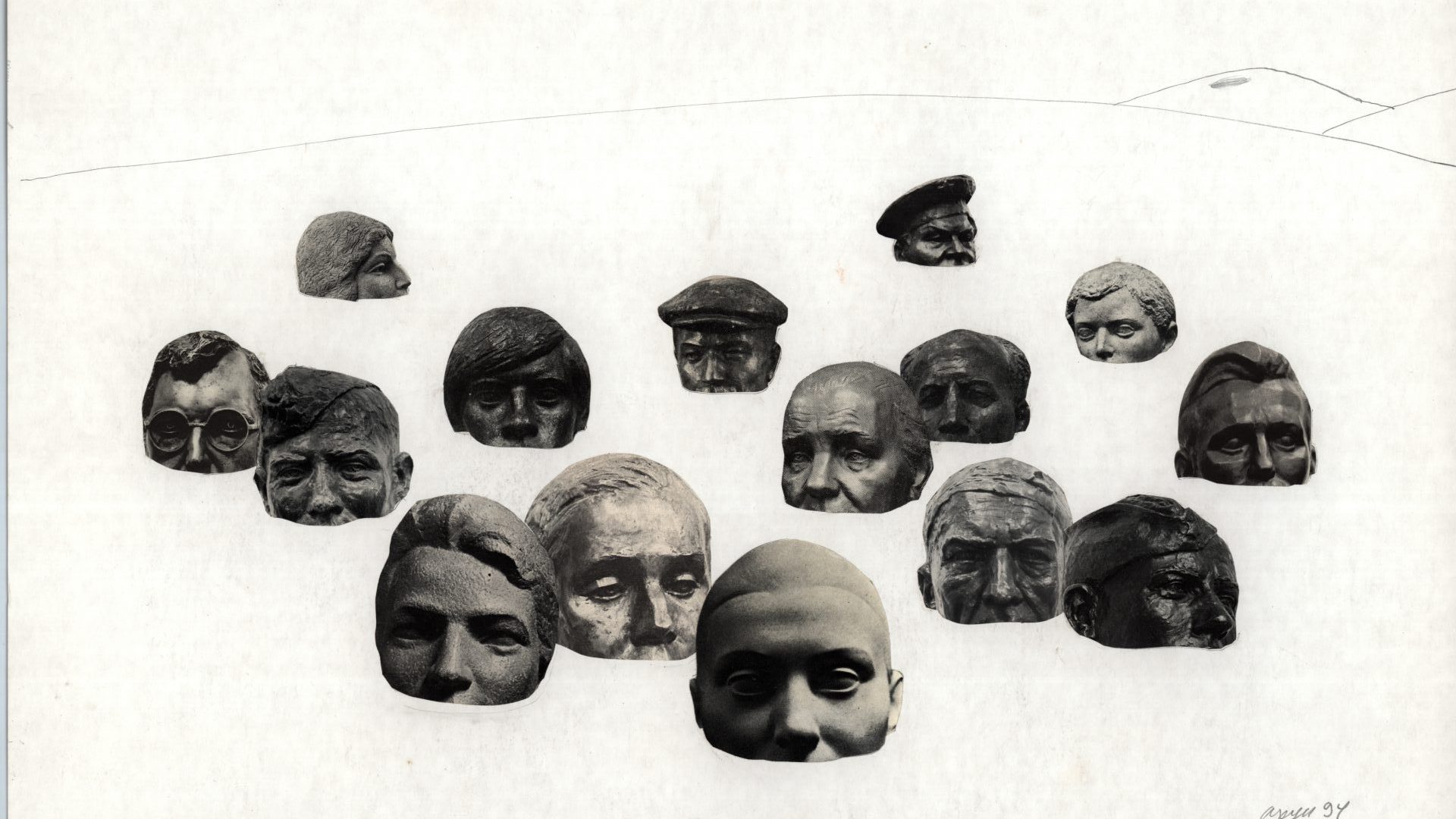
In a series, Desert of Oblivion, disembodied heads and clutching hands reduce the same powerful men to supine mediocrity. The slogan: “Quicksand. Silence. Submission.”
Akhunov drew mantras on newspapers, jam jars, even incorporating them into sewing patterns, and set colourful images of a Soviet nirvana – happy families, eager students, willing workers – against the sarcastic slogan “The Victory of Communism is Inevitable”.
Suggested Reading
How Giotto woke up art
He reflects on the past with a collection of family photographs. Faces are often removed or torn in pieces to expose the tyranny of an era where dissenters, or ordinary innocent people, went missing.
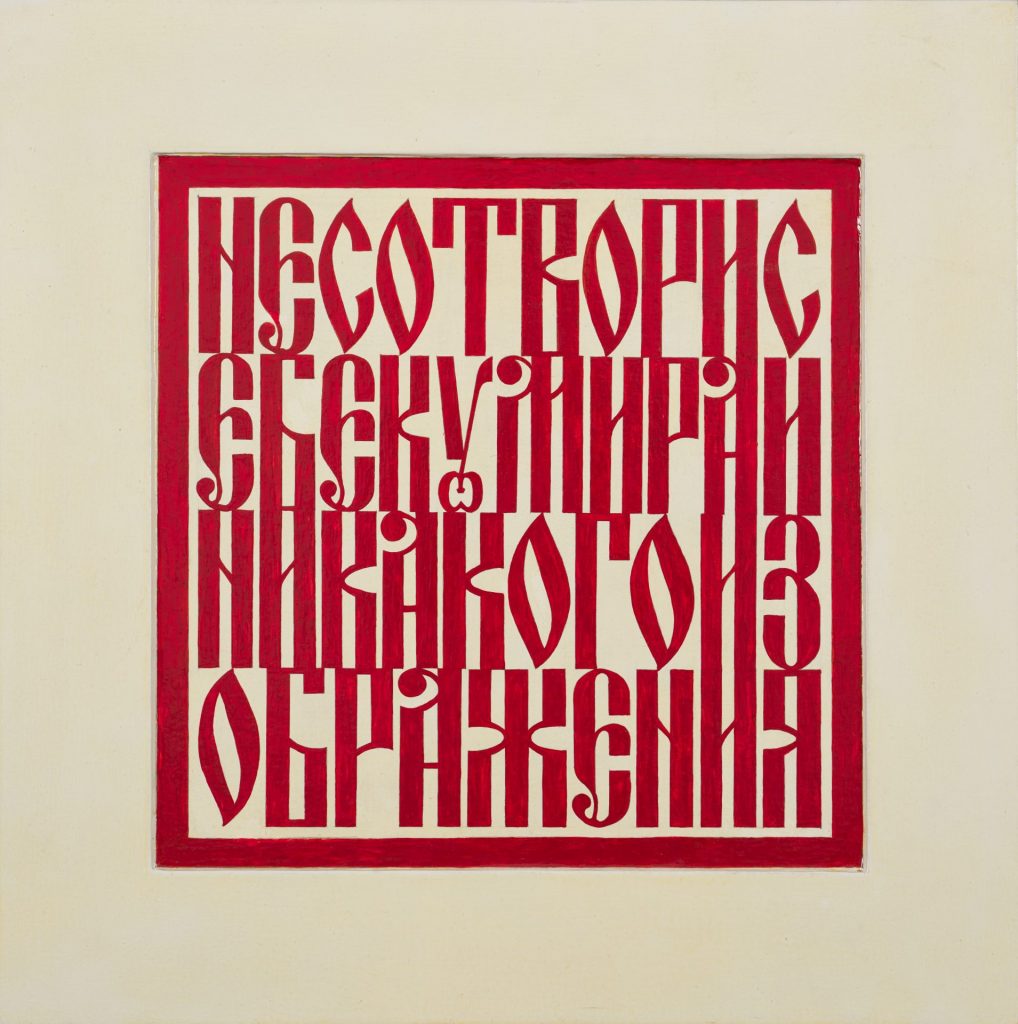
In the series Icon he created “anti-icons” to satirise the Soviet passion for portraits and sculptures of their leaders and their ideological slogans by using the techniques of that traditional religious form but without the canonical imagery. The densely decorative Cyrillic script reads: “Thou shalt not make unto thee any graven image.”
This huge repository of Akhunov’s work is an inspiration to Sheynfeld, herself an artist who contributed to the previous Biennale. She is typical of the new freedoms that artists now enjoy in Uzbekistan. She says: “I can tell you that Vyacheslav tried to make me as free as possible – so much so we have too many arguments. He doesn’t like it, but…”
I insist she translates that last bit to Akhunov. He laughs uproariously. Young and old, they are united in the freedom to express themselves. Now there is no need to hide their work under a desk.
The 61st Venice Art Biennale runs until November 22