There were rumours of kebab at Erzurum. Twenty four hours into a 29 hour rail journey, with only dry snacks and some tinned tuna on Ryvita, the thought was hard to shake. The train manager called a friend who owned a restaurant near the platform, but even in my rudimentary Turkish I could tell the news was bad. Closed for Eid.
I returned to my couchette and deliberated over which protein bar to eat next. Then the train manager appeared again. He could cook me some kofte, if I liked? For a sleeper train that no longer served hot food, I have no idea what I did to deserve this.
Why take a two hour flight from Istanbul to Tbilisi when you can instead take 60 hours to do the journey? The Dogu Express – dogu is Turkish for east – runs 800 miles daily between Ankara and Kars, in Turkey’s far north east. From Kars, it’s a two-hour drive north to the Georgian border.
After an initial five hour train from Istanbul to Ankara I wandered to Kavaklidere, the embassy quarter, with its mid-century apartment blocks and wine bars. I found a Korean restaurant, which was surprisingly good. I walked around for a few miles, knowing it would be my last chance of a stroll for a while, before boarding at Ankara station.
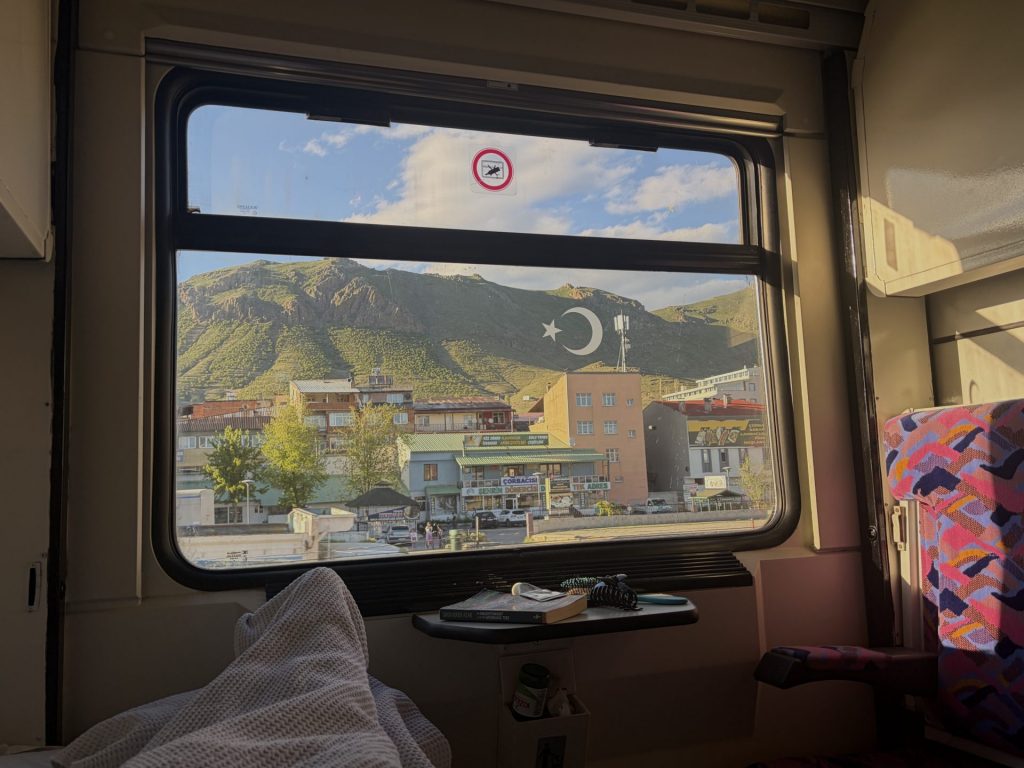
The train climbed through the city’s outskirts of squat hills, lonely petrol stations and power lines before banks of crimson poppies and daisies took over along the tracks. Two hours later the sun set and peering into the darkness against the window etched with an Ottoman crescent moon and star, I could make out occasional lights from houses on the horizon.
Comfort is not the point. There was just one western style toilet on the train and for most of the journey it was out of service. The alternatives were holes in the floor and judging by the state of them, many passengers had struggled with the concept. Attempting to use one as the train swung around bends felt rather like taking evasive action under fire.
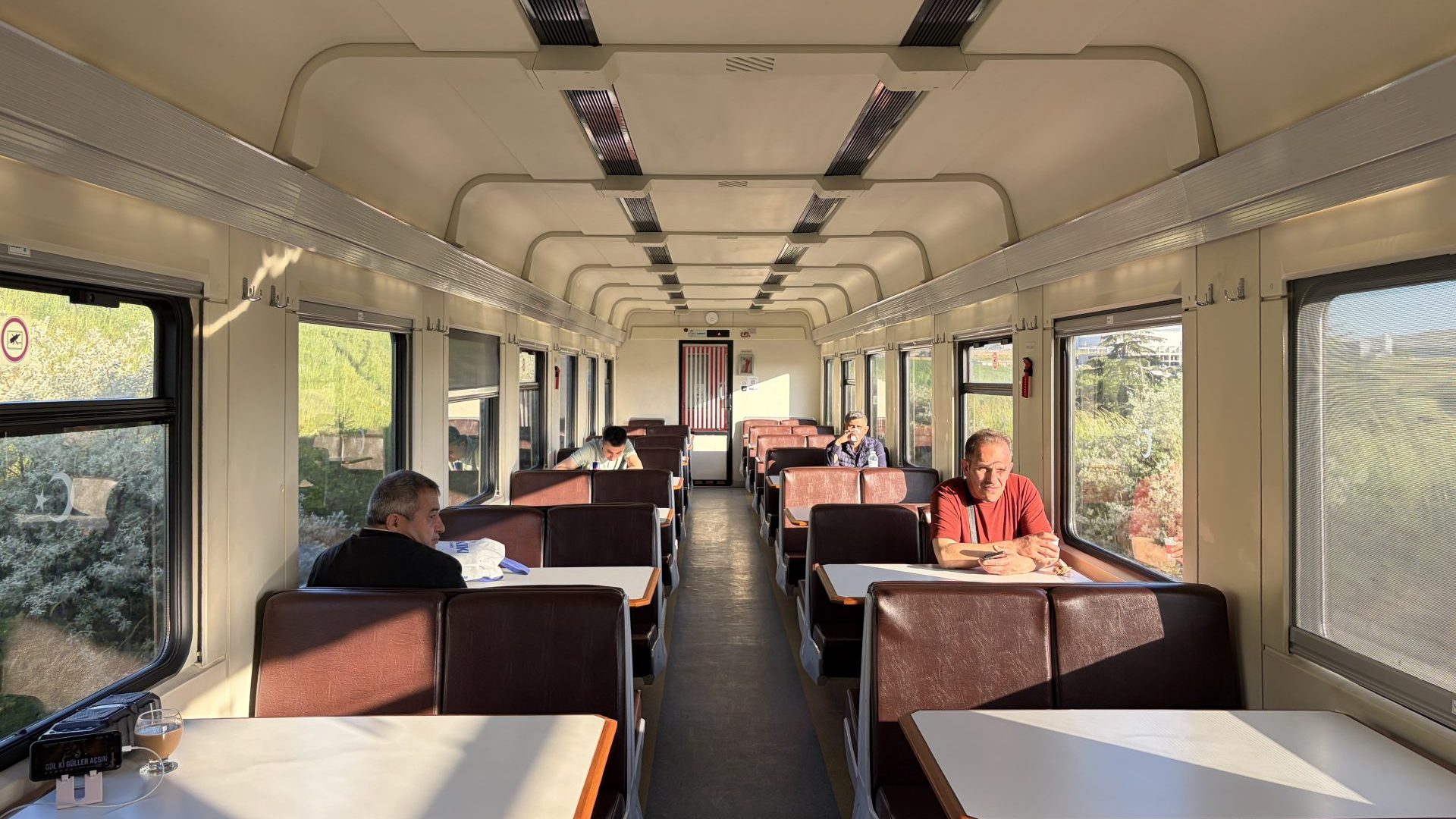
Seats were upholstered in garish, scratchy 90s purple fabric and my couchette neighbour started smoking whenever the train manager made himself scarce. The sheets were freshly laundered, though and the views and serenity made up for everything else.
The train line is older than the republic that runs it, with the oldest section laid in 1899 when Kars was still a Russian imperial outpost. The founder of the republic of Turkey – Ataturk – inherited most of the rest of Turkey after 1922.
A hundred years on, Ataturk’s secular legacy is wearing thin. No alcohol is served onboard and mixed gender parties are forbidden from booking individual bunk spaces in a shared couchette, unless they’re immediate relatives. An unmarried couple can get around this by booking out the entire four bed compartment privately.
I hadn’t downloaded a single podcast or TV programme and had chosen instead to watch 850 miles of Turkey unfurl through the window, which turned out to be more than enough. There’s a particular magic to waking in a couchette, going to the next carriage for a coffee and not entirely knowing where you are, only that the hills outside have changed again. A minaret would appear briefly above hedgerows and vanish. Flocks of goats appeared from nowhere. A solitary farmer.
The stretch from Sivas to Erzurum required 138 tunnels through the Eastern Anatolian plateau, coming so frequently it was impossible to read more than a few sentences of my book before the light dropped out again. At Sivas the gorge walls closed in, sheer and rust red, the river running chalky beneath us.
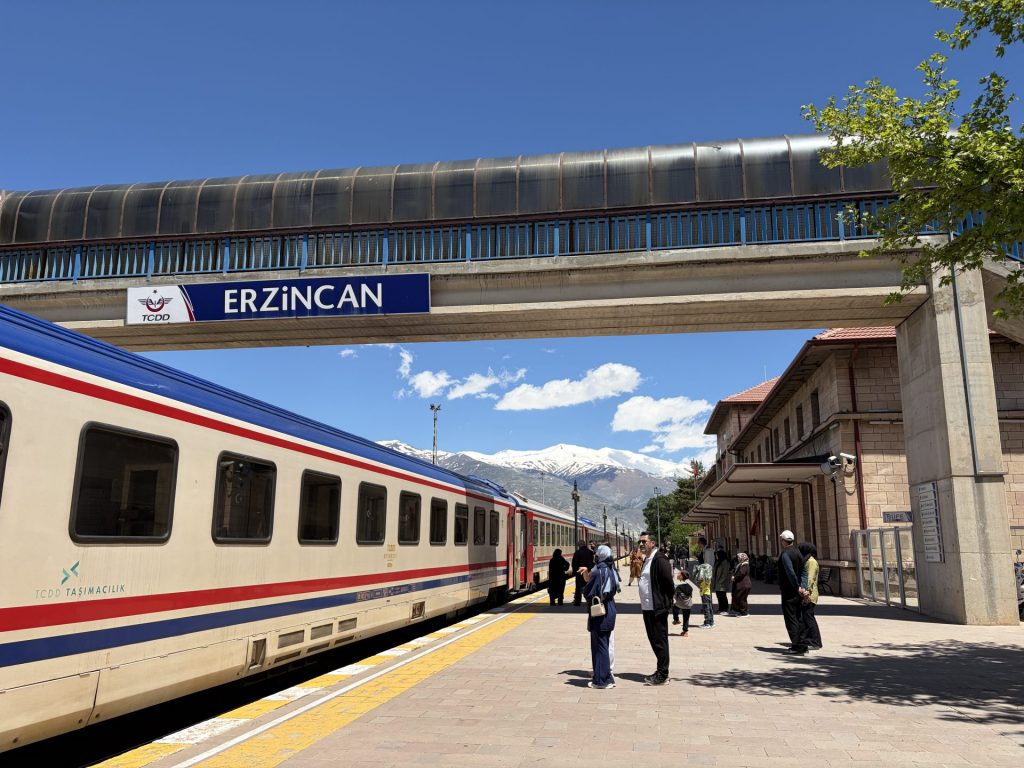
At Erzincan the Euphrates appeared, broad, tea-coloured, already beginning its long journey south through Syria and Iraq, and pressed tight against the tracks, the cliffs rising until you could barely see sky. Valleys widened into empty plains, lapped on all sides by snow-capped mountains.
By Erzurum we’d climbed to nearly 2,000 metres and were afforded the privileges of stretching legs and fresh air. Later, evening light turned the clouds peach and copper above impossibly green stretches before darkness swallowed the last leg and we arrived late to Kars.
The logical next step would be to continue by rail. For years, officials have promised a passenger service on the Baku-Tbilisi-Kars railway, the freight corridor linking Turkey, Georgia and Azerbaijan that forms part of a modern Silk Road that can move goods from China to Europe in as little as 12 days. Yet despite repeated announcements, no passenger timetable has been published and no launch date confirmed.
Suggested Reading
Why it’s better to travel alone
The more direct railway through Armenia has been closed since 1993, when Turkey shut its border in support of Azerbaijan during the first Nagorno Karabakh war. There is renewed talk of reopening regional transport links as relations between Ankara and Yerevan slowly improve, but for now Kars remains the end of the line and a taxi into Georgia the only realistic option.
As we drove north the next morning, the fabled Mount Ararat appeared to the southeast. At 5,137 metres it’s visible for over 60 miles and it towers over the Armenian capital, Yerevan. Armenians consider it sacred and regard it as the resting place for Noah’s Ark. And on this clear morning the snow capped cone was floating above the plain as though disconnected from the earth. At first I thought it was a cloud, but then my driver pulled over so we could stare at it, before joking he’d need 200 lira for the privilege.
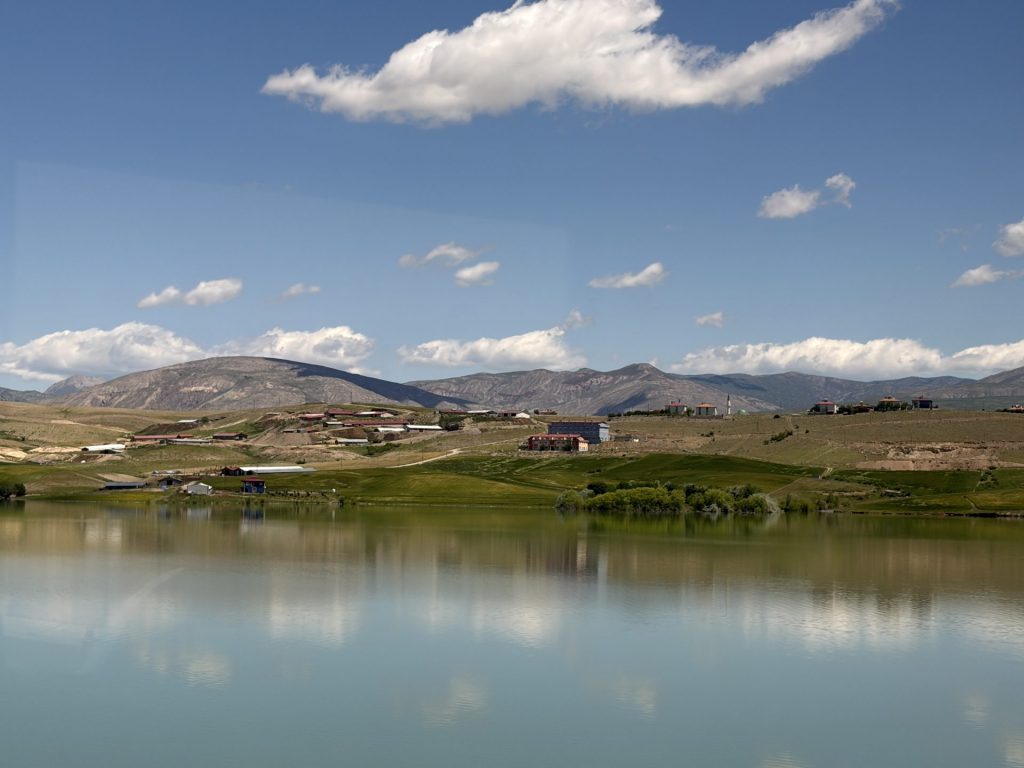
The road continues onto a plateau that feels like the end of the world, basalt steppe running flat and treeless under a wide sky, the occasional truck the only sign that anyone comes this way. Then Lake Cildir appears without warning – 47 square miles of flat water at 1,900 metres, ringed by bare mountains.
The Russians took Kars in 1877, the Turks got it back in 1921 and for the next seventy years Nato watched this border, with the Soviet highway on the other side just out of sight. The Soviets are gone now and the border gate at Aktas is eerily quiet, just trucks and no other passengers.
You cross and Georgia greets you with potholes deep enough to swallow a wheel. Through the Samtskhe-Javakheti plateau with its flat-roofed concrete buildings scattered across wide basins, Soviet-era infrastructure rusting quietly, snow still on the Lesser Caucasus peaks. This is Javakheti, historically Georgian and heavily Armenianised under Russian and Soviet rule. The Russian military base at Akhalkalaki is now closed. It was once the region’s biggest employer.
Then, almost impossibly, the bleakness clears and the Trialeti Ridge rises to 3,300 metres on the edge of the Algeti National Park, pasture and forest running all the way to the outskirts of Tbilisi. On a Monday evening, nearly 60 hours since I left Istanbul, the green grass was moving in the wind off the ridge and the light was going gold on the treeline.
Somewhere back in Ankara, Turkey’s courts were busy deciding who gets to lead the opposition. Out in Georgia, it felt very far away – which is, I suppose, exactly the point of taking the long way round.
 Most popular

My truly deranged encounter with Trump apologist Kellyanne Conway
The moral depravity of Robert Jenrick

Is this the real reason Trump keeps falling asleep in public?


Suella Braverman’s book has sold only 106 copies. This is why