The Royal Society in London was packed in late October with a room full of shellshocked mathematicians debating what future their profession has after the past several months of bombshell announcements by AI companies.
Anthropic, OpenAI and others have used their AI maths models to derive several genuine breakthroughs in the field, and in early October OpenAI dumped over 700 AI-generated papers on to the open-source coding site GitHub, in which the company claims there are solutions to some major mathematical problems.
Previously, OpenAI’s model had seemingly settled a question about the equations of fluid flow that had been identified as one of the Millennium Problems, for the solution of which the nonprofit Clay Mathematics Institute had offered a $1m prize.
One of the new papers contained arguably an even bigger revelation: proof of a problem called the quasi-Riemann hypothesis, which provides insight into how prime numbers are distributed along the number line. At the Royal Society meeting one of the world authorities on this field of maths, James Maynard of Oxford University, heralded the advance as “the most important result in analytic number theory for the past 100 years”.
The question confronted by the meeting, then, was stark: is there going to be anything left for mathematicians to do in the age of AI? “It’s likely there will be much more of this,” said Maynard. While it’s hard to forecast just what lies even six months into the future, he said, AI seems sure now to “usher in a golden age of mathematical discovery”.
The bottleneck is no longer finding proofs of conjectures like the Riemann hypothesis (although that full hypothesis has yet to fall), but in our understanding of what the machines are saying. Timothy Gowers of Cambridge University, a recipient of the “maths Nobel prize” called the Fields medal, spoke the fear out loud: “What should we do if AI no longer needs mathematicians?”
Because advances in maths revolve around statements that are provably true or false on the basis of rules as rigid as those of chess, it’s especially amenable – or vulnerable – to the machinations of AI. Mathematicians have been good at adducing which questions are important and have long used automated algorithms for checking alleged proofs for mathematical violations or inconsistencies.
Suggested Reading
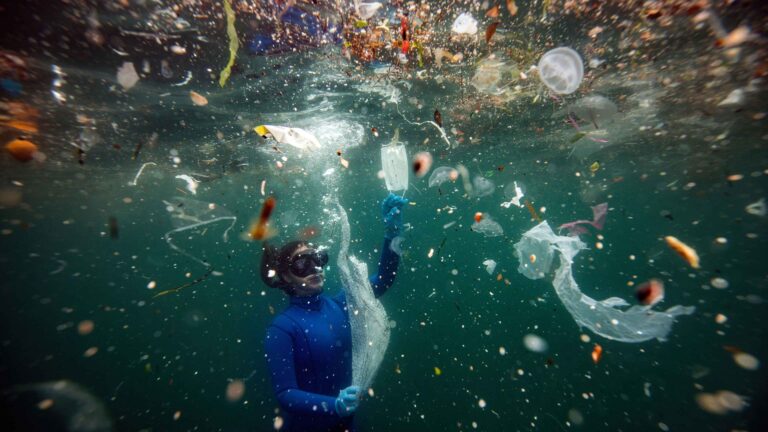
Saving the oceans at Brian May’s big science festival
The rate and ease with which AI models seem able to crank out proofs are forcing mathematicians to re-evaluate what they value in researchers: not proof-generation, but sense-making. It’s one thing to be confident that a proof is correct, another to figure out why.
One of the criticisms of OpenAI’s proof-dump is that it is inimical to the field: unlike human-generated papers, the documents from the company made no real attempt to explain or explore the implications of the results. One speaker compared them to the undigested notebooks of a maths genius.
Some of the proofs are probably technically correct but of little real importance or value. Whether this will change in the future remains to be seen, but for now the human skills in most demand will be concerned with exposition and contextualisation of computer-created proofs. Being the “first” to solve a problem won’t carry the kudos it used to.
Some bemoaned this cavalier offloading of the cognitive burden of understanding on to the community. Others went further, questioning the motives of the companies who seem to be using maths proofs as trophies of prestige rather than caring about the good of the profession.
When someone accused the companies of acting in bad faith, the audience burst into applause. “Maths is life-enhancing,” said Gowers. To hand it over wholly to machines would be folly, and not just because knowledge is power. It’s unclear that proving the Riemann hypothesis would have world-changing applications, but neither does composing a song or painting a picture. It’s time to ask what we actually want from AI, and from its makers.