Imagine the excitement of the British family en vacances pitching up at La Piscine in Roubaix, near Lille. Mum, smug to have effortlessly plucked the French word for swimming pool from the recesses of the GCSE mind. Dad in budgie smugglers after last year’s shenanigans over French trunks policy. Given that they’re already clutching a euro for the locker, it’s a whole new level of holiday hell to have to break it to the kids that this [pissing] piscine is actually an art gallery.
Still, the fact the place is free for kids is just enough to nudge everyone over the threshold. That and a whiff not of chlorine but of great artists you don’t really expect to see outside a capital city. Here in the town nicknamed “1,000 Chimneys” in its industrial past, reside the works of Picasso, Rodin, Dufy, Mondrian et al.
They are all very impressive, yet all in danger of being eclipsed by the radiance of the building’s Art Deco architecture. Originally the town’s grand municipal baths, the building took on a fresh identity as a museum and art gallery (officially La Piscine – Musée d’Art et d’Industrie André Diligent) in 2001.
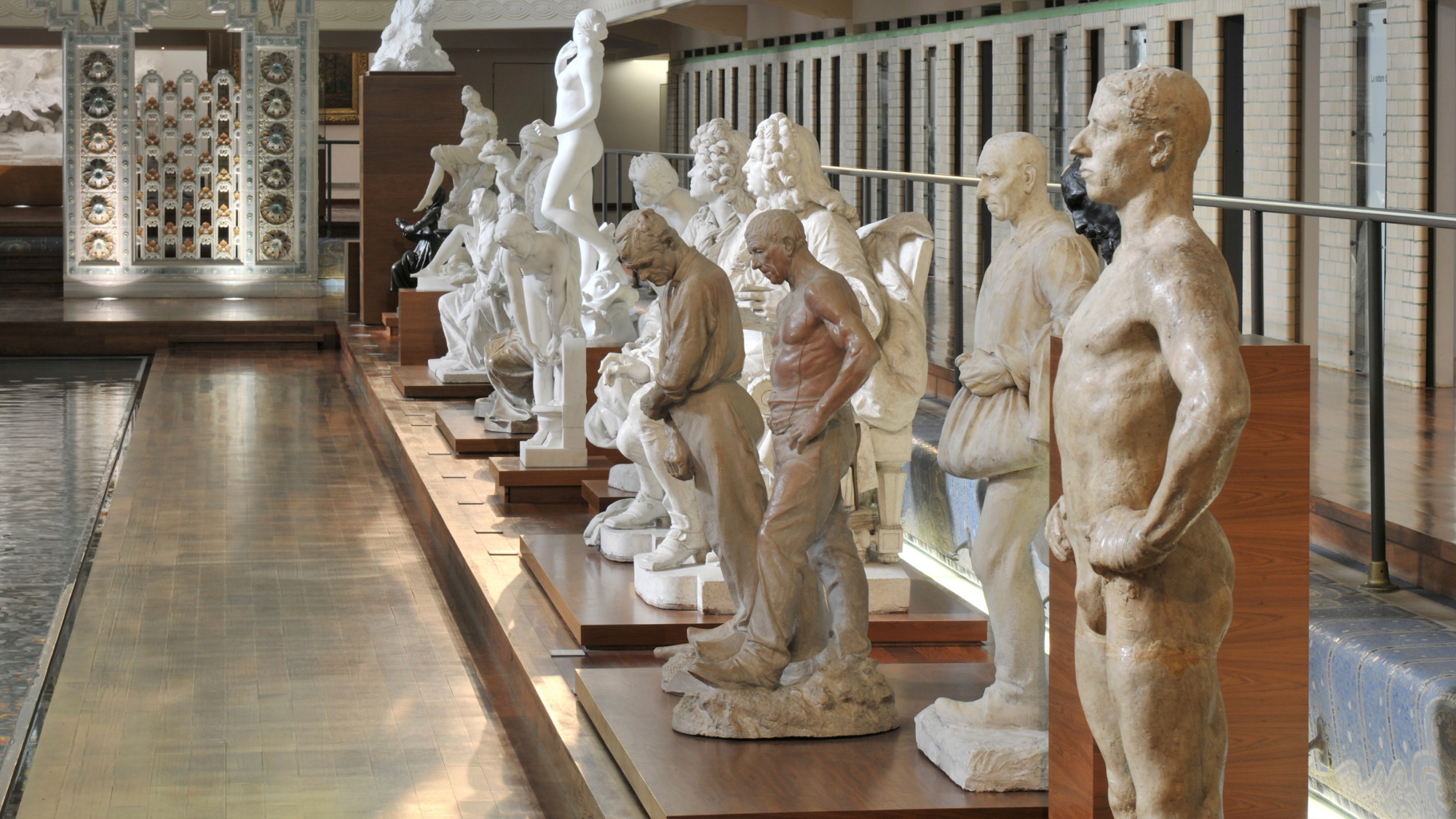
Now, past and present identities meet most dramatically poolside. When the arching stained-glass windows – one sunrise, one sunset – illuminate the statues, you can’t help but feel you’re looking at former lifeguards turned to stone.
Opened in the 1930s to cater for swelling numbers of workers during the textiles boom, the building of the baths was a three-pronged socialist project: to provide hygiene in a TB-dodging era of no domestic bathrooms; to provide recreation to counter the daily grind at the dawn of paid holidays for French workers; and to provide a thing of beauty to distract from the industrial backdrop that lent Roubaix a comparison with Manchester.
Clearly subscribing to the William Morris school of thought that buildings could be easy on the eye as well as functional, it was laid out like an abbey, complete with cloisters where workers could get a vital dose of sun and air.
Regardless of your opinion on whether all this was pure philanthropie or just a ruse to keep the workers out of the pubs, 50 years of health-boosting swimming and washing ensued. Then, as industry gradually collapsed, so too did the pool’s vaulted ceiling. Before long, one proposition on the table seemed as radical as it did reasonable: not to pull the plug entirely by bulldozing, but to repurpose by making it an art museum to house the town’s art collection.
Suggested Reading

Will Sam Sauvage cure Britain’s aversion to French pop?
For those whose art inclinations are the classical and the figurative, and for those who’ve clocked that from London by train it’s quicker to get to France’s Manchester than it is to the UK’s, Roubaix is worth the detour. There is an extensive collection of fine art paintings from the 19th and 20th centuries.
The collection extends into fashion, design and ceramics, reflecting the conviction of its first director, Bruno Gaudichon, that the applied arts should never play second fiddle to fine art. But arguably La Piscine’s crown jewel is its sculpture collection. Most eyeballed is La Petite Châtelaine by Camille Claudel, the five- or six-year-old sitter’s ambiguous expression all the more transfixing when you know something of the artist’s impassioned career and turbulent life twists.
Juxtaposing the museum’s orderliness is a reproduction of sculptor Henri Bouchard’s densely packed Paris studio, so convincing you half expect the artist’s own head to poke out from among the busts. Enjoy the small number of Bouchard bronzes you’re invited to touch (no heavy petting).
Yet for all the clout of its art, much space is left for the memory of what the building once was. To one side of the pool, a row of changing rooms unfurls a timeline of aquatic histories – each cubicle like a mini museum displaying everything from hireable swimming togs and a sessions timetable to the swimming progress booklet issued to each child.
“Ignore those who like to tell tall tales”, it advises. “It’s actually very pleasant to be in the water.”
As you wander around, if your ear thinks it’s detected a rowdy school trip, it’s mistaken. It’s a recorded soundscape of children having fun in the water.
Maybe your crestfallen kids entered the building wanting to do the same, but this might end up being a good move after all. Picasso, Rodin, Giacometti, Claudel and all the rest were all kids once.
La Piscine’s current exhibition Ni Dieu Ni Maître – Arts and Anarchy from Courbet to Banksy shows until January 24, 2027