
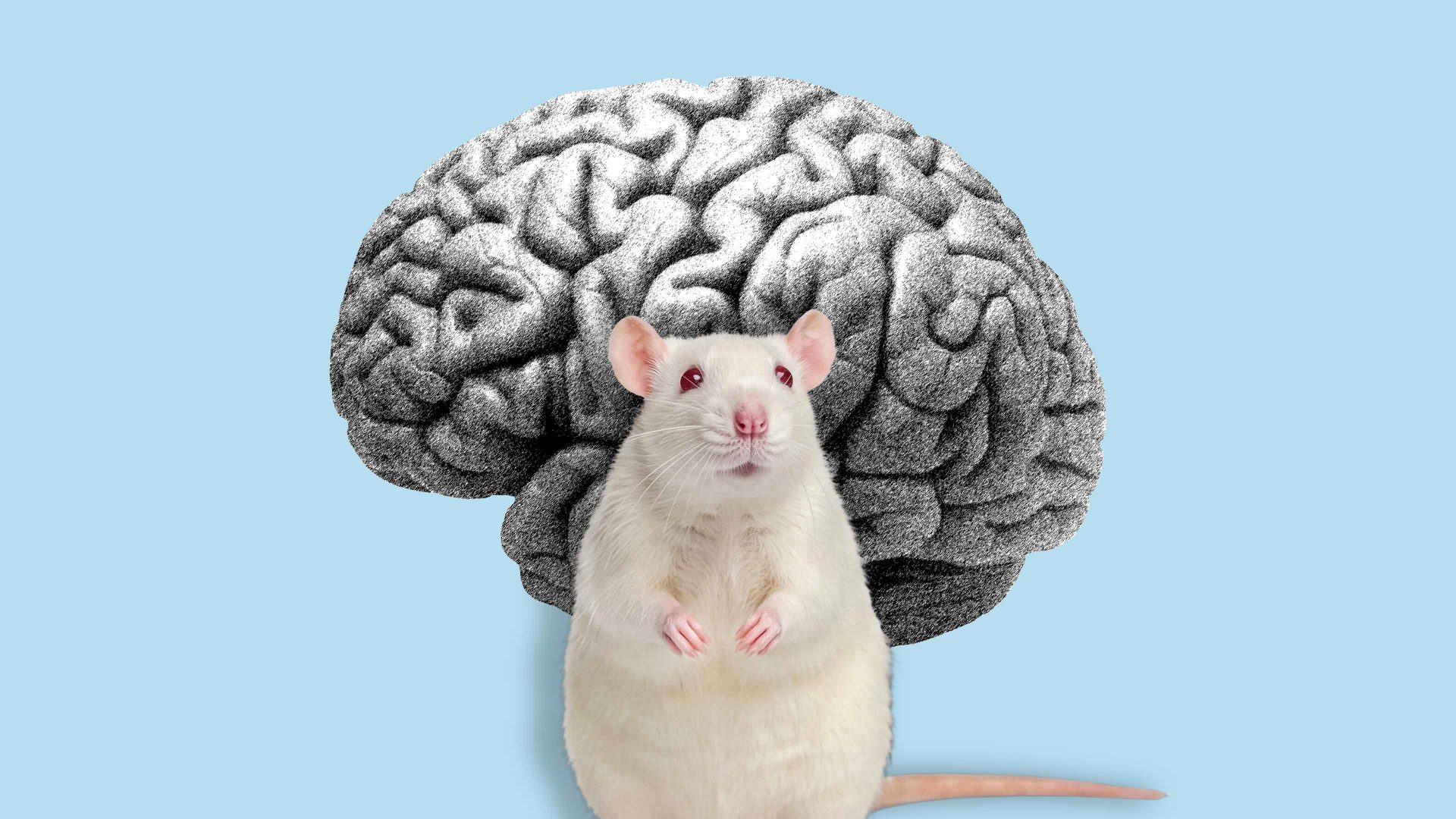
Growing a human brain inside a mouse sounds like the grotesque premise for a sci-fi horror film. But researchers at Stanford University have done something like it, and if you hear me out then I’d hope you’ll be less inclined to recoil from the idea.
First, it’s not really a human brain. But it is human brain tissue, grown inside the brain cavity of a mouse. The Stanford team transplanted human cortical tissue – the brain matter, composed of neurons, that is responsible for complex cognition – into the brain space of mouse pups just a few days old, having genetically modified the mice so the embryonic cells that would normally develop into the cerebral cortex did not form.
Over a period of a few months, the human neural cells proliferated to fill up the vacant space, occupying up to 90% of the brain cavity. They were able to wire up to the rest of the mice’s nervous system, restoring brain function so that the mice showed similar behaviour, for example in memory tests, to that of ordinary mice.
There is no suggestion the human neurons would be likely to make these mice – examples of so-called human-animal chimeras, containing tissues of both species – more intelligent, not least because the transplant happens so late in development, after birth. There’s certainly no risk in these experiments of a human-like awareness in a mouse body.
Why create this blending of human and mouse tissues, which some might find disturbing or repugnant? The researchers’ goal is to understand more about brain function and how it can go wrong. Scientists can’t ethically experiment on the brains of people with neurological conditions like cerebral palsy or dementia.
But they can find out what causes these diseases, and how they might be treated, by studying simple models of human brains. The Stanford team has already found that if they starve the human brain cells of oxygen while they grow – a problem thought to cause cerebral palsy in premature babies – the mice have difficulties with motor control resembling the symptoms of that condition.
The human cortical tissue used in the transplants was grown in a dish from stem cells bathed in the nutrients they need. In the right conditions, such cultured neurons will develop into lumps of tissue crudely resembling foetal brains (albeit not to a stage that could raise concerns about whether they might exhibit consciousness), called brain organoids. (I’ve had brain organoids made from my own skin cells – but that’s another story.)
But brain organoids in a dish can’t fully recapitulate real brain development because they lack the crucial signals that the rest of a developing body would supply to guide growth. This restricts their value for research. By growing human brain tissue inside a real body – even in miniature in a mouse – researchers might make more realistic “model brains” and get a better sense of how defective brain function can influence behaviour.
Suggested Reading


AI has made a genuine breakthrough
This trick of so-called xenografting – growing human cells inside other animals that have been engineered to lack the ability to make particular tissues or organs and thus creating a vacancy for the human cells to fill – has previously been explored for growing essentially human organs inside livestock animals like pigs and cows, for use in transplants.
As well as the instinctive aversion some might feel to such human-animal hybrids, there are important questions about animal welfare that demand careful ethical oversight, as was observed in the Stanford work. The medical potential of such work is clear, but it pushes at the boundaries of deep-seated taboos.