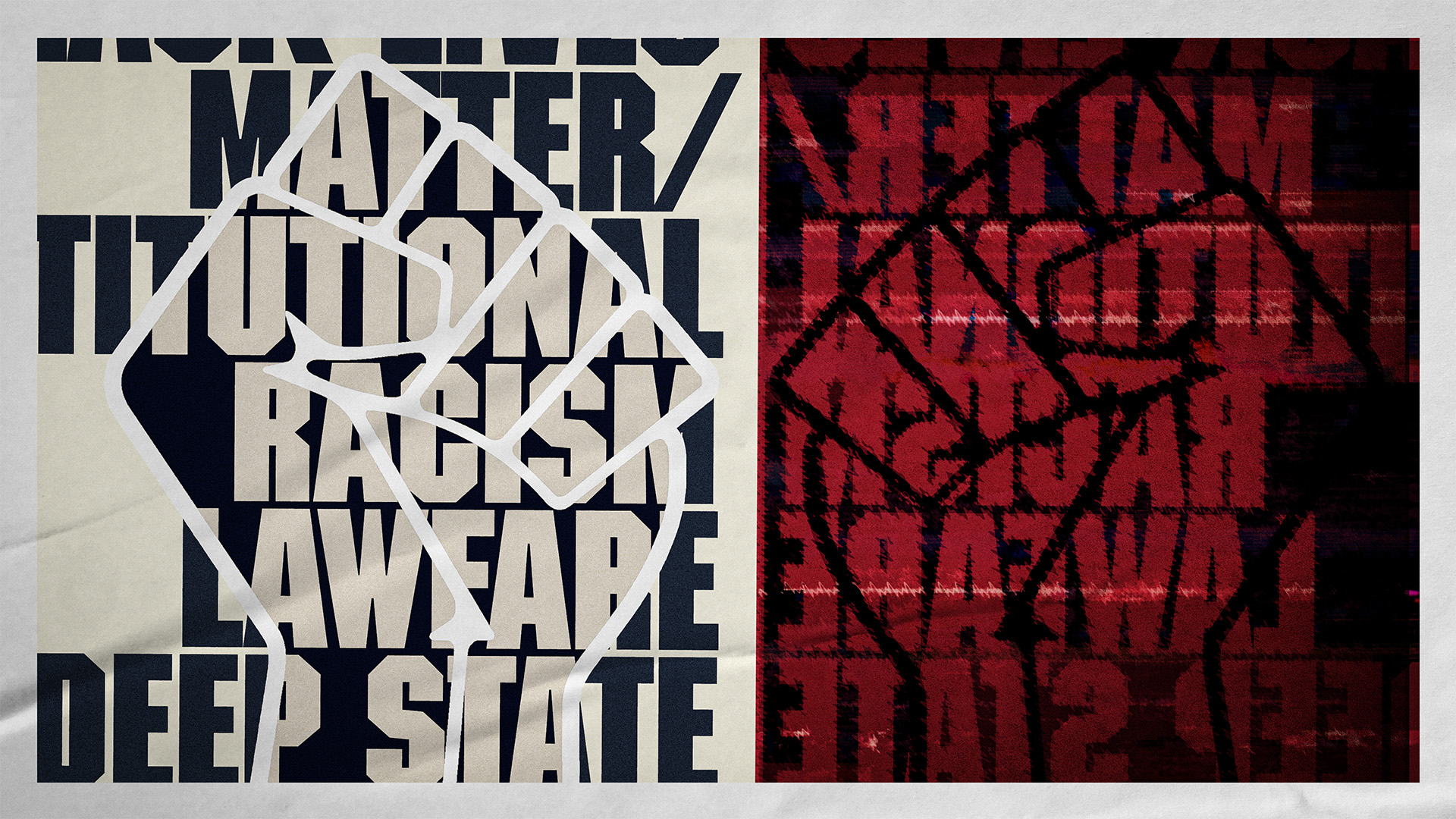
In advance of attending Tuesday’s protest outside Southampton Central Police Station over the murder of Henry Nowak, the far right agitator Stephen Yaxley-Lennon released a video on YouTube. He blamed the police’s disastrous failure to believe Nowak’s desperate insistence that he’d been stabbed on “institutional racism”.
As evidence, Yaxley-Lennon (aka Tommy Robinson) angrily read from the Hampshire Constabulary’s Race Action Plan, which he quoted as saying: “We will pursue offenders and deal with offences that cause the most harm to our ethnic minorities”. He didn’t read the sentence before this, which says: “We will protect all of our communities.”
And he objected to the assertion that the murder of George Floyd in Minneapolis was a “pivotal moment” – not only because it happened in America, but by falsely claiming that Floyd died of a drug overdose “in a legal hold by a police officer”.
But what’s striking is his use of the term “institutional racism” itself. This is an example of an increasingly common right wing agitation technique. Take a criticism created by your opponents – often as a way of challenging entrenched power – and turn it back against them.
Suggested Reading

Nigel Farage and the politics of murder
“Institutional racism” was coined by Black Power radicals in 1967 to identify subtle, deeply ingrained systemic prejudice. It was 32 years before it was embraced by the retired British High Court judge Sir William Macpherson, in his report on police failings in the murder of Stephen Lawrence.
As James Ball points out, those failures were far more severe – but why would that stop Robinson seizing the opportunity to flip such a potent term around? Even if the accusation doesn’t stick, reversing it like this may help to dilute its impact.
This tactic has a long history: you can see it in the allegations of black-on-white racism in Enoch Powell’s ‘rivers of blood’ speech. But more recently, it has been honed to a sharp point of efficiency in America. Think those who responded to Black Lives Matter protests over Floyd’s murder with the slogan All Lives Matter – as though the original phrase was ever intended to mean “only black lives matter”, not “black lives matter too”.
Suggested Reading

Our ‘pure cold rage’ should be at Farage and Robinson
The technique is visible again in the US at the moment, with President Trump seeking to funnel money to those convicted for attacking the Capitol on January 6, 2021 and others, on the grounds that they are victims of “lawfare”. This term – a fusion of ‘law’ and ‘warfare’ – has previously been used to attack the weaponisation of the legal system by oligarchs to intimidate journalists. But in recent years, Trump and his acolytes have sought to transform its meaning. Instead of using it to criticise the illegitimate use of the law by the powerful, they use it to criticise the legitimate use of it against the abuses of the powerful.
There’s no shortage of other examples. This repurposing can even be applied to such constructive ideas as “truth and reconciliation”. The phrase encapsulated South Africa’s great moral effort to account for apartheid’s crimes without retribution. But in the Financial Times last year, Palantir founder Peter Thiel used it to call for the federal government to be forced to reveal its secrets – such as whether “gain of function” research was really “a bioweapons programme”.
Likewise, the term “deep state” was popularised in the United States by a 2016 book by a disillusioned Congressional staffer named Mike Lofgren, who used it to denote ‘a hybrid entity of public and private institutions ruling the country according to consistent patterns in season and out’. These included the arms industry, Wall Street and Silicon Valley, as well as the National Security Agency.
Three of these are in the private sector – yet Trump was able to turn the term’s undoubted accusatory power on Washington DC’s put-upon civil servants. In his first term, he dealt with the accusation that he was spreading “fake news” by turning it against his journalistic accusers – even suggesting he invented the term himself.
But simply being aghast at this reversal technique isn’t enough. It can be turned back against its users. After all, many on the resurgent British hard right claim to be patriots, but visibly dislike a great deal about this country, and revel in support from the US. Witness not just their use of its techniques, but their sudden attempts to stir up the issue of abortion, which is long settled in the UK, and their MAGA-style complaints about “DEI”.
So – the left should re-appropriate the language of patriotism. Not by standing awkwardly near flags – itself a rather American way of doing things – but by calling out the far right’s fake patriotism and their fawning before a hostile foreign government.
But unlike the right, this should not be done in anger, or to worsen polarisation. Their performative outrage and manipulative reversals should be faced down in a much more British fashion: by taking the piss.
Phil Tinline is the author of Ghosts of Iron Mountain: The Hoax that Duped America and Its Sinister Legacy, out now in paperback.
 Most popular

Suella Braverman’s book has sold only 106 copies. This is why

The Brexit majority has gone for ever – rejoin now has a majority of 9 million
The mask has slipped – now we can see the real, shameful face of Reform


The riots in France are being stoked by Russia and Iran