
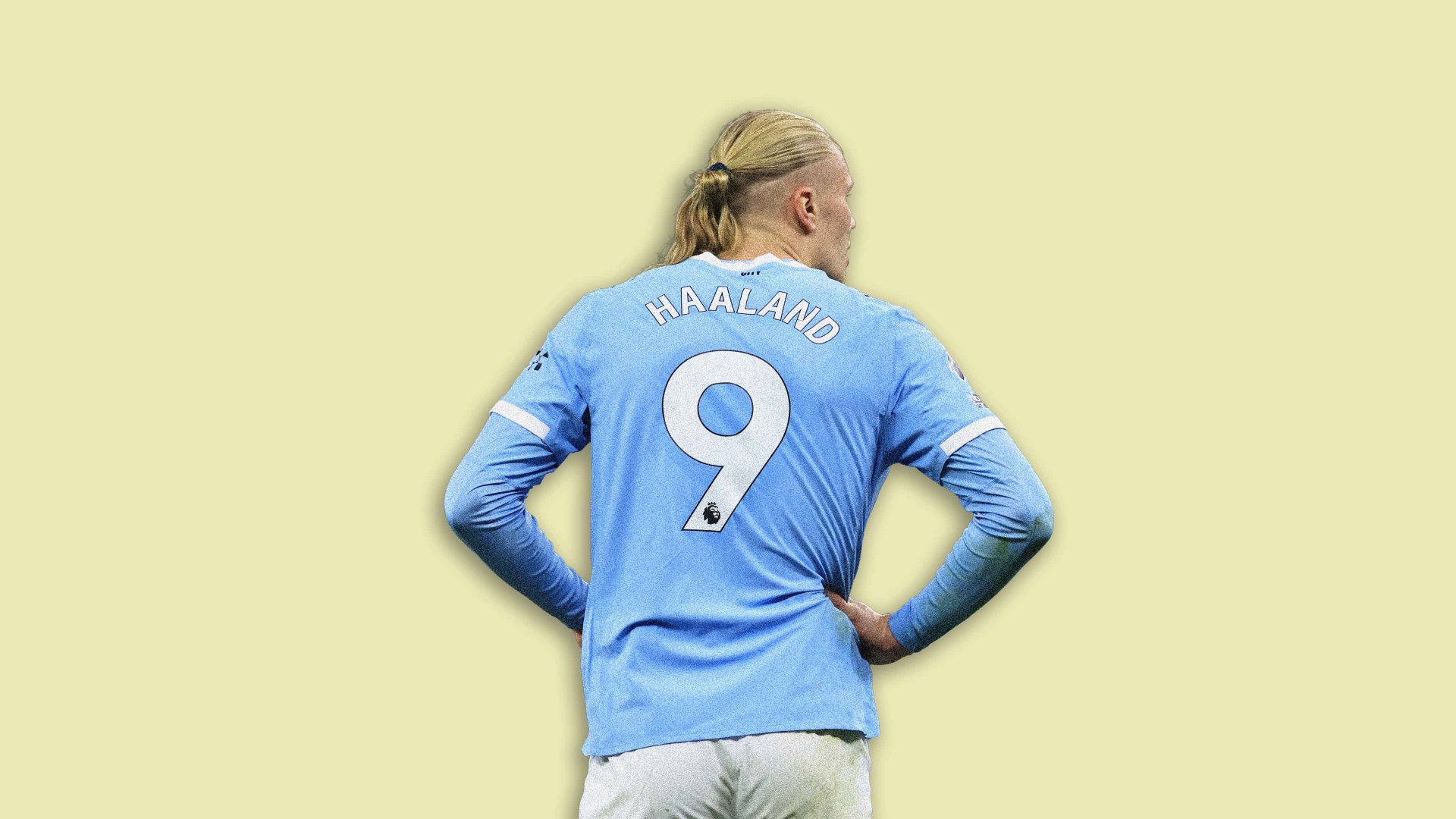
One of the best and most famous footballers playing in England today – and currently in the World Cup finals – is the Manchester City player Erling Haaland. Though he represents Norway, he was actually born in England because his footballer father Alf-Inge was playing for Leeds United at the time.
Since rising to international fame, Erling has followed his father in changing the spelling of their surname from Håland to Haaland, although this has no implications at all for how it should be pronounced. In any case, most sports commentators in this country do not seem to know that the correct way to say his name is actually “Haw-land”, and not “Hah-land”.
The spelling change was presumably instigated by football agents, perhaps to get around the problem of the unfamiliar Scandinavian letter å confusing people who they might want to do business with, not least in the English-speaking world.
The letter å is currently found in the writing systems of Swedish, Danish and Norwegian (though not in the other Nordic languages Faroese or Icelandic), as well as in Sami languages and in a small number of other language varieties around the world, including North Frisian in Europe and the Micronesian language Chamorro (see TNW #483) in the Northern Pacific – for example, the capital of the Chamorro-speaking island nation of Guam goes by the name of Hagåtña.
Suggested Reading


Why British people can’t pronounce sockeye salmon properly
Swedish began to replace the double vowel aa with the new single letter å in the 16th century, with its first recorded appearance being in the 1526 Swedish translation of the New Testament, which was later followed by its official adoption in the 1541 Gustav Vasa Bible. Like the English King James Bible, this Swedish bible goes by that name because it was named after a contemporary monarch.
King Gustav Vasa commissioned and authorised the new Bible translation in the aftermath of Sweden having broken away from the Catholic Church. It was the first complete Bible to be written in Swedish.
The shift from the spelling aa to å in Swedish became the norm over the following decades, a good deal earlier than in Danish and Norwegian, which did not officially switch to å until 1917 and 1948, respectively. And the two major Danish town names of Aarhus and Aalborg can still be seen with those double-A spellings.
The original impetus for the switch to the new letter was a 15th-century sound change in the pronunciation of the long “ah” vowel, whereby it gradually developed into a sound closer to the vowel “aw” as it is pronounced in the English used in England. A new letter representing this sound was originally created by placing a small letter O above the A to denote this new rounded vowel.
When this new letter Å first arrived on the scene, it was placed at the end of the alphabet in Danish and Norwegian, after Z (which typically does not occur in native Scandinavian words), so the phrase “from A to Z” that we use in English has to be “from A to Å”. In Swedish Å is the third-from-last letter, followed by Ä and Ö, so there it has to be “from A to Ö”.
Suggested Reading
Why did we call her the Queen – not Queen’s – Mother?
Digraph
The term digraph can be used to refer to an alphabetical letter which has been formed by joining two original Latin-alphabet letters together, as with the Scandinavian letters Å and Æ. Digraph can also be used to refer to a sequence of two letters which combine to represent a single speech sound, as in the case of ch, sh and th in English, or ll and ch in Spanish.