
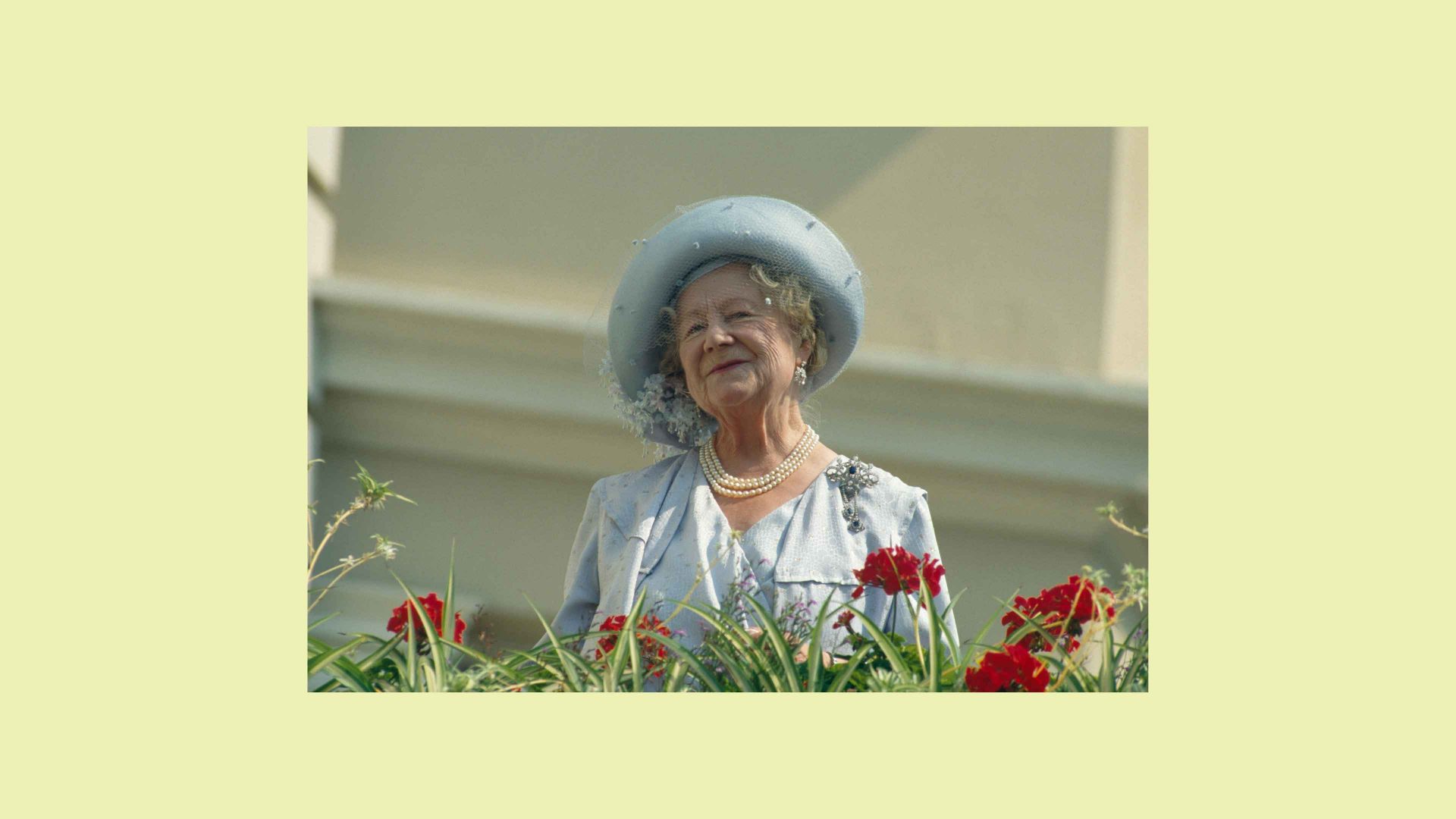
A great deal of space has been taken up on the internet over recent decades by people writing in to ask why the mother of the late Queen Elizabeth II was known as the Queen Mother and not the Queen’s Mother.
I waded through more than 40 versions of this question, with a similar number of responses, as posted on the online platform Quora, before I eventually gave up. Not one of the answers I read on the site was correct, although of course I cannot rule out the possibility that if I had had the patience to continue perusing these postings – some of them more intelligent and creative than others – I might eventually have hit upon a respondent who had come up with an explanation which was less wrong than the others.
Suggested Reading


How names go extinct, then come back to life
To help us arrive at the correct answer to this question in today’s column, I want to start by considering the date on which I am writing this piece, March 25. This was formerly an important day in the secular calendar where, until 1752, it was treated in England, Wales and Ireland as the start of the New Year, as well as the end of the fiscal and tax year.
When Great Britain and its empire changed from following the Julian calendar to the Gregorian calendar in 1752, 11 days had to be “lost” in order to achieve this (Wednesday September 2 was followed by Thursday September 14). At the same time, the start of the New Year was moved from March 25 to January 1. However, the end of the tax year remained in place, but because of the 11-day difference fell on April 5.
March 25 was also important in the Christian religious calendar, where it marked the Feast of the Annunciation of the Blessed Virgin Mary, the day when Archangel Gabriel visited Mary to inform her that she was going to give birth to the Son of God. Crucially for our purposes, this is also known as Lady Day – “Our Lady” is a traditional title for the Virgin Mary.
The point is that in two phrases, the Queen Mother and Lady Day, we would expect to find an apostrophe followed by an s marking possession: the Queen’s Mother and Lady’s Day. Why isn’t this the case? The answer lies in the history of English grammar.
Like modern Icelandic, Faroese, Norwegian and German, English used to have three grammatical genders – masculine, feminine and neuter – mainly marked on determiners and adjectives. So in Old English, “the king” (masculine) was se cyning, “the queen” (feminine) was sēo cwēn, and “the ship” (neuter) was þæt scip.
Suggested Reading
Why few dare speak the name of Mozart’s son
Also, in Old English grammar, the genitive (or possessive) grammatical case was marked by adding a word-final -s only to masculine and neuter nouns, not to feminine nouns. Both queen and lady were, naturally enough, grammatically feminine, and so lacked the possessive -s.
Over the centuries, English has lost grammatical gender altogether, but these two set phrases with no possessive -s, the Queen Mother and Lady Day, survived into Medieval English and then into Early Modern English. Now, these few fossilised grammatical relics from our linguistic past have survived into Modern English, even if only in very limited formulaic usages.
Secular
Secular means “belonging to the world and its affairs” as opposed to belonging to the church and the religious sphere. It comes originally from Late Latin saecularis “worldly, secular, pertaining to a generation or age”. From the mid-19th century, it has been used in English with reference to the “exclusion of belief in God from matters of ethics and morality”.