
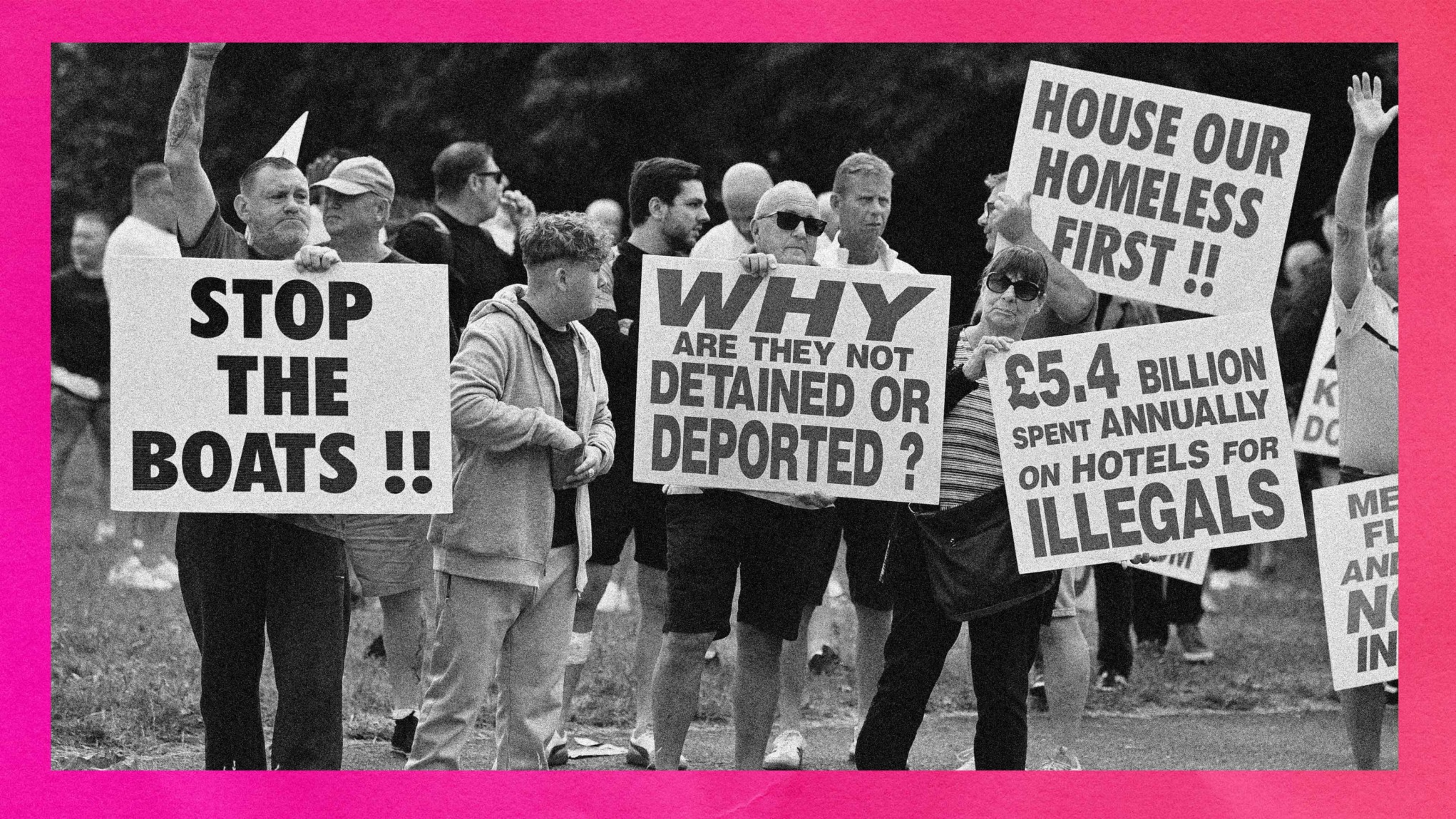
Like it or not, immigration is a massive public concern, rivalling the economy as voters’ top issue, way ahead of health, crime and welfare.
Each week YouGov presents respondents with a list of 18 subjects and asks them to say which three “are the most important issues facing the country at this time”. In its latest survey, the economy scores 51% and immigration 48%. Health is way behind in third place on 24%.
The figure for immigration has doubled, from 24%, in the past four years. It has slipped a little since its peak of 56% a year ago, but remains historically high, despite the sharp fall in net migration.
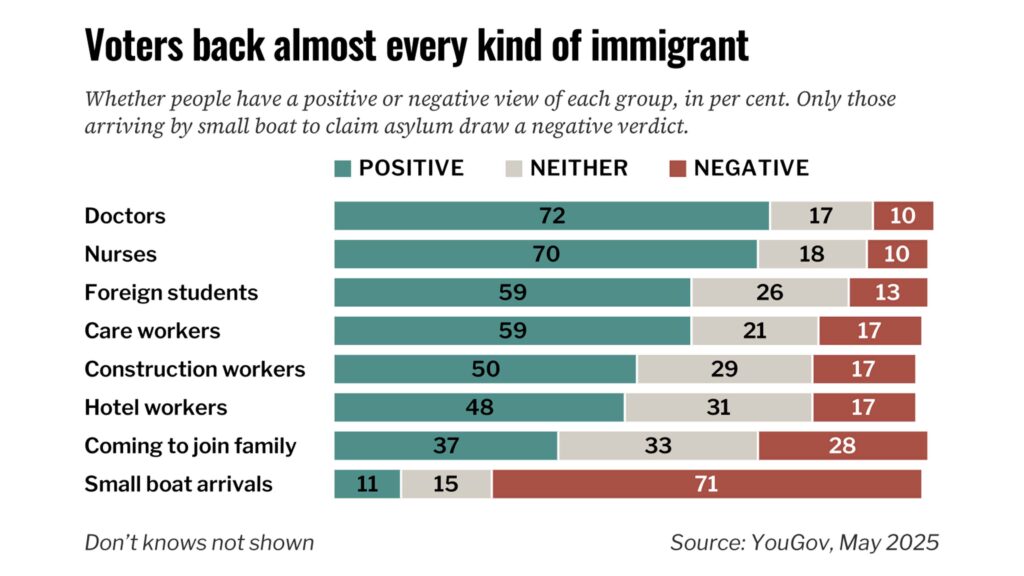
A separate YouGov survey adds to the mystery. Last year it asked people whether they had a positive or negative view of different groups of immigrants. For all kinds of workers, and also students, the “positives” far outweighed the “negatives”. For those coming to live with their families, the positives remain ahead but more narrowly. It’s people arriving by small boats to seek asylum whom we view most negatively.
Given this, why are voters so het up about immigration when the numbers are falling? An Ipsos survey from two years ago explained why. (I doubt a more recent survey would have given significantly different results.)
Ipsos asked respondents what percentage of immigrants in each of four categories had come to Britain the previous year. These are the average figures for what voters thought, compared with the actual number recorded by the Office for National Statistics:
To work: what voters thought, 26%; actual share, 40%
To study: voters, 19%; actual, 38%
To apply for asylum/refugee status: voters, 37%; actual 7%
To live with their family/partner: voters, 17%, actual 6%
So the two groups viewed most positively – workers and students – comprised 78% of all new immigrants, but were believed to make up just 45%. In contrast, the two less popular groups – immigrants wanting asylum or to join their family – comprise just 13% of all new immigrants, but were believed to comprise a majority, 54%.
The real political issue is not that most voters dislike immigrants, or that the numbers are too high. It’s that they think immigration is a problem that is out of control. The government’s greatest challenge is changing that perception.