A year ago, Ecuador voted decisively against allowing foreign military bases on its soil. It was a rebuke to president Daniel Noboa, the 38-year-old right wing hardliner, who has made an aggressive crackdown on organised crime the centrepiece of his presidency and wanted foreign “armies” to join his “war” on drug-trafficking groups. It turned out the foreign power he wanted to get close to was the US.
Voters had other ideas, with around 60% rejecting his plans. Noboa promised to “respect the will” of the people. A year later, however, the US military’s footprint in Ecuador appears to be growing anyway.
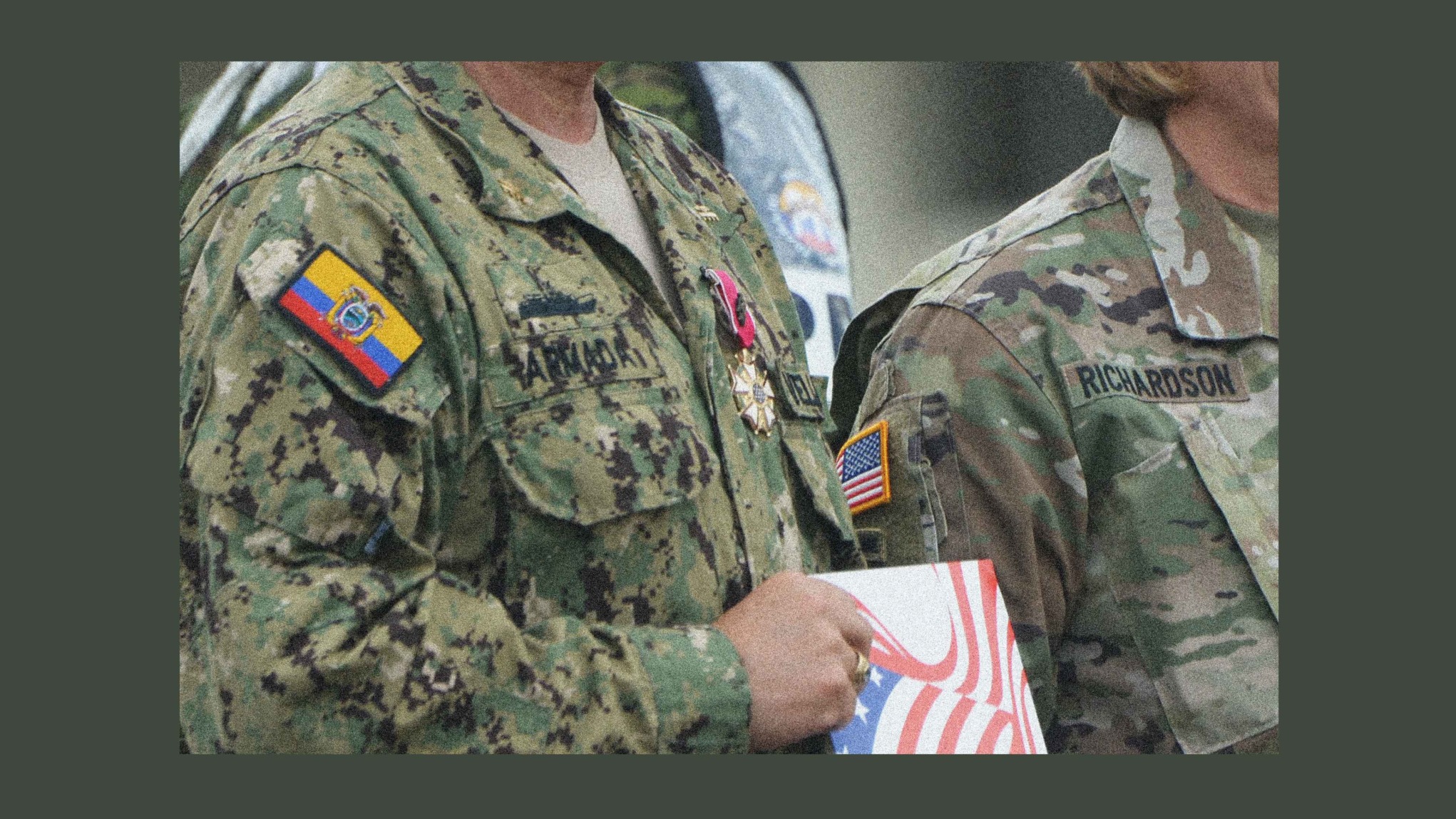
The Taura air base, just outside Guayaquil, the country’s largest city, is quietly becoming a key hub for Washington’s expanding military campaign against drug trafficking in the region. Satellite imagery, flight records, witness accounts and military documents reveal a significant US build-up. Even so, Noboa has denied the existence of a US base.
The contracting office of US Air Forces Southern has committed $715,886 to an Ecuadorian company, for “airfield grounds maintenance” at the base. AFP reported evidence of at least 20 US military flights to the facility between June and mid-October. Flight records showed C-130 Hercules and C-17 Globemaster transport planes, V-22 Ospreys and Black Hawk helicopters arriving at the base, with several flights linked to US military installations.
Suggested Reading
The nation where 1.7% of the population is now behind bars
US military contractors, meanwhile, were hired to provide “base operational support” at an undisclosed site in Ecuador, in a contract that has since more than doubled to nearly $1.5m. US Marines have also documented clearing land for an airfield.
Despite this, Ecuador’s armed forces have told local media there are no foreign military bases in the country. The question is whether Washington can expand its military presence without formally establishing a base.
There’s already a US-Ecuador agreement allowing American personnel to operate in the country. Quito can argue that joint operations and temporary deployments do not breach the ban voters upheld. But with US aircraft flying into Taura and infrastructure being developed for military use, the distinction is looking increasingly blurred.
American military activity is being felt well beyond the airfields. The US is involved in developing a naval training facility in Guayaquil. For more than a year, US forces have been destroying boats in the Pacific off Ecuador, accusing their crews of supporting drug-traffickers. But survivors and their families have challenged Washington’s account.
Jhonny Sebastián Palacios, a fisherman, says his boat was struck twice by US drones before the crew were detained at gunpoint by American personnel. “Their drones were circling us, and then there was a sudden crash. The boat was destroyed, shattered, my colleagues were injured, then they handcuffed us and bagged our heads.”
“It said US on the uniform,” he added.
Suggested Reading
Trump is quietly destroying Cuba
Human Rights Watch said US forces intercepted and destroyed eight Ecuadorian vessels between August 28 and September 16, detaining more than 140 of the 160 crew members. Some fishermen alleged they were abused while in US custody.
The crackdown has also drawn attention to Ecuador’s own security forces. In March, workers at a farm near the Colombian border said they were detained and tortured during an Ecuadorian military raid targeting what the army described as an organised crime operation. Residents say the community has no links to criminal groups.
One worker said soldiers bound his arms and legs, beat and kicked him, repeatedly submerged him in a water tank and threatened to kill him. The abuse continued at a military base, he said. “They electrocuted me. I passed out twice. What they’re doing is inhuman,” he said.
US involvement in the operation was acknowledged by Trump in a letter to Congress, which said American forces had been present during the “partnered operation” with Ecuador.
“The serious problem is that there are no clear limits on the role of foreign military personnel in Ecuador. That creates legal uncertainty for everyone, especially civilians,” said Fernando Bastías Robayo, an Ecuadorian lawyer.
“The specific support provided by US military personnel in Ecuador should be made public and transparent. Citizens have the right to know what role the US armed forces are playing in their country’s security policy.”