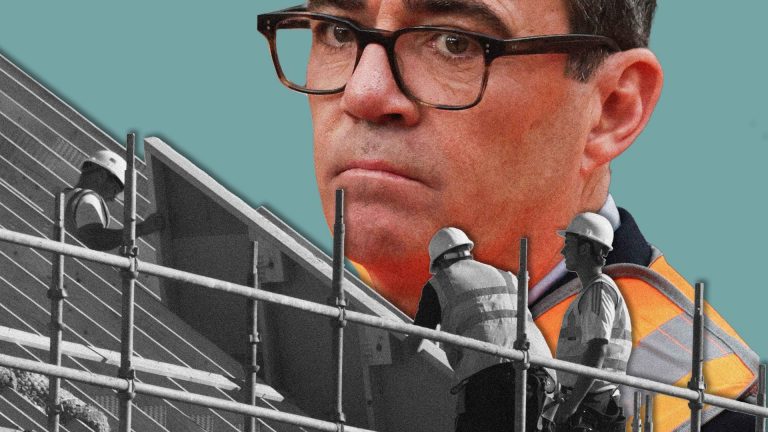
Andy Burnham should beware what he wishes for. At Labour’s conference, he explained why he wants to change the way we elect MPs. It’s to scrap the risk of getting “a divisive government on less than 30% of the vote”. Proportional voting would certainly prevent that. The trouble is, it would hurt Labour, too.
To show how such a voting system could work, I have made two assumptions. First, to win any seats, a party would need at least 5% of the vote (with England, Wales and Scotland being counted separately).
Second, seats are distributed in proportion to the votes cast for each eligible party in each of the three countries. (Some systems come closer than others to that precise outcome.)
I have applied those assumptions to YouGov’s latest seat-by-seat MRP survey. YouGov says Labour would win 241 seats under first-past-the-post (FPTP). Labour enjoys big leads in seats over its rivals because its support is better distributed, with fewer wasted votes in unwinnable seats.
Suggested Reading

Sorry Nigel, but the polls show you’ve had it
That is without tactical voting. I showed last week how this could give Labour (and also the Conservatives) dozens more seats.
But on the same voting figures, a fully proportional system would give Labour only 164 seats. The party’s penalty for switching to proportional voting could well exceed 100 seats. As the table shows, the Greens would enjoy the biggest boost.
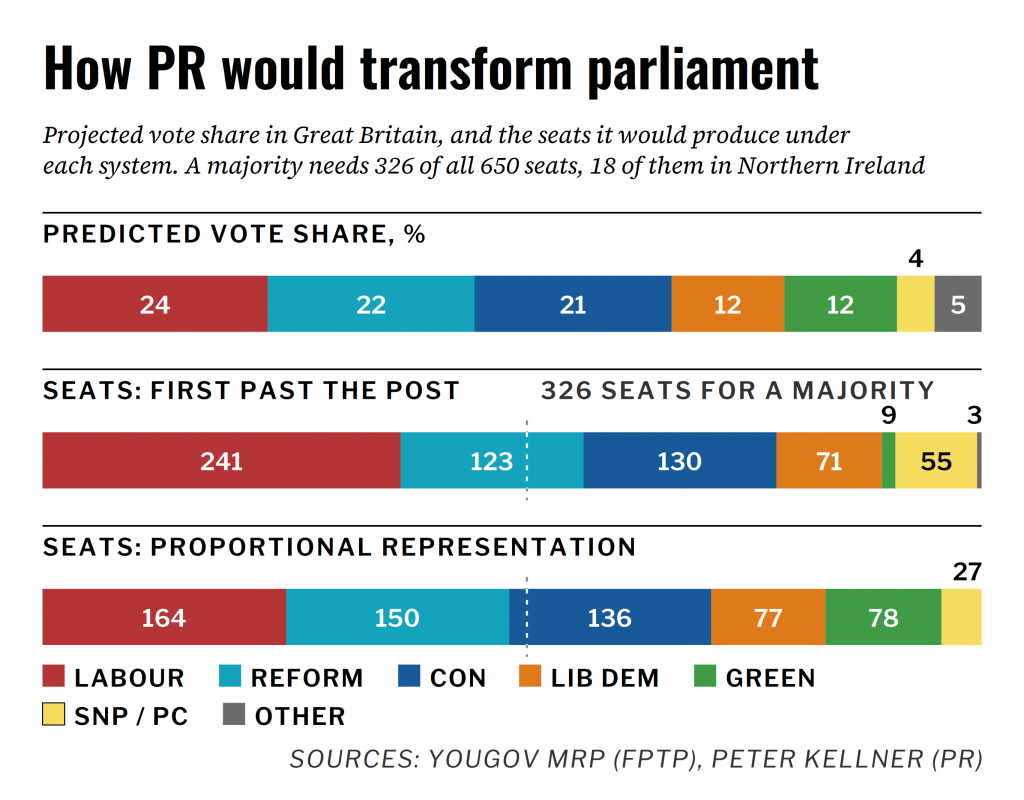
All in all, the further we move away from FPTP, the greater the likelihood of multiparty governments becoming the norm. More limited change, such as the Alternative Vote, which keeps the constituency system, would retain the possibility of single-party majority governments – but that’s because AV does not produce proportional results.
The latest Opinium survey puts Labour on 30%. This is its highest figure since Burnham became prime minister. It could well give the party an overall majority (326-plus MPs) under FPTP once tactical voting is taken into account. With proportional voting, it could struggle to reach 200 seats.
For Labour to suffer less, electoral reform would need to be less radical, going no further than AV. If Britain adopts a truly proportional system, Burnham’s epitaph may well say that he was Britain’s last prime minister to lead a single-party majority government.
 Most popular

Is this the real reason Trump keeps falling asleep in public?
I was at Eton with Charles Spencer – this is how it explains his battle with the royals

The New World at 500: Independence isn’t our marketing slogan. It’s our business model


Why is Farage so keen to protect Russia’s right to lie and cheat?