

Time to puncture Reform’s bubble. Two weeks ago I showed how the party could gain dozens of extra seats if its new wealth enabled it to generate just three percentage points more support. This week, I can report new research that could not just offset such gains but come close to killing off Reform completely.
YouGov has repeated a set of questions it last asked in February, when Reform was more popular than it is today, and Labour was sunk in gloom. It asked people how they would vote if only two parties appeared to have a chance of winning in their constituency. YouGov tested responses to a range of different two-way contests.
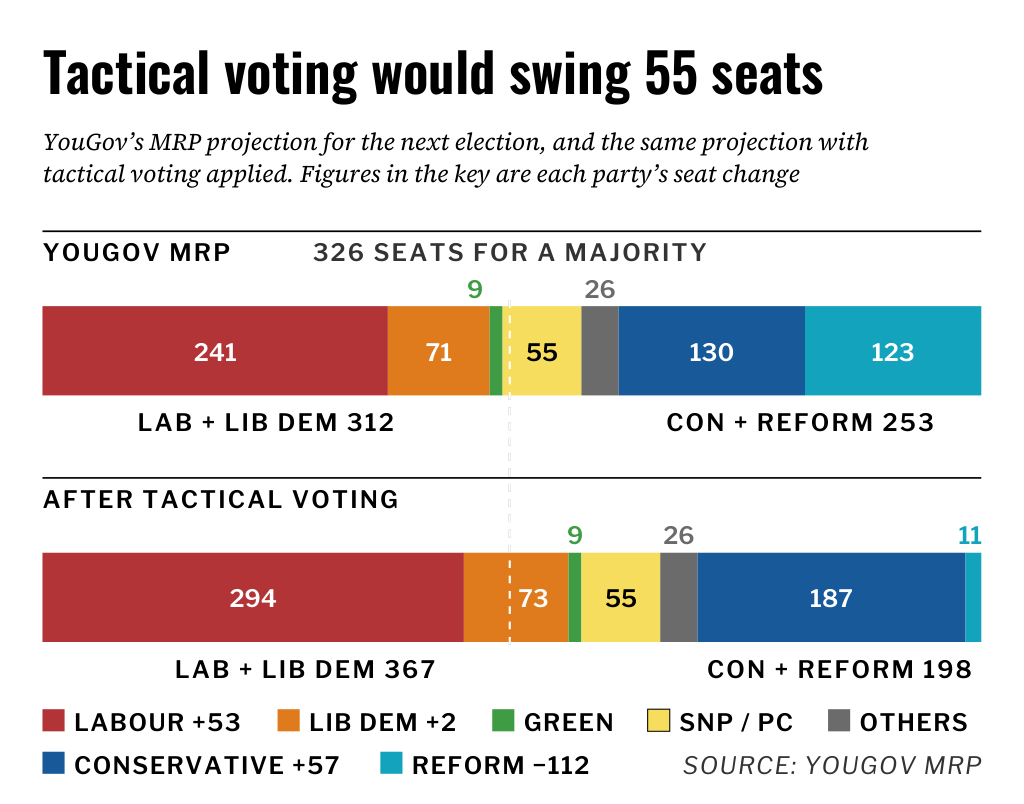
The results show that there is a big appetite to defeat Reform, and that this has increased since Andy Burnham became Labour’s leader.
Separately, YouGov has conducted a fresh MRP poll that projects current party strength in each seat. By combing the two pieces of research, we can estimate the impact of tactical voting.
Reform would lose all but 11 of the seats it is currently on course to win. There are two reasons for this. The first is that it is expected to win the vast majority of its seats by tight margins. This makes it especially vulnerable to tactical voting.
Suggested Reading

Farage’s £72m of crypto donations could swing the general election
Second, only part of the story is Lib Dem and Green supporters voting Labour in Reform-Labour contests. In addition, large numbers of supporters of all three left-of-centre parties are also willing to lend their vote to the Tories in Reform-Conservative battles. That’s why the Tories could benefit even more than Labour from tactical voting. (This time, the Tories would lose only two further seats to the Lib Dems from tactical voting.)
Nevertheless, Labour would be the real winners. With 53 extra seats they would be just 32 seats short of an overall majority. A Labour-Lib Dem coalition would have 367 seats and a comfortable majority of 84.
These figures are illustrations. Among other things, they depend on voters having good local knowledge of their constituency’s election race. But the appetite for tactical voting is huge, most of all to stop Reform. We have seen this in recent by-elections. It is likely to play a big part when the general election comes.
 Most popular


My day out with Danny Tommo

I was at Eton with Charles Spencer – this is how it explains his battle with the royals


Emily Maitlis’s diary: Trump doesn’t fear the AI apocalypse – but he’s terrified about the midterms


Memo to Burnham: this is how you beat the populists