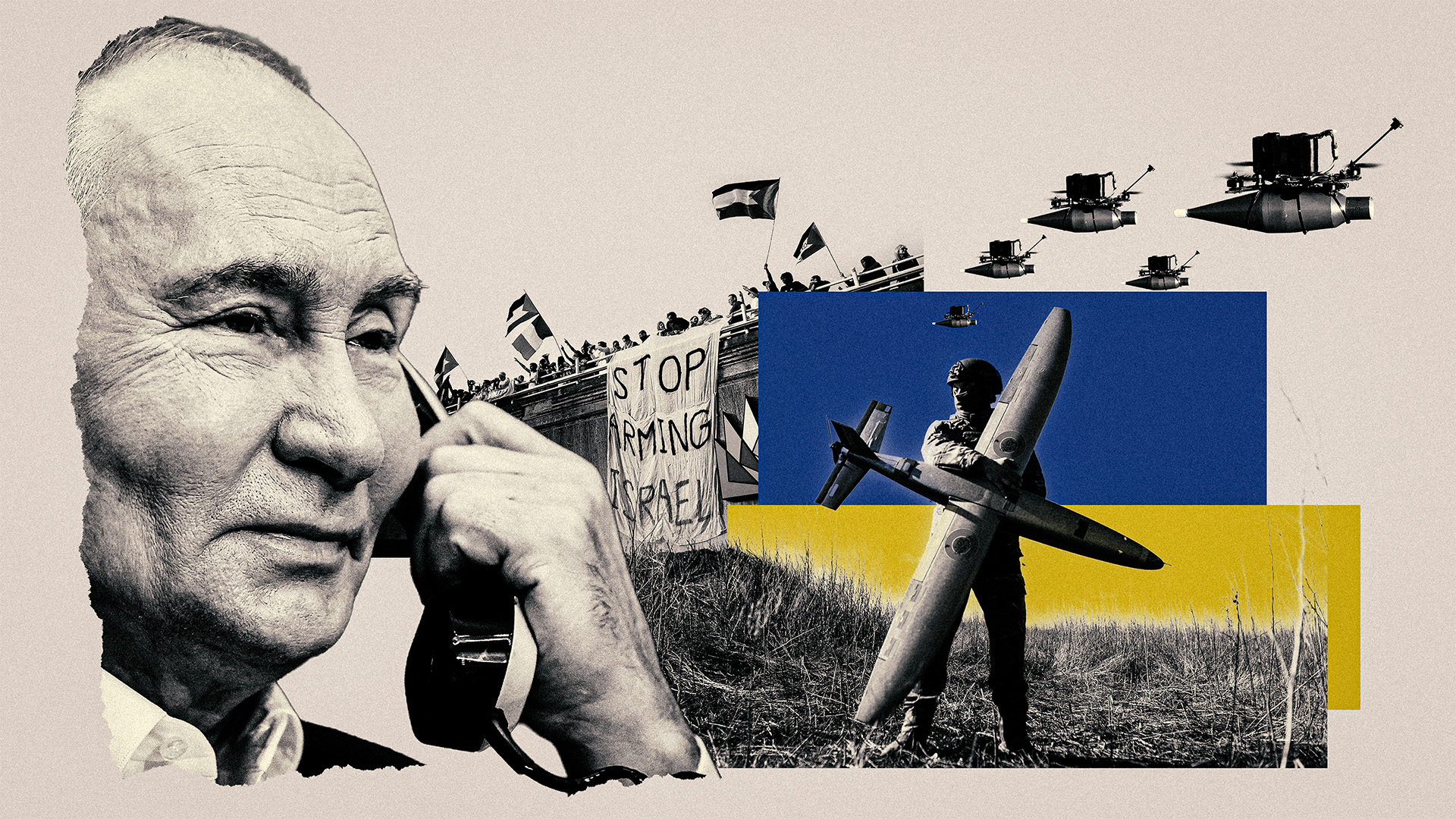
The warning signs are accumulating. Last week, Latvian intelligence warned: “We see indications that Russia is preparing military provocations against the Baltic countries or Poland.” A second senior Nato country source confirmed the briefing.
Belarus, from which such provocations might be launched, has doubled army recruitment, hiked military spending fivefold and is now hosting antennae designed to guide Russian drone strikes against Ukraine.
Meanwhile Russia, having funded and masterminded “gig economy” attacks against Keir Starmer, plans to flood the internet with fake Wikipedia sites, news outlets and search engine manipulation bots, to overwhelm western public opinion with cross-referenced fake stories.
Leaked documents seen by Bloomberg reveal a comprehensive plan to move beyond spreading disinformation to systematically polluting and destabilising all reliable sources of truth.
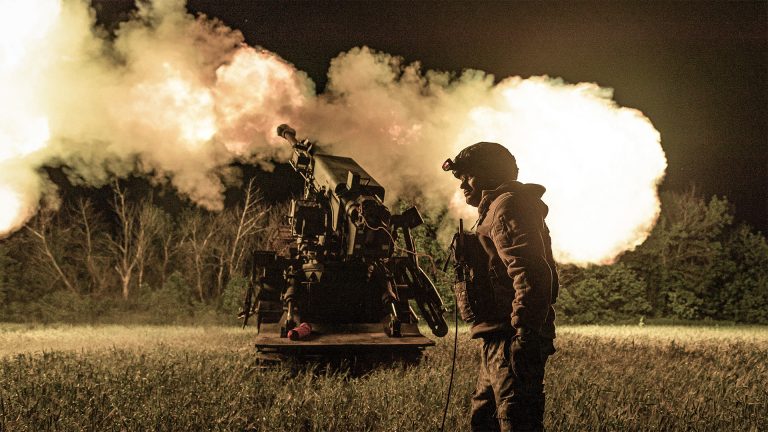
The reason for Russia’s potentially heightened aggression is that it is losing the war in Ukraine. Ukraine is winning the battle of deep strikes against Russian oil refineries, and has reduced logistical supplies to Crimea to a trickle by conducting drone strikes on the trucks and ferries they rely on.
Suggested Reading
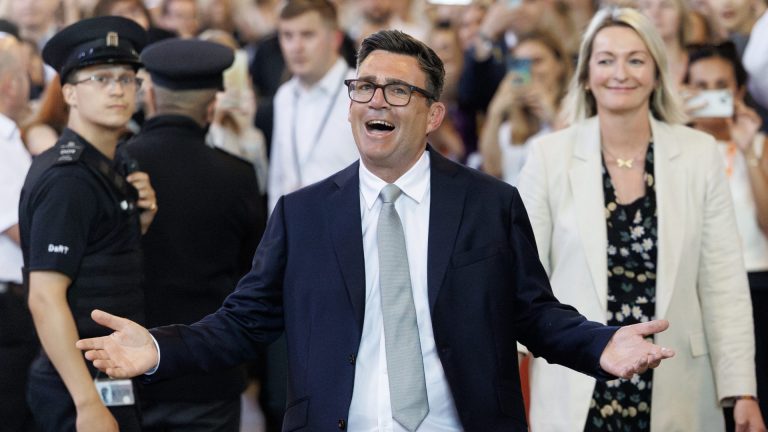

Andy Burnham v London
With both France and Britain now intermittently seizing tankers from Russia’s dark fleet, the possibility of sudden Russian escalation against one or more western countries has to be carefully watched.
Its purpose would probably not be to seize a chunk of land in the Baltics. It would be to use drones, cyber-attacks, subsea cable sabotage and the kind of gig-economy arson attacks it staged against Keir Starmer’s family to prove that Nato is a busted flush.
In defence jargon all of these things – from firebombing to paralysing production lines to drone incursions into western airspace – are called “sub-threshold”. But there’s a playbook, well understood by Nato planners, by which their intensity – combined with displays of hard, military power – reaches a level that you cannot deal with simply by expelling diplomats.
The Social Design Agency is a Russian IT company with links to the Kremlin that is at the centre of these disinformation and cognitive warfare efforts against the west. One of the most worrying aspects of the Bloomberg revelations is that the SDA’s disinformation efforts are intended to boost the messaging of parties like the German AfD, and to stoke community tensions. They do this by signal boosting every rumour and incident that incites the breakdown of public order.
And of all the countries Russia despises, the UK is unfortunately the sitting duck. We enter the high summer with a record of disinformation-inspired racist rioting; with a brand-new prime minister, probably reeling from the security briefings he is about to get, and a far left that seems determined to buy as much of the Kremlin’s narrative as its activists’ brains can hold.
On Saturday 20 June, some of Britain’s key trade union leaders staged what can only be described as a festival of self-deception. Speaker after speaker conflated their justified anger against Israel’s war crimes in Gaza with opposition to UK defence spending.
Ian Hodson, the leader of the Bakers’ Union, after condemning Israel and lauding the Palestine Action prisoners sentenced for the attack that left a policewoman’s spine broken, said: “Building something better is not putting all of our money into helping a genocide carried out by Israel… the idea that we can bomb our way to a democracy, or that we can bomb our way into better lives, is never going to happen.”
I struggled to understand this speech. The United Kingdom provides no aid, and no military hardware, to Israel, still less “all of our money”. Nor – since David Cameron lost the parliamentary vote on Syria – has the UK threatened to bomb anybody, still less “into a democracy”.
But it was par for the course in the whole event. Micaela Tracey-Ramos, the vice-president of Unison, which has more than a million members, said: “We continue to see the war in Ukraine, with our government and the EU doing our utmost to prolong it.” After lamenting – as I do – the US blockade of Cuba, she continued: “These are all part of a project by the US of complete domination by any means possible.”
She described Labour’s decision to raise “war spending” to 2.5% of GDP as the result of “war hawks in parliament”. She decried former defence secretary John Healey for resigning over Keir Starmer’s refusal to meet his own pledge of spending 3%, adding that it was a demand for “increasing militarisation, with lies about the so-called danger Britain is in from Russia and Iran”.
The president of the University and College Union, Jo Grady, likewise conflated support for Palestine with opposition to increased defence spending. With her members losing jobs by the thousands as universities hit crisis point, and as defence research in innovation is becoming an increasing lifeline, she told the crowd that “we do not want jobs at any cost”.
It’s not hard to see what’s going on here: the justifying of Kremlin narratives about UK defence spending and preparedness and the Ukraine war, by associating them with the entirely just causes of Palestinian and Cuban self-determination. And no one should be mystified by the origin of this narrative: it has been pushed by outright pro-Russian voices on the extreme left for more than a decade.
This is the challenge Andy Burnham will face as he becomes prime minister. Inside the British state there are now thousands of police, armed forces personnel and civil servants fighting a 24-7 battle against the effects of Russian hybrid warfare – and have been doing so for more than four years at high intensity. Out there in civil society there are not only overtly hostile narrative makers, saboteurs and hackers, but a bunch of deluded union leaders prepared to echo their narratives.
Suggested Reading

Why have we let Putin get away with it for so long?
And while none of the unions mentioned above is affiliated to the Labour Party, they have activists and influence. That is why Burnham, who is a confirmed Atlanticist and holds mainstream Labour views on security and defence, must disabuse early any idea that he is sympathetic to these ideas.
Burnham is right to emphasise the domestic agenda. He brings, from his experience after the Manchester Arena atrocity, a track record of linking social resilience efforts to wider national security.
As he approaches Downing Street, Burnham is already beset by the unresolved defence rows of the Starmer era: how to find the massive sums needed to make the Global Combat Air Programme and the AUKUS submarine initiative a reality; how to persuade the Treasury to borrow to invest in defence; how to navigate the rival EU, Canadian and British Treasury solutions to multilateral defence borrowing.
But the bigger challenge is to grasp the national security narrative. Because with major union leaders prepared to echo – however subtly and garbled – Kremlin talking points on Ukraine and UK defence spending, there’s a battle on for the heart and soul of the British Labour movement.
As early as July 18, Burnham will become both the movement’s figurehead, and the leader of a nuclear-armed Nato power. No matter how softly he wants to speak on national security issues, he will have to go on carrying the proverbial big stick.