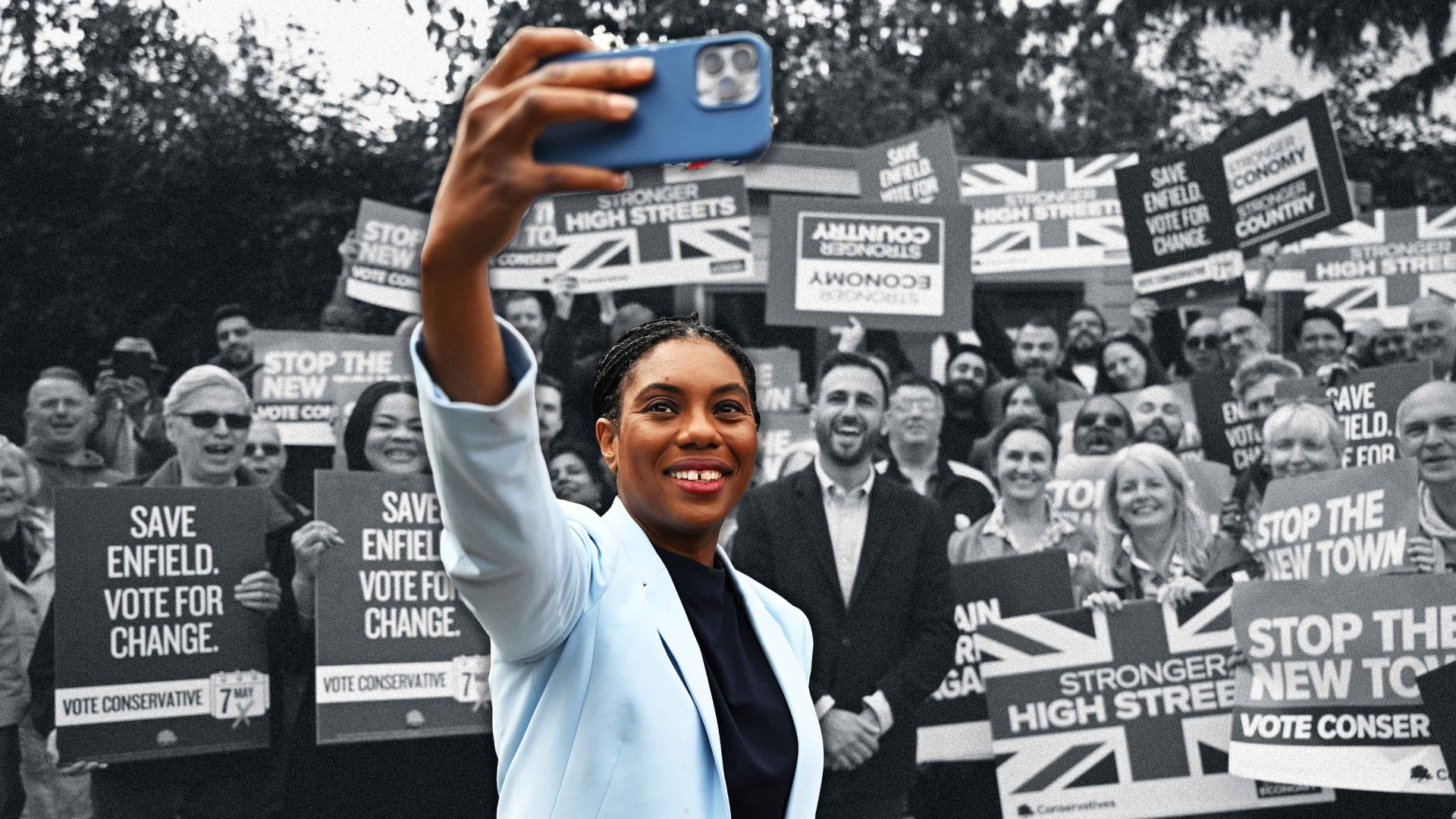
Why is it that Kemi Badenoch makes it impossible for me to vote Tory? Keir Starmer’s popularity rating may be plumbing the depths: local elections have shown that he has no fan club, but it is Badenoch who, whatever her limited appeal to the people of Bromley and Bexley, makes me think “anything but…”
Judging by the sharp loss of Conservative seats in last week’s elections, many former supporters seem to feel the same. The fact that Labour did even worse does not suddenly turn this into a good result for Badenoch’s party, whatever they claim.
At heart, I’m a one-nation Tory. I grew up in a household where being Conservative was assumed to be the natural order of things, though I briefly rebelled via a dalliance with the Liberals. The Conservatives became my default, but always the “nice” version: sound economics paired with socially progressive instincts, tempered by compassion.
That ideal was never perfectly realised, but it felt worth aiming for. Even David Cameron, at least initially, offered something close to it. His attempt to “heal the broken society” ran straight into the financial crisis, and George Osborne’s austerity agenda pushed things further than many of us were comfortable with.
Suggested Reading


British politics will only get worse
Even within Conservative circles, including what might be called the “middle-of-the-road” contingent in the House of Lords, there was pushback. That space – the compassionate but pragmatic centre – hasn’t disappeared, but it no longer feels as though any party properly represents it.
What Badenoch consistently conveys is something else entirely: a lack of compassion. Privately she may well be warm, even thoughtful. But in political presentation, the dominant impression is harshness. And that is not something I want to vote for.
Prime Minister’s Questions is not, of course, the natural habitat for tenderness. But the Badenoch style often tips into something that feels less like firmness and more like hostility. Her rhetoric too often gives the impression that she has little patience for those who fall short.
When given opportunities to soften that image, she has not taken them. Her appearance on Desert Island Discs earlier this year was a case in point. Choosing not one but two songs from Hamilton might have been idiosyncratic; opting for a Baz Luhrmann track containing the line “prices will rise, politicians will philander” felt, to many, like an odd note of cynicism rather than charm.
Suggested Reading

Badenoch, Harrogate and the Ayatollahs
“Badenochism” appears to be a highly individual political project driven from the top, with limited interest in accommodating competing instincts within her own party. When a group of relatively moderate Conservatives under the banner of Prosper UK offered support and ideas, she was reportedly dismissive. That did not surprise me. She does not appear especially inclined to broaden her coalition or soften her edges in pursuit of wider appeal.
Prosper UK has since gathered a number of disaffected Tory figures, though it insists it is a pressure group rather than a potential party. As a result, it has limited direct influence. Yet Badenoch continues to move rightwards while insisting she would never consider any arrangement with Reform.
That line may become harder to maintain after Reform’s recent local election gains. Some Conservatives may conclude there is no alternative but to align with Nigel Farage. Yet Farage, emboldened by success, might equally decide he has no need of them.
In policy terms, the gap between the two is not necessarily vast. Conservative campaign material has already spoken of “Kemi’s rule”, under which half of any savings would go to reducing national debt, with the remainder earmarked for tax cuts.
If a Badenoch-led government ever materialised, the question would quickly become where the savings come from. The largest contribution would almost certainly be expected from welfare spending – though few believe that would extend to challenging the pension triple lock. Civil service cuts would follow: a familiar ambition, but a difficult one to execute meaningfully.
These are not detailed plans for today, but they do raise a more fundamental question: who exactly is this politics for?
Because, increasingly, it does not feel like it is for me.