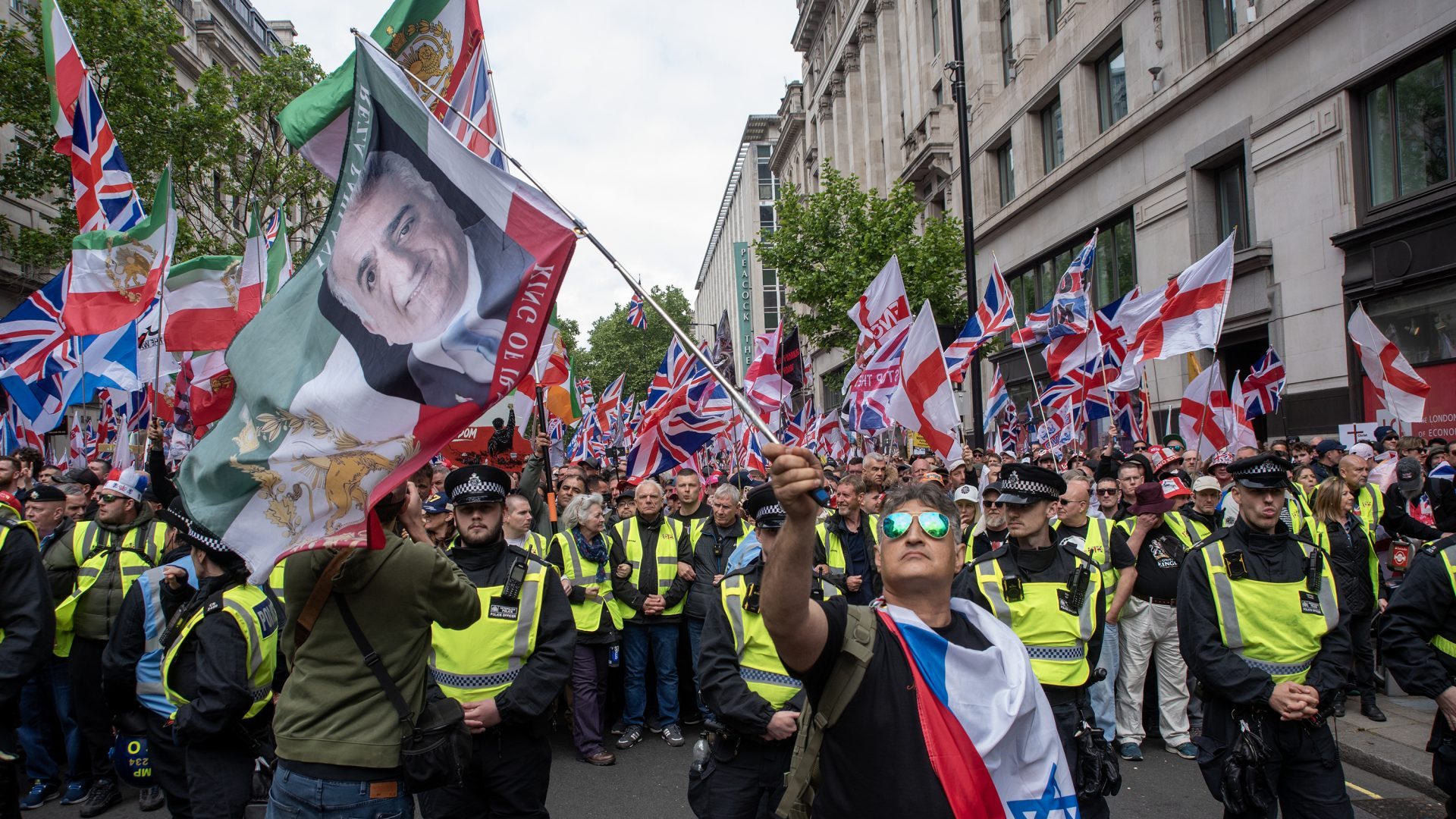
Last week in London, beneath the slogans of Britain’s far right, Iranian monarchist flags appeared in the crowd as Tommy Robinson invoked the struggle of the Iranian people as part of a broader nationalist spectacle.
The scenes followed marches in several German cities in April and May, where members of the Iranian diaspora appeared in black shirts reminiscent of Mussolini’s Blackshirts, displayed emblems of the SAVAK, the shah’s brutal secret police. They were chanting “One People, One Nation, One Leader”, a slogan with uncomfortable echoes of the mass nationalist politics that defined twentieth-century Europe.
For many observers, especially in Europe, the imagery carried a dark historical resonance. A movement that had been born in resistance to authoritarianism was beginning to reproduce the aesthetics, emotional language, and political choreography of authoritarian mass politics itself.
This raises a troubling question: why does a society that spent more than a century struggling against authoritarian rule begin reproducing the emotional language, symbolism, and psychological impulses historically associated with authoritarian movements?
The answer lies not in monarchism alone, nor in the personality of any single political figure, but in the cumulative exhaustion of Iranian society after generations of failed democratic aspirations, repeated political trauma, geopolitical pressure, and the gradual collapse of faith in the future itself.
The Iranian Constitutional Movement (Mashroteh Movement) of 1905 was among the first democratic and constitutional struggles in the Middle East. In the decades that followed, the Ghajar dynasty gave way to the Pahlavi dynasty, which pursued modernisation, secularisation, and state-building, but largely through authoritarian rule and suppression of political plurality.
Then came the 1979 revolution. It promised freedom, dignity, justice, and moral renewal, yet produced another authoritarian order — this time theocratic. Resistance began almost immediately: women protested against compulsory veiling, while intellectuals opposed the closure of independent media such as Ayandegan, the daily newspaper.
Though demands for political freedom receded during the Iran-Iraq war, they resurfaced afterward. The student uprising of 1999 was crushed. So was the Green Movement of 2009. Yet labour activists, teachers, bus drivers, women, and civil society groups continued resisting despite arrests, intimidation, and repression.
Then came the death of Mahsa Amini and the “Woman, Life, Freedom” movement, perhaps the most ethically profound and progressive impulse in modern Iranian history. Unlike earlier revolutionary movements centered on conquest or ideology, it was rooted in dignity, women’s experience, and decentralised solidarity. For a brief moment, another political direction seemed possible in Iran.
But the movement was brutally crushed. Thousands were arrested. Hundreds were killed. Executions followed.
Yet perhaps the deepest wound was psychological. By 2026, many protesters believed the world had finally drawn a line. Donald Trump publicly warned the Iranian government against suppressing demonstrations, while Pahlavi called on people to come into the streets. Many did, believing perhaps this time the world would not look away.
Suggested Reading
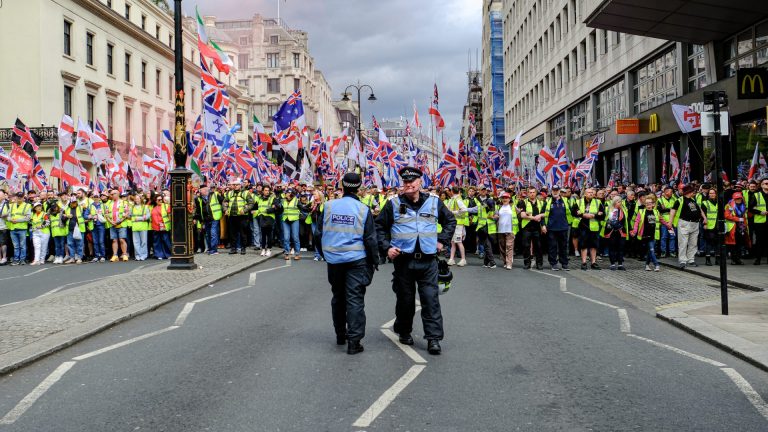

‘I photographed the Tommy Robinson march – here’s what I saw’
Instead, they were slaughtered.
After decades of repression, sanctions, corruption, economic hopelessness, ideological suffocation, crushed uprisings, broken promises, and now confrontation with a superpower, the January 2026 protests became existential for many Iranians. Their failure marked the collapse of belief itself — the feeling that courage changes nothing.
Several forces converge at this moment.
First, after decades of sacrifice and repeated defeat, democratic patience erodes. A hopeless society loses the ability to endure gradualism. When the future disappears, politics becomes emotional rather than institutional. People stop asking, “What is morally right?” and begin asking, “What can end this nightmare?”
Under such conditions, force begins to appear emotionally rational. This is why societies trapped in prolonged humiliation often oscillate between revolutionary hope and authoritarian temptation. Iran today is suspended between the two.
Second, one of the great tragedies of authoritarian societies is that people may reject authoritarian rulers while remaining psychologically shaped by authoritarian logic. Such conditions normalise associating strength with survival, compassion with naivety, nuance with weakness, and patience with futility.
Under these circumstances, movements promising certainty, revenge, dignity, emotional release, and restored greatness become psychologically attractive. Democracy requires patience – the belief that institutions can gradually improve life, that compromise has value, and that slow progress matters. But despair compresses time.
This dynamic becomes even more dangerous in a generation shaped by algorithmic culture. Social media rewards outrage over complexity, spectacle over truth, certainty over ambiguity, and identity performance over reflection. Politics becomes aestheticised. Anger becomes addictive. Viral humiliation replaces democratic discourse.
It is within this psychological landscape that authoritarian aesthetics become seductive within segments of the Iranian opposition. Black uniforms, militarised imagery, chants about unity and national purity, performative masculinity, glorification of force, attacks on intellectuals, hostility toward pluralism, accusations of betrayal, and efforts to silence dissent within the opposition itself are not politically neutral behaviors. They are the signs of democratic exhaustion.
But the Iranian crisis cannot be understood in isolation from the geopolitical environment surrounding it.
Iran exists in one of the world’s most unstable and contested regions. It is surrounded by hostile rivalries and geopolitical competition. Israel, in particular, increasingly views Iran not merely as a regional competitor but as a strategic threat, and some political forces openly envision a weakened, fragmented, or internally destabilised Iran as beneficial to their regional interests.
Suggested Reading
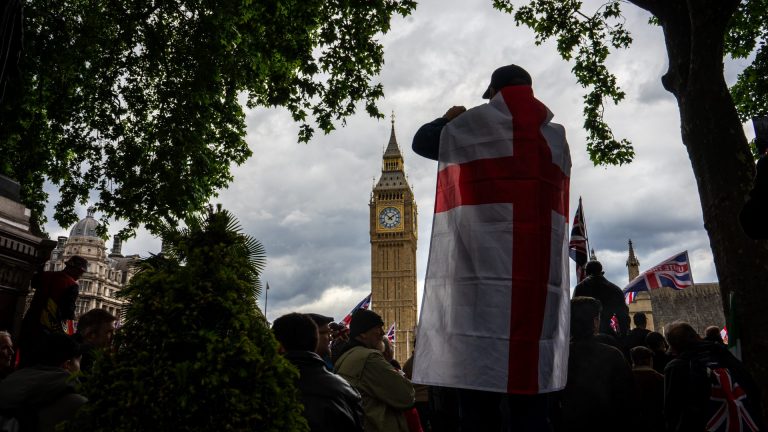

Tommy Robinson’s pointless, confused, US-funded march
Other powers are motivated by strategic access to energy, resources, influence, and regional control. Iran’s internal vulnerability therefore exists within a geopolitical environment where external actors may have strong incentives to manipulate instability for their own purposes.
At the same time, all of this is unfolding within a deeply unstable global order where the far right is rising across much of the world. Democratic institutions are weakening. Nationalism, anti-immigrant politics, the rhetoric of civilisational confrontation and authoritarian emotionalism are increasingly normalised. The aesthetics of force are no longer marginal. They are becoming mainstream in many political cultures.
This wider context matters because exhausted societies are especially vulnerable during moments of geopolitical instability. A wounded population searching for salvation can easily be drawn toward movements that redirect legitimate anger into authoritarian fantasies, nationalism, and emotional cults of military force.
The danger is not only political, but psychological. History repeatedly shows that broken societies can be manipulated into embracing movements that promise liberation while reproducing new forms of oppression. Fascistic aesthetics, militarised symbolism, intimidation of critics, and the silencing of independent voices are not signs of democratic renewal, regardless of the slogans attached to them. Such politics almost always serves another agenda beneath the surface – ideological, psychological, or geopolitical.
Iran today is vulnerable: betrayed, angry, exhausted, fragmented, and deeply distrustful. Its constant struggle for democracy has replaced dynasty with dynasty, monarchy ending in revolution, revolution ending in theocracy, reform ending in paralysis, protest ending in repression, hope ending in exhaustion. Moments like this are dangerous, and can lead either to democratic renewal or authoritarian rebirth.
The real question facing Iran is therefore not whether the Islamic Republic will survive. No political order survives forever. The real question is what kind of society will emerge from this long exhaustion: one driven by rage, spectacle, humiliation, and authoritarian longing, or one capable – even after all this suffering – of rebuilding dignity, pluralism, democratic trust, and political maturity.
That is now the real struggle for Iran’s future.
 Most popular

‘The deep state stole my mini-budget’: An exclusive extract from Liz Truss’s new book
Nigel Farage’s attack on the RNLI and co is a new low even for this bottom-feeder
18 things that will absolutely, definitely happen if Trump gets whopped in the midterms
I went looking for Trump’s America – this is what I found