
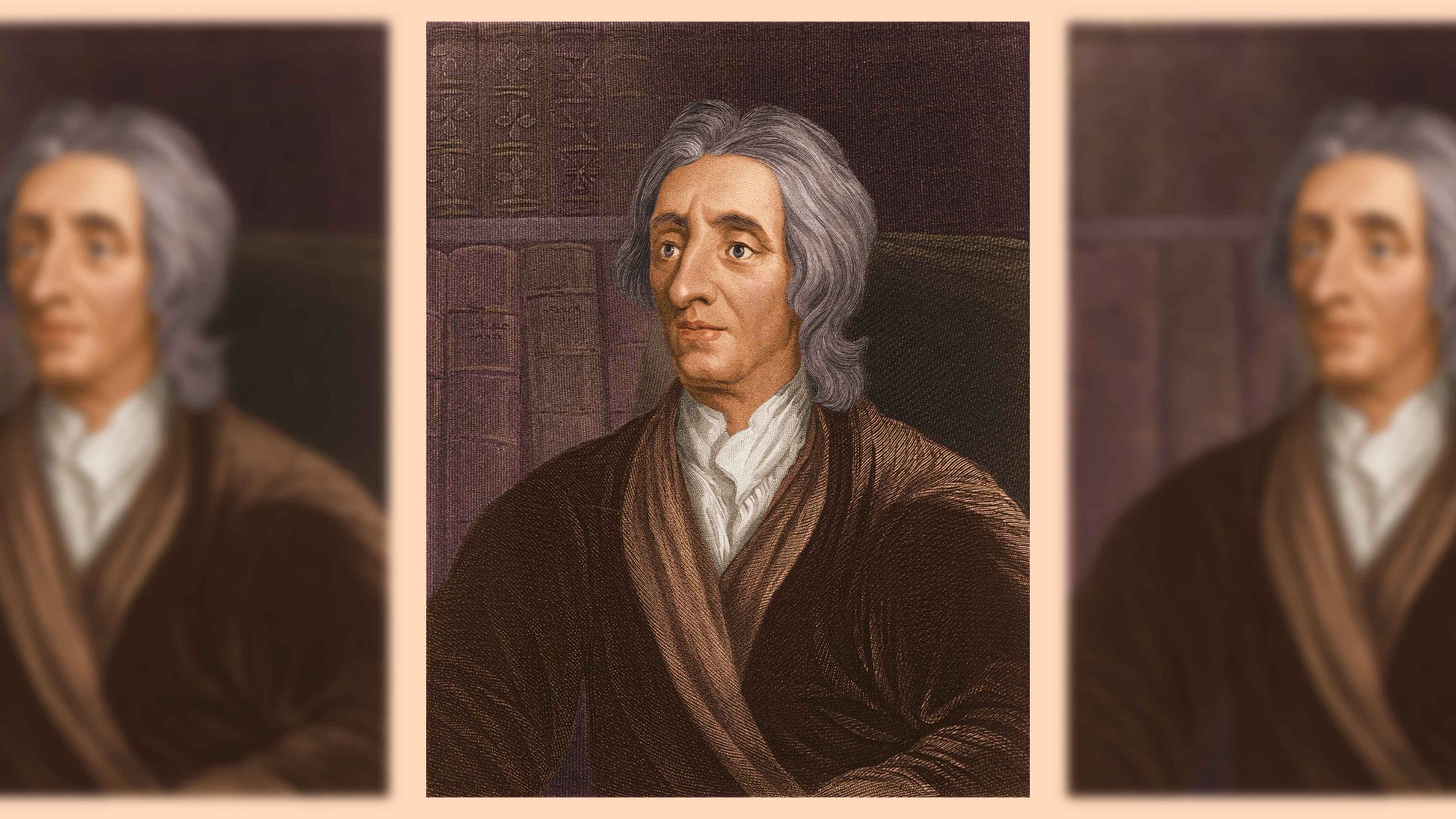
John Locke was born in Somerset on August 29, 1632. If his theory about human beings is right, at that point he emerged mewling and kicking from his mother’s womb, his mind was a tabula rasa, a blank slate on which experience then wrote. That mind became incredibly impressive.
Locke not only put forward important philosophical theories about the origins of knowledge and the nature of persons in his An Essay Concerning Human Understanding but was also a prominent defender of religious toleration. His political ideas about natural rights influenced the American declaration of independence: the claim that everyone has “inalienable rights” to, among other things, “life, liberty, and the pursuit of happiness” paraphrases him. Thomas Jefferson acknowledged Locke’s importance as a source of inspiration.
Yet Locke’s fundamental belief that our minds are entirely determined by the sensations we have, and by the ideas we form on the basis of them, not by anything innate, looks implausible now. We know so much more about the role genetics plays in what we become than he did.
To take one important example, Locke believed that all language learning began with an empty mind, but Noam Chomsky has shown that to be false. We all have what he called a Language Acquisition Device, an innate predisposition to discover and implement rules of language. Sorry, John.
Suggested Reading

The philosopher who couldn’t save Boris Johnson
He’s often presented as a poster boy for religious toleration, since he argued forcefully against repressive laws penalising religious dissenters. But anyone who reads his A Letter Concerning Toleration will soon realise that his position stopped far short of a modern one.
True, he was against torturing religious heretics into expressing beliefs they clearly didn’t have on the grounds that religious conversion by holding someone’s feet to the flames wouldn’t be genuine. But he denied toleration to Catholics (because they were in thrall to a foreign prince) and to atheists (because they lacked a religious book to swear an oath on, and so couldn’t be trusted). Hmmm.
On his philosophical views about acquiring unclaimed wilderness, his idea about the importance of “mixing” your labour with the land doesn’t seem quite so enticing or fair when you discover that it doesn’t have to be your own labour: the labour of your servant sent at your bidding will do just as well.
Worse still, although in his anti-monarchist First Treatise of Government he began by describing slavery as “so vile and miserable an estate of man” that it is almost inconceivable that anyone would support it, as part of an argument about how subjects of hereditary monarchs were like hereditary enslaved people, it turns out he helped draft a plan for the state of Virginia’s constitution which explicitly endorsed slavery. He even owned stocks in the Royal African Company, which transported enslaved people.
Suggested Reading
Why philosophers can’t explain the power of music
Academics have divergent views about Locke’s involvement with this vile practice. The historian Holly Brewer maintains that he was no hypocrite but was acting as a kind of secretary to his employers in the case of Virginia’s constitution, and that the stocks in Royal African were given to him in lieu of payment for work, and that he subsequently sold them. Others have been more reluctant to exculpate him, seeing him as sympathetic to colonialism and so to the exploitation and violence that accompanied it.
It’s worth noting too that even Brewer concedes that he wasn’t opposed to slavery in every context: Locke thought it was an appropriate punishment for starting an unjust war. There are several world leaders, past and present, who should be grateful that this aspect of his philosophy never really caught on.