

In Edgar Allan Poe’s ingenious story “The Purloined Letter”, detective C Auguste Dupin outwits a clever criminal. Minister D has stolen an incriminating letter from the queen and left an innocuous one in its place. D is blackmailing her and refusing to return the letter. If the contents are released there will be major political repercussions.
The police know that D is the culprit and have searched his home, stripping the furniture, walls, and carpets, but to no avail. They search again, but still no letter. Has D outwitted them?
Dupin then tries to put himself in the mind of the criminal. Where would he conceal the purloined letter? The police, who are not used to dealing with such a brilliant mind, think that D would do everything to make it invisible to them. But Dupin thinks the opposite. The best place to hide something is in plain sight.
Suggested Reading
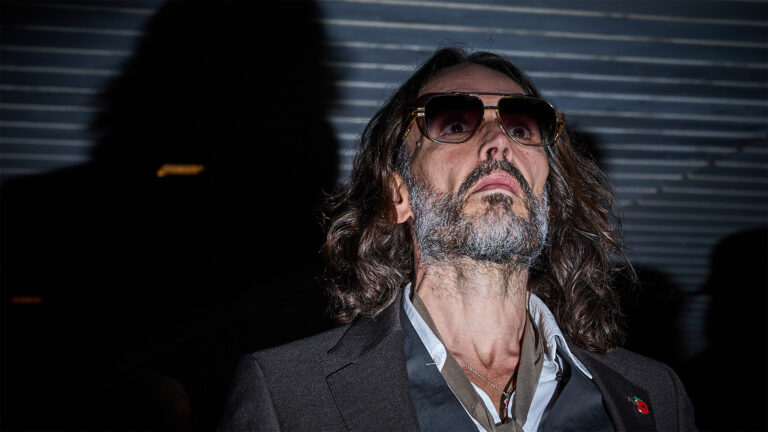

The reckoning I thought Russell Brand would never face
He returns to D’s rooms and discovers the letter tucked inside a scruffy envelope in a letter rack. No one thought it would be hidden there. In a sense it wasn’t hidden at all. In a nice twist, Dupin substitutes a different letter, playing D’s game against himself.
Hiding in plain sight is how many people have described Russell Brand, and before him Jimmy Savile, Harvey Weinstein, Jeffrey Epstein and other celebrity predators. It’s almost as if the visibility of their obnoxious attitudes and patterns of behaviour immunised them against further investigation: paradoxically their visible attitudes towards young women made them invisible in some respects – like the barely hidden letter.
Serial seducers who made jokes about abusing women couldn’t possibly be rapists, could they? It must be just a persona. Why would they draw attention to themselves? Yet the evidence was in front of us all along, we now think, and it is replayed ad nauseam on social media. Their far worse activities, it’s claimed, were an open secret.
An open secret sounds like an oxymoron. Secrets by their nature are closed. With a typical secret, very few people know the details, and they are supposed to keep mum. An open secret is different: it is something that quite a few people know, aren’t supposed to know, and don’t fully acknowledge or act upon, perhaps because to do so could have unpleasant consequences for them.
Possibly Jensen Huang’s affairs were open secrets among those working alongside him; perhaps some even thought about the espionage risks. When lewd jokes were made about David Walliams on live television, people laughed. Walliams denies the allegations against him.
But open secrets aren’t true secrets, because too many people are in on them. The trouble is that many supposedly open secrets are simply rumours – malicious or otherwise.

It was an open secret when MI5 didn’t officially exist that a few academics in Oxbridge colleges recruited spies. Some of us “knew” the names of the recruiters. If the names had been officially disclosed, we’d have said “No surprise! That was an open secret. We knew”. But the truth is we didn’t know. We just surmised. Perhaps in reality the careers officer was the principal recruiter.
Hindsight changes everything. We then take what was previously circumstantial evidence to have been a reliable marker of things we now know to be true. In retrospect, someone who has revealed unsavoury patterns of thought and is subsequently outed as a criminal makes us feel sure that we’d known this all along. But did we?
Several celebrities are now in the frame as putative Brands because they’ve made deeply offensive jokes about women. But we should be cautious about the conclusions we draw from their behaviour. That alone doesn’t prove they are criminals hiding in plain sight.
True, their behaviour might be a symptom of guilt and of an unconscious desire to be caught or even a strategy to deflect suspicion, but it might also just as easily be evidence that they are sad misogynist shock jocks and nothing worse.