The ancient Greeks believed philosophy should teach you how to die, a theme that Michel de Montaigne riffed on in a famous essay. Perhaps it ought also to teach us how to carry on living when someone close to us dies.
No one warns you, but the older you get, the more people you love will pre-decease you. That’s inevitable – unless you don’t love anyone. The number of dead friends, family and former lovers keeps on going up.
Losing a partner with whom you’ve shared and entwined most of your adult life, and from whom there are few secrets, causes a special kind of agony that can affect the whole body and colour every subsequent experience. This kind of grief leaves a void, a gaping hole.
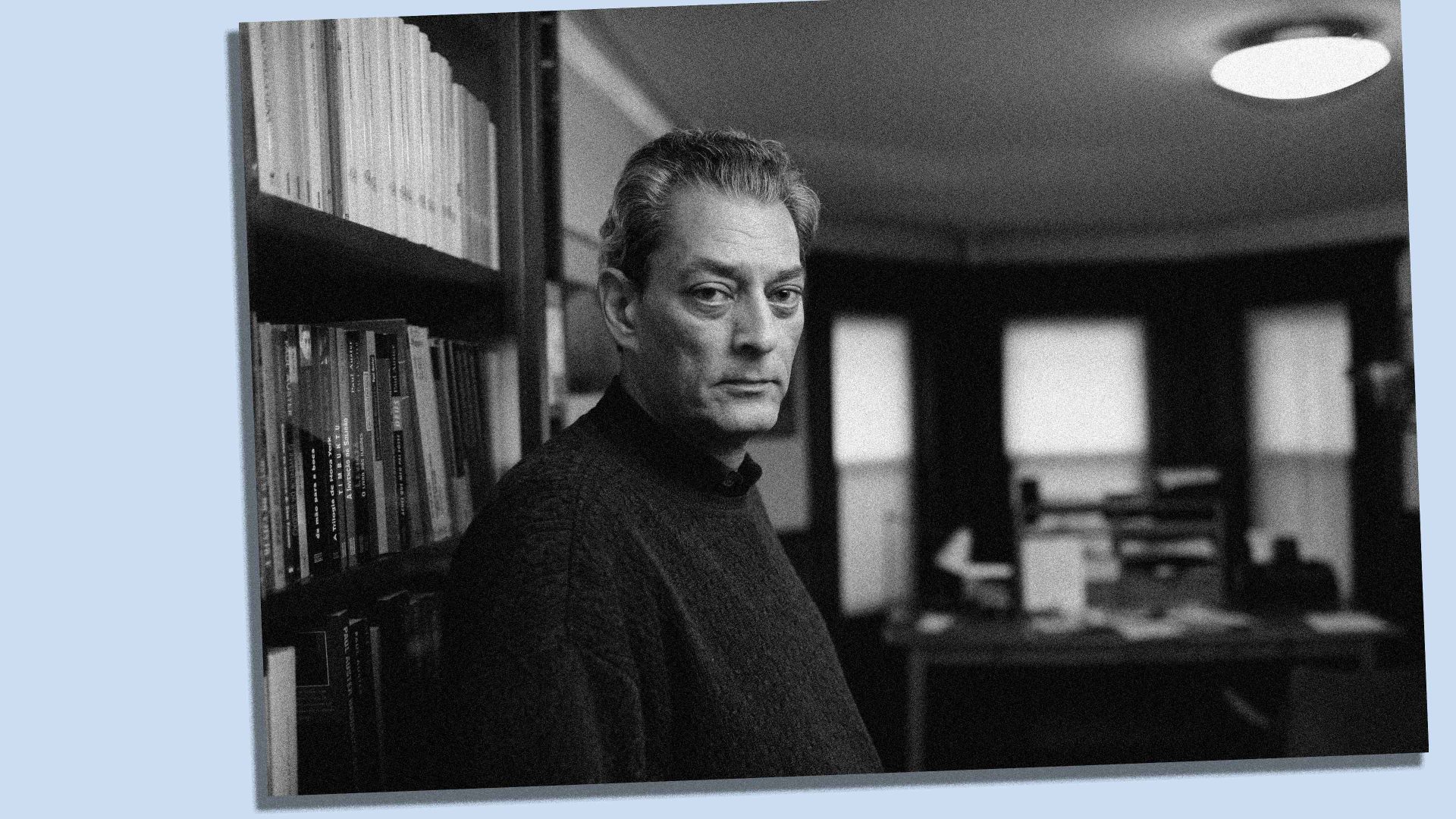
The novelist and essayist Siri Hustvedt lived with and loved the novelist and essayist Paul Auster for 43 years. Theirs was an intense intellectual and physical entanglement.
They were the quintessential New York literary couple: both unreasonably good-looking, both fiendishly intelligent, both feted writers with dedicated followers. They adored each other, supported each other, read and edited each other’s books, they talked late into the night about Wittgenstein and Kierkegaard. They helped each other through very dark times too, including the death of Auster’s granddaughter and then his son.
Auster died of lung cancer on April 30, 2024, aged 77. Next week Hustvedt’s memoir about their life together and her grief in the months following his death, Ghost Stories, will be published in the UK. It’s a powerful, beautiful, honest book with many philosophical and psychological insights, and it will take its place alongside CS Lewis’s memoir written after the death of his wife, A Grief Observed.
Hustvedt reveals how bereavement has made her reluctant to tell people what they want to hear, more apt to speak straight, even when the truth is likely to hurt (echoing the theme of last week’s Everyday Philosophy column). She rails against those who describe the dead as “having passed”. She wants them to confront what she confronts every minute without euphemism or white lies.
She is scathing about a woman who tells her not to use the word “widow” of herself. She wants us to stare death in the face and think about its meaning, not deny it out of politeness or bad faith. She’s right, of course, and more of a philosopher than many who have that as their official title. But her honesty unnerves people.
Suggested Reading
Are plants conscious?
Philosophers of perception often write as if all that we perceive is what is in front of us. Yet that is not what the phenomenology of perception is like for the bereaved. They experience absent people as ghosts: no longer there but somehow as present as anyone living.
The dead person’s absence is understood at an intellectual level, but still sensations of them linger and intrude. Hustvedt compares what she feels to having had an amputation that leaves a phantom limb, citing the French philosopher Maurice Merleau-Ponty as the source of that image.
She writes about how it feels to be alone in the four-storey Brooklyn brownstone they made their home, how Auster’s typewriter has become “a speechless thing”. The significance of objects has changed. His office had been sacrosanct, as hers was – each had their private space. Now she enters and must decide which of his writing paraphernalia and notes to keep, what to throw away, what to archive.
Their house is haunted by Auster’s absence and also by his presence. Whatever her rational mind tells her, Hustvedt’s body still expects him. Her embodied memories, like that phantom limb, give her the sensation of this presence she knows is no longer there, but which she continues to experience, nevertheless. The body is obstinate. She hallucinates cigar smoke even though Auster had not smoked for nearly a decade before he died.
Too often memories are described as if they were visual replays or narrated histories, but memories are corporeal too, sometimes visceral; they can be triggered by shared places and by the actions that formed the memories: laying plates on a table, turning to go up the staircase, opening a door into a room.
Hustvedt writes of how Auster is always still present in “the perceptual, felt, rhythmic realities I call myself”. He has become part of her.
The words of the Song of Solomon seem right here: “Love is as strong as death”. Perhaps the words of John Donne too: “They who one another keep alive ne’er parted be”.
Ghost Stories will be published by Simon & Schuster on May 5