We began our conversation in one era and ended it in another.
On September 11, 2001, I had lunch with the Czech ambassador, Pavel Seifter, a great dissident intellectual of the Velvet Revolution who had earned his living as a window cleaner during the bleak years of the cold war.
In an Italian bistro in Notting Hill, Seifter regaled me with tales of internal exile, of his friend and colleague Václav Havel (the then president of the Czech republic), of the fall of the communist leadership in Prague in November 1989, and of the colossal challenges facing his country, from which Slovakia had seceded in December 1992.
It was the kind of joint that has hanging onions, red check tablecloths, and Caruso piped through the sound system but no radio or television. Smartphones were still six years away and, out of respect for my host, my old-school Nokia was switched off.
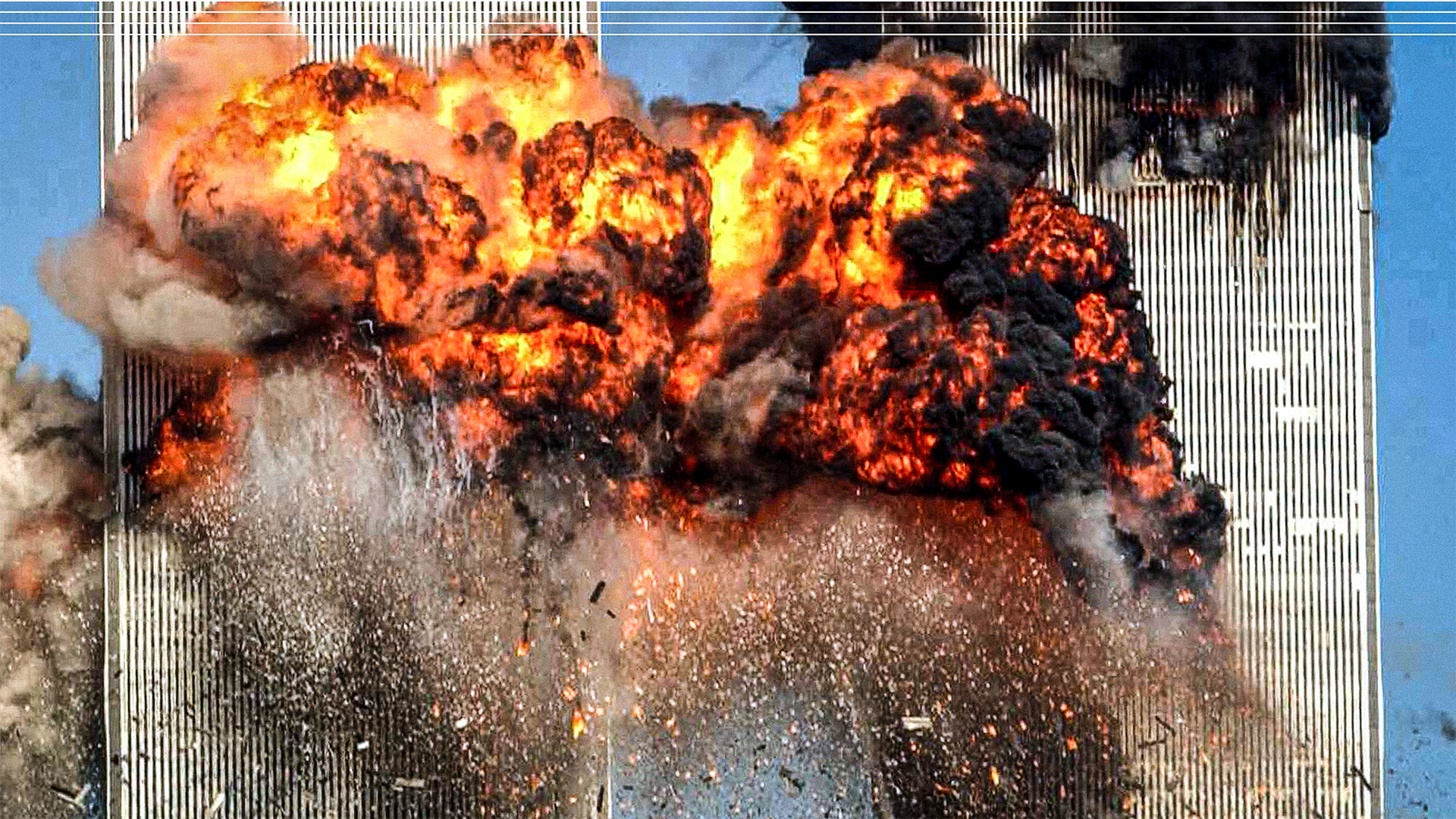
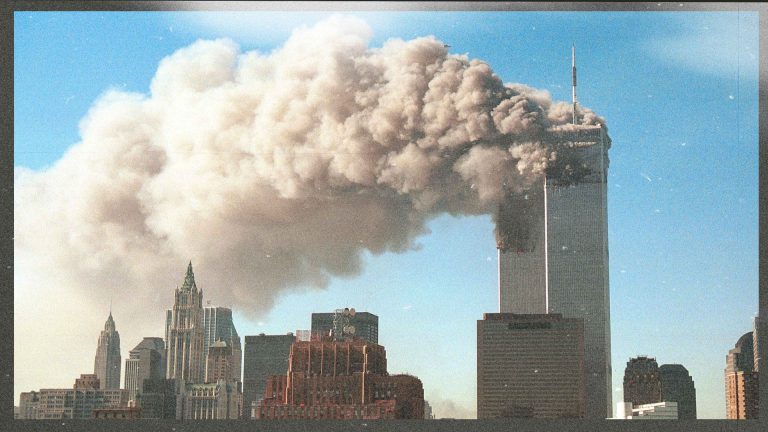
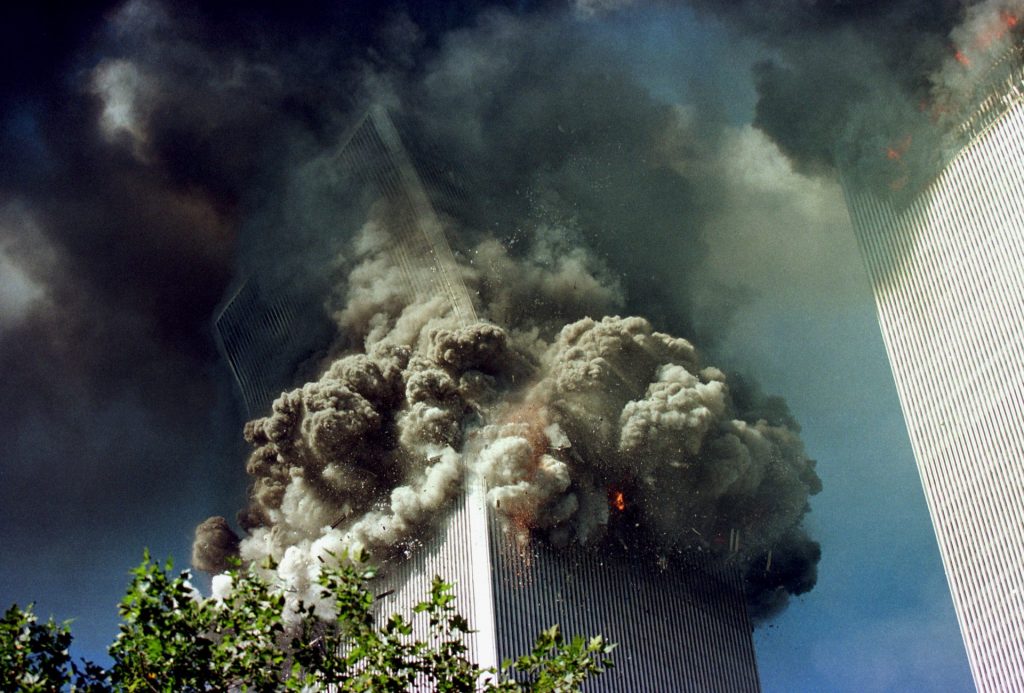
So it was only when we left the restaurant, under broken clouds, that we heard the news – both north and south towers of the World Trade Center had been struck, at 1:46pm and 2:03pm UK time respectively, followed by the Pentagon at 2:37pm. In less than an hour, history had, with savage clarity, drawn a line under one of its chapters and thrust the world pitilessly into another.
In every sense, we were all at Ground Zero. This was not only a moral affront (who could do something so diabolical?) but also a serious test of the imagination and its limits (how could this be happening?).
Back at Canary Wharf, where I was working for the Sunday Telegraph, the cataclysm unfolded in real time on huge screens in the atrium of One Canada Square. And – come to think of it – might this shimmering 50-storey skyscraper be a target, too? It would take a hi-jacked passenger jet only 90 seconds to fly at low altitude from London City airport into the glass of the tower.
Suggested Reading
Twenty-five years later, these are the new victims of the 9/11 wars
A quarter century on, it is hard to convey the blunt force trauma, globally experienced, of 9/11. “The kaleidoscope has been shaken,” said Tony Blair in his Labour conference speech in Brighton on October 2. “The pieces are in flux.”
Which was true enough but did not quite capture the full force of the attack’s psychic hammer-blow which – on top of the murder by terrorism of 2,966 people, the bloodiest day on American soil since the Battle of Antietam in September 1862 – provoked a queasy global oscillation between collective aphasia and manic chatter.
In the weeks that followed, rumour became utterly entangled with reality: which, after the act of violence itself, was the terrorists’ principal objective. The two batches of anthrax-laced letters posted to US public figures on September 18 and October 9 infected 22 people and killed five. Bruce Ivins, the American biodefence scientist believed to be responsible, who died by suicide before he was charged, had no connection with Islamism.
On the morning of October 11, CIA director George Tenet briefed president George W Bush on intelligence from an agent code-named Dragonfire that Osama bin Laden’s al-Qaida had smuggled a 10-kiloton nuclear weapon – comparable to the atomic bomb dropped on Hiroshima – into New York City.
Bush took the risk seriously, despatched vice-president Dick Cheney to an undisclosed location and, advised by national security adviser Condoleezza Rice, deployed a unit of NEST (Nuclear Emergency Support Teams) specialists to Manhattan in search of the device. So small was the circle of trust that not even mayor Rudolph Giuliani was informed that more than 100,000 New Yorkers might, at any moment, be vaporised in a blinding flash.
It turned out to be a false alarm, but one that further shredded the nerves of Bush’s war cabinet as it continued its assault on al-Qaida and its Taliban hosts in Afghanistan. In this country, Blair came within a hair’s breadth of ordering a passenger plane that had gone dark to be shot down by an RAF fighter jet.
“Moments later the plane regained contact,” he recalls in his memoirs. “It had been a technical error. I needed to sit down and thank God after that one!”
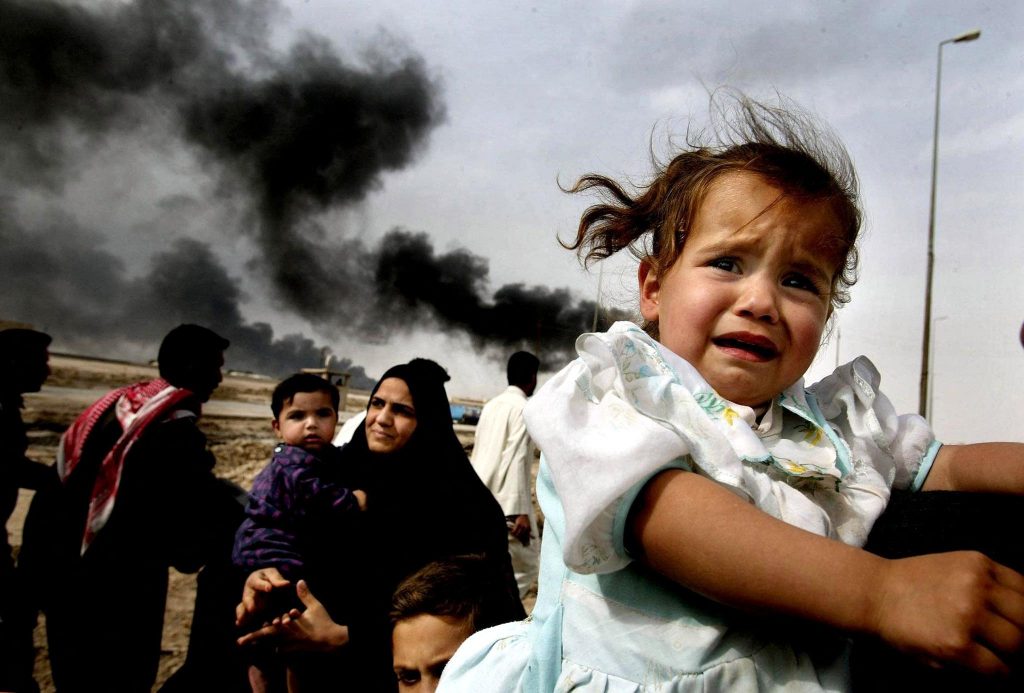
To this day, we are still being struck by the psychological shrapnel from that terrible day 25 years ago and the war that followed, in which at least 400,000 civilians perished. Inevitably, we talk about it much less than we used to – according to UN figures, nearly 40% of the global population today were not even born on 9/11. Yet the impact of the attack is still felt everywhere, sometimes in unexpected or subconscious ways.
For a start, it was the murderous opening salvo of the age of permacrisis, the first in a series of pulverising global disruptions: the financial crash, the rise of the populist right, Covid, Ukraine, October 7 and the Gaza war, the ongoing disaster of climate emergency, the darker consequences of the digital revolution.
In Kingsley Amis’s novel The Anti-Death League (1966), the army chaplain Major Ayscue is sent a semi-literate poem entitled “To a Baby Born Without Limbs”, purporting to be from God: “This is just to show you whose boss around here… I’ve given you one love-pat, right?/ You don’t want another.”
Well: 9/11 was the first obscene “love-pat” of the century; and there have been plenty of others – the grim geopolitical backdrop against which younger millennials and Gen Z have grown up.
In the immediate aftermath of the attacks, there was one brief shining moment of international unity, symbolised by Nato’s first (and only) invocation of article 5 (declaring that an attack on one member state is an attack on all), by Vladimir Putin’s initially strong support of Bush, and by a signed front-page editorial on September 12 written by Le Monde’s editor-in-chief Jean-Marie Colombani, entitled “Nous sommes tous Américains”.
The article pledged that France would stand “shoulder to shoulder with America, its ally for ever.” The following day I contacted a close adviser to Bush with whom I was on friendly terms to express condolences. Even then, as firefighters and rescue crews scrambled through the rubble and twisted steel for survivors, he was rueful about the likely durability of this global solidarity: “How long, exactly, is ‘for ever’?”
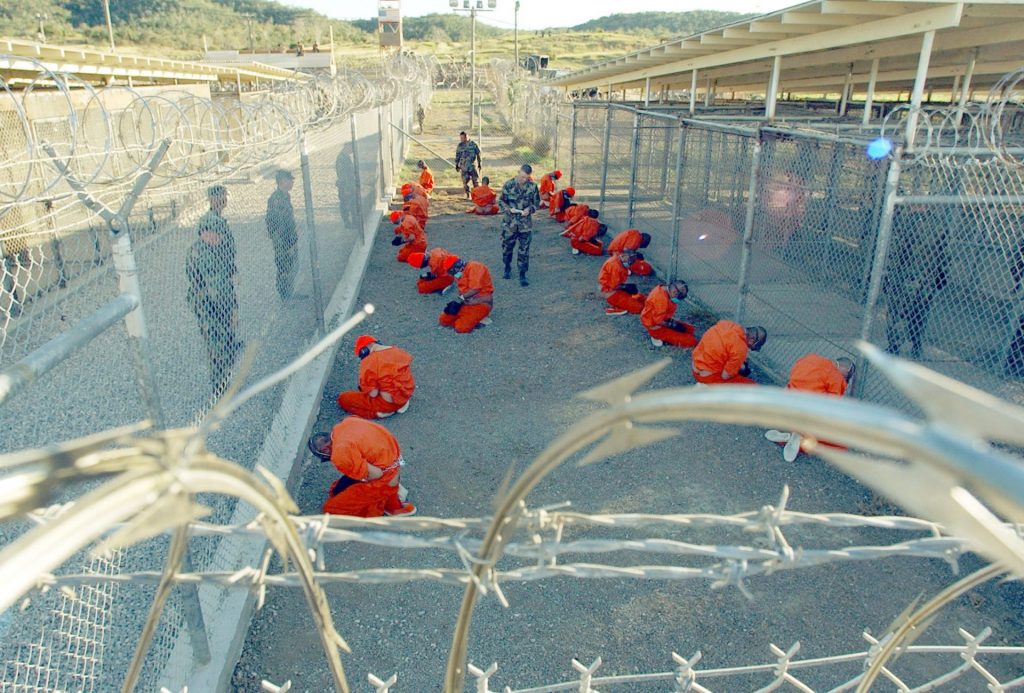
Not long, as it turned out. On January 18, 2002, the US Defense Department released a series of shocking photographs of so-called “enemy combatants” kneeling in orange jumpsuits, shackled and wearing blacked-out goggles at Camp X-Ray in Guantánamo Bay. Intended to signal American resolve, the images generated serious unease in those countries signed up to the “coalition of the willing” supporting the US in Afghanistan and elsewhere.
The alliance collapsed once and for all over Bush’s determination to end Saddam Hussein’s 23-year-long tyranny in Iraq. By the time Operation Iraqi Freedom was launched on March 20, 2003, American commentators, borrowing an old insult from The Simpsons, were calling the French – who strongly opposed this new phase of the war on terror – “cheese-eating surrender monkeys”. Bush and Jacques Chirac barely spoke for months. So much for “for ever”.
That conflict also left an indelible stain on Blair’s legacy and, to a great extent, still defines how he is perceived in the country he led for a decade. In due course, “Iraq” became shorthand for the cratering of trust in public institutions across the board. It set the table for anti-elitist fury after the financial crisis, grievance culture and the subsequent rise of the populist right.
In late 2002, it had become gruesomely clear that the US was also using “enhanced interrogation” methods – a euphemism for torture – at CIA black sites. In April 2004, America’s initially strong claim to the moral high ground suffered yet another grave setback when CBS broadcast the first appalling tranche of images showing the abuse of prisoners at Abu Ghraib.
Leading the charge to end these practices and get US strategy back on track was senator John McCain of Arizona, who would go on to be defeated by Barack Obama in the presidential race of 2008. As a former prisoner of war, who had suffered permanent physical damage at the hands of his Vietnamese captors, McCain brought serious moral weight to the controversy.
In September 2006, I was in his senate office on the day that he and his closest ally, Lindsay Graham of South Carolina (who would later, dismally, embrace MAGA) were trying to finalise legislation to outlaw any further use of torture. Throughout the afternoon, Graham dashed in and out with freshly drafted clauses. “Waddya make of this one, John?” he asked in his distinctive Dixie drawl.
At this point – five years in – it seemed at least conceivable that America might put right what was going so badly wrong. “In the United States,” McCain told me, “we need to acknowledge that serious mistakes were made in the conduct of this conflict and emphasise again and again how difficult this is.” He added: “One of the biggest mistakes was to somehow make our citizenry believe that this was going to be a very easy kind of deal.”
Too true. But, by then, conventional statesmanship had been trounced by the polarisation which we now regard as routine. On the right, the “neoconservatives” – often, though not always, supported by liberal interventionists like Blair – had insisted from the start that the jihadi threat could be destroyed only by a combination of military might, drastic security measures at home, and the one-size-fits-all export of Jeffersonian democracy.
This was a project that long predated 9/11: a geopolitical software that had been written by the Project for the New American Century think tank and in the pages of Rupert Murdoch’s magazine The Weekly Standard. Regime change in Iraq had always been a high priority for the neo-con intellectuals and their patrons in the Bush administration.
On September 11 itself, according to contemporaneous notes taken by his aides, US defense secretary Donald Rumsfeld was already speaking of the need to “go massive – sweep it all up, things related and not” and to consider the immediate case to “hit SH [Saddam Hussein] at same time – not only UBL [bin Laden].”
The phoney intelligence concerning Iraq’s alleged stock of weapons of mass destruction was bad enough: I supported the invasion in my columns after repeated assurances of its authenticity by very senior political and security sources on both sides of the Atlantic. That’s still on me, but – to put it mildly – it was a lesson in what can happen when intelligence is conflated with spin.
Just as bad was the neglect of US secretary of state Colin Powell’s multi-volume plan for the reconstruction of Iraq after liberation, and the embrace of Cheney and Rumsfeld’s conviction that “shock and awe” would do the trick followed – with ludicrous speed – by the holding of full nationwide elections less than two years after the fall of Baghdad. No “nation-building”, no new civic society to speak of, no substance to the supposed strategy to rebuild the liberated nation.
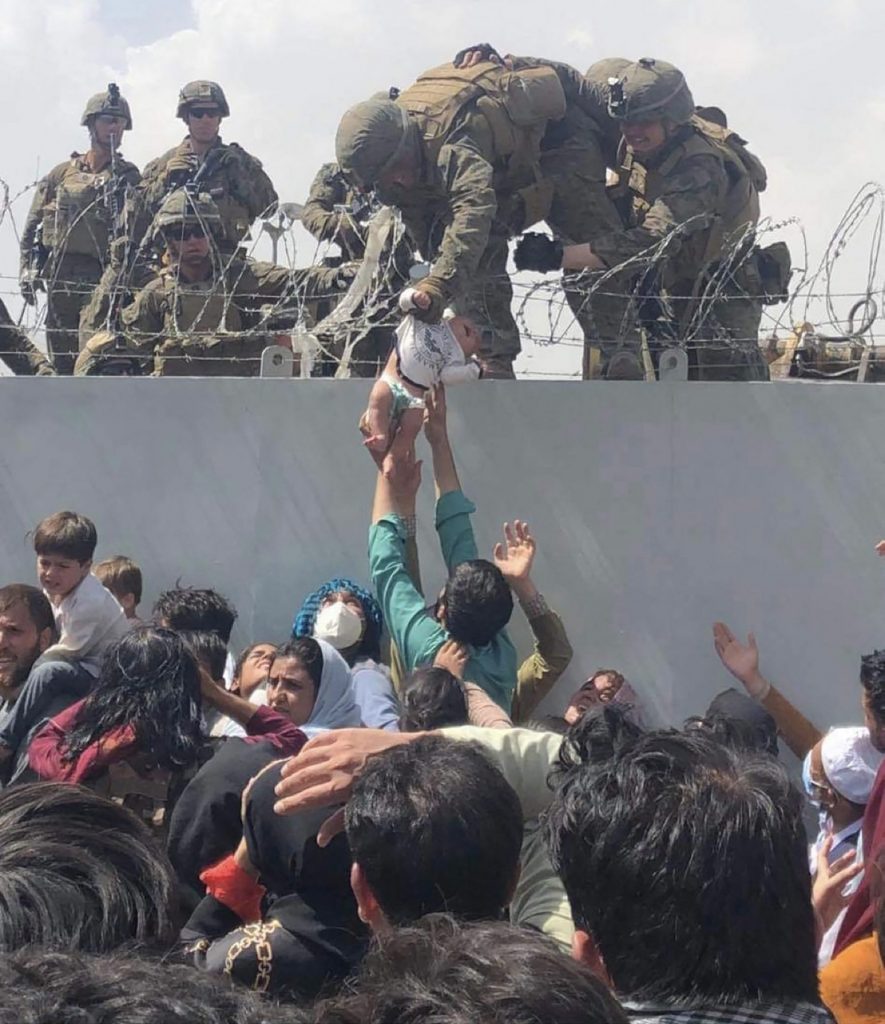
Today, Iraq remains a precariously fragile state, riddled with corruption and destabilised by complex factional struggles involving 50,000 insurgents. Meanwhile, the final US retreat from Kabul and return of the Taliban in August 2021 was not only the moment that Joe Biden’s poll ratings tanked (they never recovered): it also dramatised America’s new and diminished role on the world stage.
If the right had totally failed to understand the implications of its own objectives, the left refused point blank to accept or even seriously investigate the formidable convictions animating the enemy. It was psychologically so much easier to blame jihadism upon “western foreign policy” and to insist that the threat should be disaggregated by region.
Only a handful of hardliners like the American activist and intellectual Ward Churchill and Barack Obama’s former pastor Jeremiah Wright went as far as to echo Malcolm X’s famous line after the assassination of John F Kennedy about “chickens coming home to roost”.
But, in private, a great many more, and not only on the hard left, said the same thing, albeit in less egregious language. What did the masters of the American imperium expect? After half a century of postwar proxy conflicts, CIA interventions and predatory capitalism, was Bush really surprised that the US homeland had been attacked?
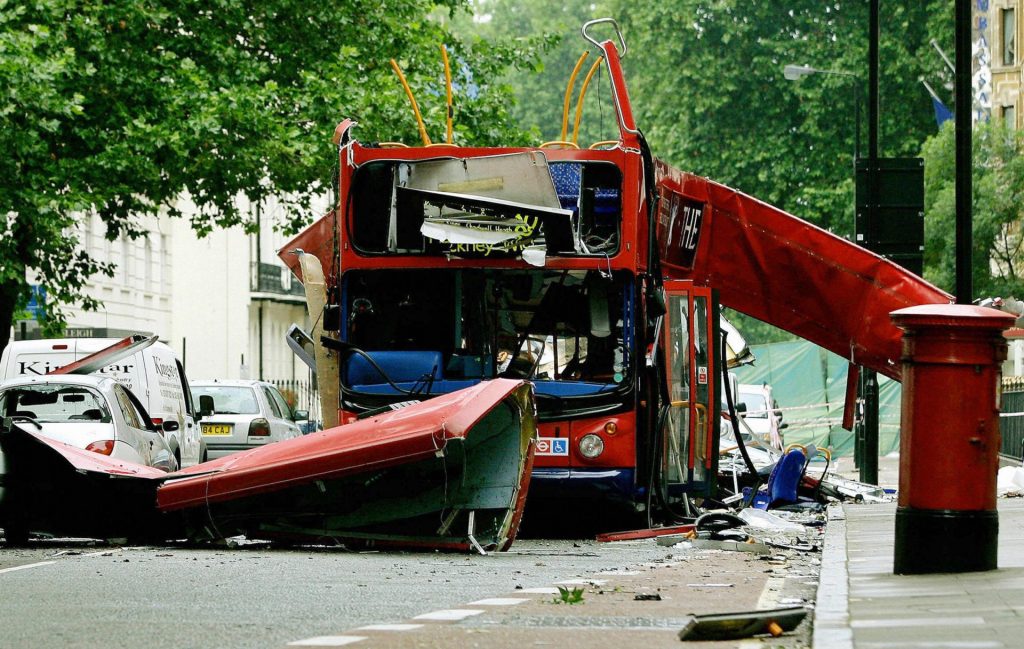
To this day, progressive politicians have failed abjectly to get the measure of Islamism and to acknowledge the sheer, resilient force of the theocratic ideology driving these relentless attacks: Bali, 2002 (202 dead); Madrid, 2004 (193); 7/7 in London, 2005 (52); Mumbai, 2008 (166); Charlie Hebdo, Paris, January 2015 (12) ; six further locations in Paris, including the Bataclan theatre, November 2015 (130); Manchester, 2017 (22): London Bridge and Borough Market, 2017 (8); Barcelona and Cambrils, 2017 (16).
Neither this blood-stained inventory, nor even the rise of Islamic State (Isis) and its murderous grip, by 2017, on 33% of Syria and 40% of Iraq, was sufficient to persuade many on the left that Islamism was more than pseudo-religious cosplay, beneath which lay the familiar rebellion of the powerless, the materially deprived and the disenfranchised against injustices, historic and present, inflicted by the west.
Even the normally wise David Miliband, the then foreign secretary, wrote in January 2009 that “the motivations and identities of terrorist groups are disparate” and that there was no “unified, transnational enemy”. This was to underestimate grievously the core fundamentalist beliefs that all the jihadists shared, and to confuse old-fashioned centralised terrorist structures with the loose-knit networks of the digital age.
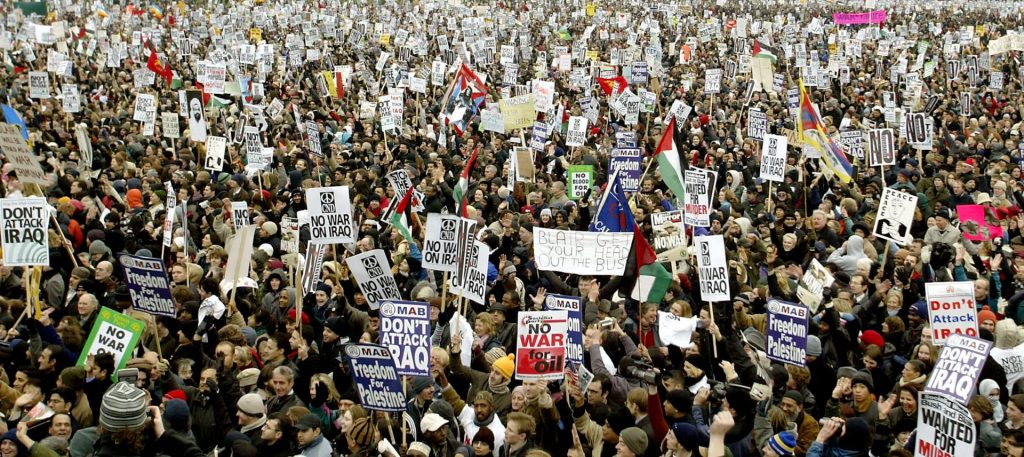
It was grimly ironic, too, that so many progressives made precisely the same mistake as the neocons: believing that, in the final analysis, everyone, everywhere, ultimately wants the same thing. Which, conveniently, tends to be what you stand for.
This was a woeful failure of imagination. It was also a form of moral cowardice and political decadence; still is, to be honest. Islamism is so much more than a protest movement of the desperate, or a cry of victimhood. It is an ideology of formidable sacred power, with a series of founding texts, notably Muhammad Rashid Rida’s The Caliphate or Supreme Imamate (1923) and Sayyid Qutb’s Milestones (1964) – books rarely, if ever, consulted by those in the free world who still (extraordinarily) believe that everything is explained by economic factors and by rational decision-making.
Al-Qaida, like the Muslim Brotherhood that spawned Hamas along with many other jihadi movements, believed implacably in the restoration of the Caliphate and the millenarian dream of a global Islamic order, the umma in its final form. The deepest roots of 21st-century Islamism are almost 1,400 years old. Yet its ingenious strength also lies in its comprehensive grasp of the world in which it operates.
In Al Qaeda and What It Means to be Modern (2003), the philosopher John Gray shows that, far from being a primitive or ancestral phenomenon, post-9/11 jihadism is fiercely contemporary in its use of global communications, sophisticated financial mechanisms, mastery of digital spectacle and neo-Jacobin commitment to revolutionary destruction.
In Terror and Consent: The Wars for the Twenty-First Century (2008), Professor Philip Bobbitt of Columbia University argues that al-Qaida was, in fact, a “virtual state”, and that the new cohort of terrorists fully understood the specific vulnerabilities of the globalised, networked world. There should be, he wrote, “a fundamental rethinking of conventional doctrines in international security and foreign policy, that is, in strategy and in law”; a radical renewal of the international rules-based order; and, most complex of all, a readiness by democratic states to stockpile preclusive laws before horrors took place, instead of rushing through bad measures in the wake of bloodshed.
In his intellectual depth, erudition and experience – he has occupied multiple senior roles on the US National Security Council – Bobbitt is to the war on terror what George F Kennan, Dean Acheson, Zbigniew Brzezinski and Henry Kissinger were to the cold war. Yet what is striking is how few of his fellow scholars have risen to the challenge: a failure of conceptual ambition and a disreputable preference by so many in the academy for life below the parapet.
Such abdications of responsibility in the western public sphere have been consequential, not least because the jihadis have proved, by stealth, to be formidable strategists. There were successes for the west: the astonishing and often unsung bravery of counter-terrorist operatives in foiling domestic jihadi plots (most dramatically, the Heathrow liquid-bomb plan in 2006); enhanced intelligence-sharing; hyper-kinetic special forces operations, notably the US Navy Seals’ raid on Abbottabad in May 2011, where bin Laden was finally located and killed; the allied liberation in 2017 of Mosul and Raqqa from Islamic State; the US assassination in January 2020 of Qasem Soleimani, mastermind of the Iranian Quds Force; and the accelerated development of drone technology, forensic science and cyberwarfare. But these achievements were overshadowed by deep systemic failures.
What bin Laden had understood, crucially, was that it was not enough to murder at scale. The enemy – the “Great Satan” – had to be discouraged, divided, exhausted and filled with doubt. “If fear enters the hearts of men,” he said, “winning the war becomes impossible.”
On every front, he was committed to “bleeding America to the point of bankruptcy”: not only financially (the bill to date is more than $8tn), but spiritually, morally and psychologically. In embracing the audacious plan of his lieutenant Khalid Sheikh Mohammed to fly hi-jacked aircraft into structures symbolic of American power, he showed that he grasped what Guy Debord had meant by the “society of the spectacle” and the speed with which the new “attention economy” was about to take control of the world in the digital era.
‘What bin Laden had understood, crucially, was that it was not enough to murder at scale. The enemy had to be discouraged, divided, exhausted and filled with doubt’
He also recognised that the attention span of the western mind was fast contracting. In 2005, I was told by a source who had access to intercepted jihadi documents that they were ordered in time frames of 50 and 100 years, measuring their objectives in generations, rather than months or years.
On 9/11, bin Laden and his allies were thinking of avenging the end of Muslim rule in Spanish Andalusia in 1492; of the historic humiliation of the Ottoman army at Vienna in 1683; of the fall of the Caliphate in 1922; and of the intolerable presence since 1990 of US troops in Saudi Arabia, land of the sacred sites of Medina and Mecca. We, in contrast, were thinking of what to have for supper.
As liberal democracy withered into technocracy and proceduralism, the Islamists – like the populist right – were crafting their own viral story. Even in its years on the run, al-Qaida had its own media arm, Al Sahab, just as Isis had the Al-Hayat Media Centre.
Much more keenly than their western adversaries, they understood from the start what the sociologist Zygmunt Bauman calls “liquid modernity”. Nimbleness is now the most important feature of effective asymmetric strategy.
Yes, the overwhelming military response to 9/11 was always likely to cost al-Qaida its command-and-control system and many of its cells.
But the dividend was the launch of a potent franchise (plot globally, act locally); a timeless brand with enduring appeal; a software, a merciless way of thinking which anyone could – quite literally – download to a laptop.
Who needs to go to a terrorist training camp in North Waziristan when you have broadband? In the 2020s, the most effective jihadi is what the former home secretary John Reid called “the fascist individual”.
Suggested Reading
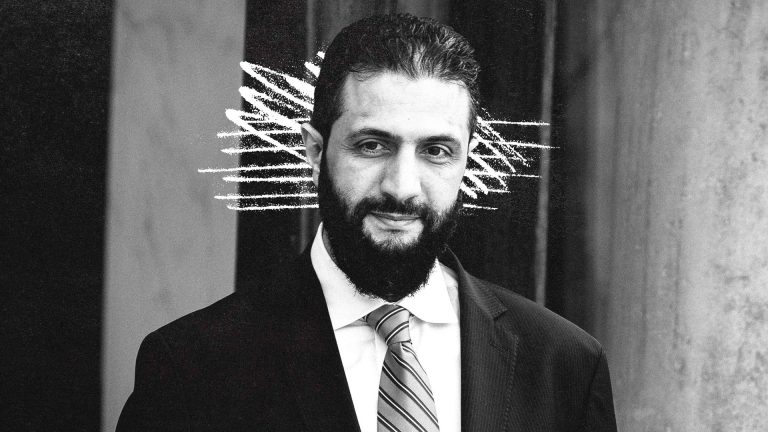
The terrorist who took over Damascus
The jihadis were always thinking ahead: to how, in years to come, western youth would respond to the conflict. As long ago as 1991, Mohamed Akram of the Muslim Brotherhood wrote in An Explanatory Memorandum on the General Strategic Goal for the Group in North America of the need to establish a base in US universities and cultural networks and to present Islam as a “civilizational alternative”.
The western campus protests after October 7 – explicitly welcomed by Hamas and part-orchestrated by campaigns linked to the Brotherhood – had featured in the blueprint for decades. If “Woke 1”, to borrow Alexandria Ocasio-Cortez’s classification, was focused on Black Lives Matter, #MeToo, and trans rights, then “Woke 2” has planted its standard firmly in Palestinian soil, demanding the end of Israel and a single state “from the river to the sea”.
Bin Laden was the scion of a Saudi dynasty made wealthy by vast construction and civil engineering contracts, the 17th of 54 children, with a private income of at least $1m a year. Another commercial dynast who fully understood the post-9/11 landscape – intuitively if not intellectually – was Donald J. Trump, not yet presenter of The Apprentice but already considering a political career.
As long ago as September 1987, he had declared that “I believe that if I did run for President, I’d win” – a claim which had been dismissed with a collective chuckle as standard Trump braggadocio, not to be taken literally or seriously. Indeed, his immediate response to 9/11, on the day itself, was a grotesque personal boast. “40 Wall Street [one of his properties] actually was the second-tallest building in downtown Manhattan,” he said. “And now it’s the tallest.”
This was both untrue (AIG’s American International Building at 70 Pine Street was taller) and breathtakingly tasteless. But what Trump understood, deploying that deep pre-rational faculty with which the world has since become all too familiar, was that the American psyche would soon make a dramatic about-turn.
The war-weary US would cede its claims to unipolar control of the world, and – except for intermittent actions like his raid on Caracas and deranged Iranian adventure – retreat from the global stage. At the same time, as if in compensation, American culture would become more bombastic, more hyperbolic, more theatrical: more like Trump, in other words.
What the US lost abroad, it would offset with reality television, MMA, WWE, superhero movie franchises, and digital outrage. Just as bin Laden had exploited the vulnerabilities of the west, so Trump would hack liberal democracy and become the most powerful man in the world – twice.
In so many ways, he was the beneficiary of the world that was born on 9/11. As Richard Hofstadter had written in the seminal 1964 essay, “The Paranoid Style in American politics”, conspiracy theories had long been part of the nation’s psychology: “the modern right wing… feels dispossessed: America has been largely taken away from them and their kind, though they are determined to try to repossess it and to prevent the final destructive act of subversion.”
But Trump saw the potential to turbocharge that instinct radically – and did so by leading the conspiracist “Birther” campaign; claiming that “Barack Hussein Obama” had not been born on American soil and speculating repeatedly that his long-form birth-certificate would reveal his Islamic origins: “maybe it says he is a Muslim” (it didn’t).
In December 2015, five days after 14 people were killed in the San Bernardino terrorist attack, Trump put a “total and complete shutdown of Muslims entering the United States” at the heart of his first presidential campaign. Suddenly, Bush’s speech to a joint session of both houses of Congress, only nine days after 9/11, in which he had told “Muslims throughout the world” that “we respect your faith” seemed a very distant memory.
Even as Trump promised to end what had become known as the “forever wars” – the “America First” kernel of MAGA – he was domesticating, with unalloyed bigotry, the idea that all followers of Islam were to be treated with suspicion. He has often alluded to the poisonous “Great Replacement Theory”: the conspiracist claim that liberal elites are systematically importing immigrants, and especially Muslims, to supplant white populations.
In similar spirit, he made greedy use of the powers bequeathed to him by the Bush administration; of the “unitary executive theory” that Cheney had enacted to give the presidency sweeping authority and immunity; and – most chillingly – he turned the security state created after 9/11 into a weapon of personal autocracy.
The deplorable excesses of US Immigration and Customs Enforcement (ICE) – including the killing of Renée Nicole Good and Alex Pretti in Minneapolis in January – were an unintended long-term consequence of that agency’s creation, as part of the new Department of Homeland Security, in March 2003. The disgusting footage posted on X in March 2025 of 261 deportees being herded like animals into the Centro de Confinamiento del Terrorismo (CECOT) in Tecoluca, El Salvador, showed that the precedent of Guantánamo and Abu Ghraib was no longer a terrible warning but a model for the new choreography of fascism.
As Adam Serwer of The Atlantic has written: the cruelty is the point. Timothy Snyder, one of the most important chroniclers of 21st-century tyranny, calls this “sadopopulism”.
Another legacy of 9/11 that Trump has ruthlessly exploited is the surge in Christian nationalism. The Evangelical “moral majority” was well-established in American politics before the 2001 attacks. But the rise of jihadism encouraged a deeper apocalypticism and crusader mentality that has become pivotal in US electoral behaviour.
In May 2018, for example, the bestselling televangelist and fundamentalist pastor John Hagee delivered the benediction at the opening of the new US embassy in Jerusalem, which he hailed as the place “where the Messiah will come and establish a kingdom that will never end.” In his book The End of the Age: The Countdown Has Begun (2021), Hagee claims explicitly, citing Ezekiel, that a “massive pan-Islamic military force” will invade Israel as a prelude to the Second Coming.
Suggested Reading

The fall of Saigon, 50 years on
Nor is this sacralising trend confined to the US. The black-masked protesters who brought Dover to a standstill on Saturday and then Portsmouth late on Sunday were marching under the banner of the far right group Patriot Platform, whose leader, Daniel Thomas, AKA “Danny Tommo”, has claimed (implausibly but significantly) that “We’re doing this under Christianity.”
His ideological patron, Tommy Robinson, has also pivoted sharply towards Christian nationalism, adopting the slogans “Christ is King” and “Deus Vult”: the second of which was prominent on banners and T-shirts at the 2017 Charlottesville race riots and the January 6 insurrection.
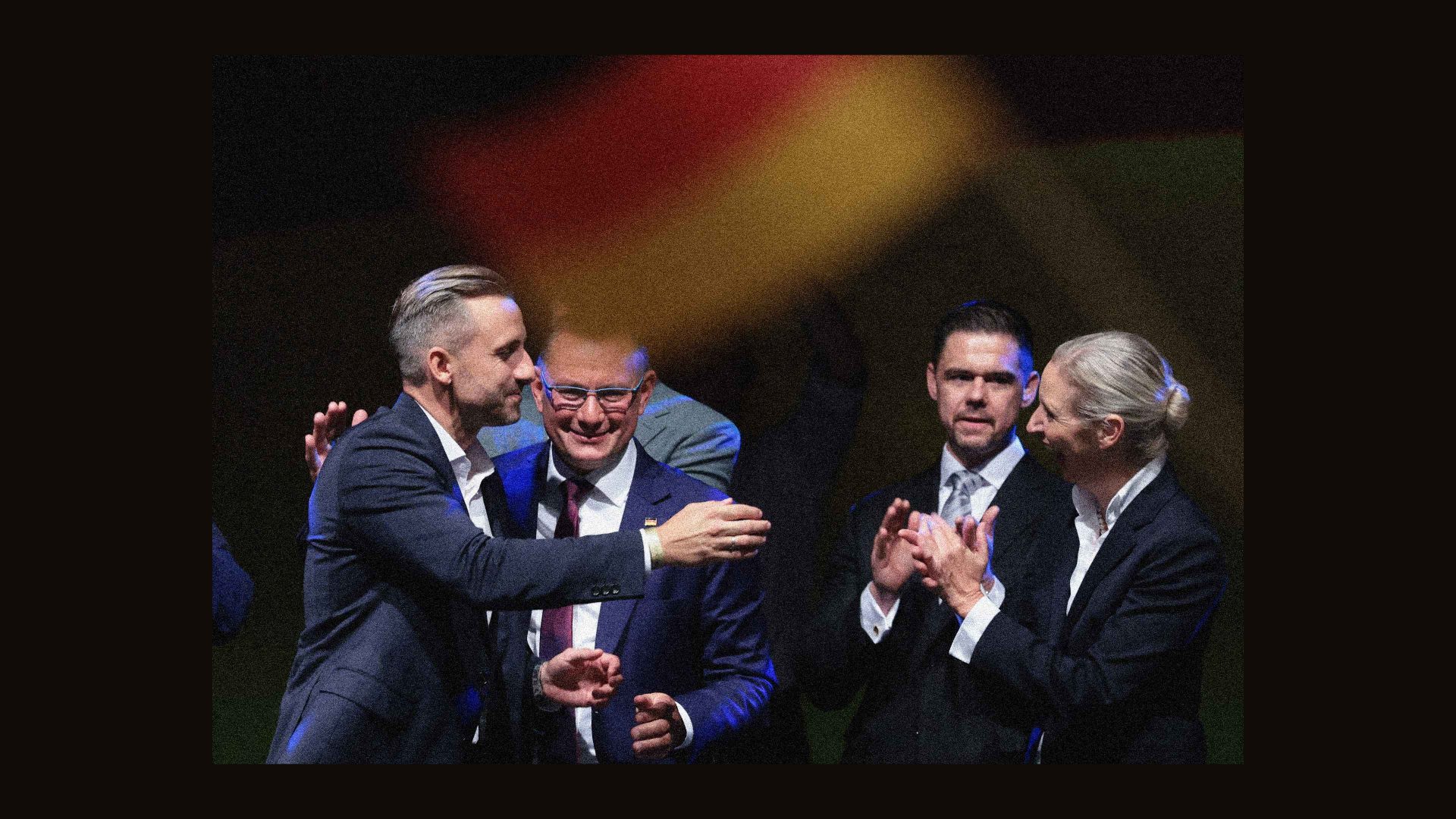
When Zia Yusuf, Reform UK’s home affairs spokesman, calls for “Christian heritage” to be protected by the listing of churches, implicitly to stop them being converted into mosques, he is blowing the “God whistle”. This alignment of far right parties in Europe with so-called “cultural Christianity” stretches from the AfD in Germany, via Vox in Spain, to National Rally in France. The conflict triggered by 9/11 did not start as a war of religion – but it has certainly yielded one.
In which respect: perhaps the greatest failure of the past 25 years in this country has been the reluctance of successive governments to hug the cactus of what Rowan Williams calls “argumentative pluralism”. One of the few heroes of the whole saga is Louise Casey, a crossbench peer since 2020, who, in her reports on Rotherham Council (2015), social integration (2016) and rape gangs (2025) has been utterly scrupulous in emphasising both the problem of anti-Muslim prejudice and the abject failure of the authorities to address the real issues raised by conservative Islam and its resistance to integration.
It is a depressing list: the “intolerant and aggressive Islamic ethos” in some Birmingham schools revealed in 2014 by Peter Clarke’s inquiry into the alleged “Trojan Horse” plot; the death threats received by Andrew Moffat, assistant head teacher at Parkfield Community School (also in Birmingham), in 2019 after Muslim parents objected to the classroom discussion of same-sex relationships in his “No Outsiders” project; the teacher from Batley Grammar School in West Yorkshire still in hiding, five years after his lessons upset another group of Muslim parents; above all, the rape gang scandal, a scar on the national conscience, and now, finally, the subject of a national statutory inquiry under Baroness Anne Longfield, 24 years after Ann Cryer, the then Labour MP for Keighley, first raised the alarm.
And the story is always the same: government agencies, local authorities and the police too often more fearful of the charge of political incorrectness than they are concerned with enforcing the law and confronting knotty social challenges. Of the many lessons of 9/11, one should be that the word “Islamophobia” is what the late Robert Jay Lifton called a “thought-terminating cliché”: in a pluralist society, the right to criticise, interrogate and satirise all religions must be non-negotiable.
What we should ensure, instead, is that the law prevents anti-Muslim bigotry, enforceably so, and amend it accordingly if it does not. But that is not the same thing at all as an exceptional ring fence around one religion, and one religion alone.
As Kenan Malik wrote in 2009, referring to the Salman Rushdie affair and the death sentence passed in 1989 by the Ayatollah Khomeini on the novelist over The Satanic Verses, we have “internalized the fatwa”. Shamefully, we have preferred a quiet life to a good one.
Scattered to the winds the jihadis may be in September 2026, but they are gathering once more in Africa, especially the Sahel, in Yemen, and (under the banner of Isis) in Syria. The conflict is paused, not over.
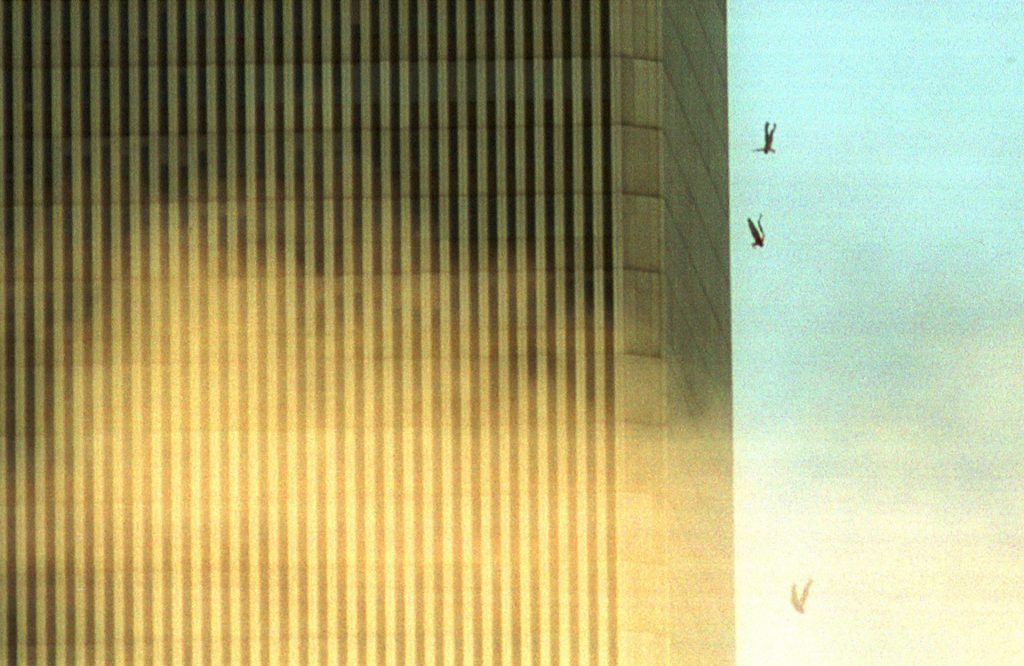
I think today of the haunting “Falling Man” photograph taken by Richard Drew of the Associated Press at 9:41am EST of an unnamed individual plunging head-first from the north tower to his death. In a riveting 2006 documentary, director Henry Singer tried to establish his individual’s identity without reaching a definitive conclusion.
The image also inspired the title of Don DeLillo’s novel Falling Man (2007), which captures the abrupt shift between the Before and the After: “It was not a street any more but a world, a time and space of falling ash and near night.” Reluctant as we might be to acknowledge it, we still inhabit that unsettled, twilight world.
One of my more eccentric pet theories is that, in the age of hypermodernity, popular culture functions as a sort of collective unconscious, from whose depths profound truths occasionally rise unbidden into the light. A conspicuous example is Edward Zwick’s movie The Siege, a decent but (at the time of its release) essentially unremarkable thriller about a jihadi terrorist cell in New York, starring Denzel Washington, Annette Bening and Bruce Willis, which opened in the US in November 1998 to mixed reviews and disappointing box-office receipts.
In retrospect, the movie is almost unbelievably prophetic, a premonition filled with dread. Bening plays a CIA officer, Sharon Bridger, who is running a double agent trusted by the jihadis; Washington is FBI ASAC Anthony “Hub” Hubbard, whose toughness is matched by a deep faith in due process; and Willis is general William Devereaux, who has covertly kidnapped an Islamist Sheikh. As the attacks in New York escalate and the death toll climbs into the hundreds, Devereaux is tasked by the White House to impose martial law in the borough of Brooklyn.
In the movie’s most important and uncomfortably resonant scene, Hub tries (unsuccessfully) to prevent the general from torturing an Arab-American detainee to extract information about the next bombing.
“What if they don’t even want the Sheikh, have you considered that?” he says. “What if what they really want is for us to herd our children into stadiums like we’re doing? And put soldiers on the street and have Americans looking over their shoulders? Bend the law, shred the constitution just a little bit? Because if we torture him, general, we do that and everything we have fought, and bled, and died for is over. And they’ve won. They’ve already won!”
Maybe they have.