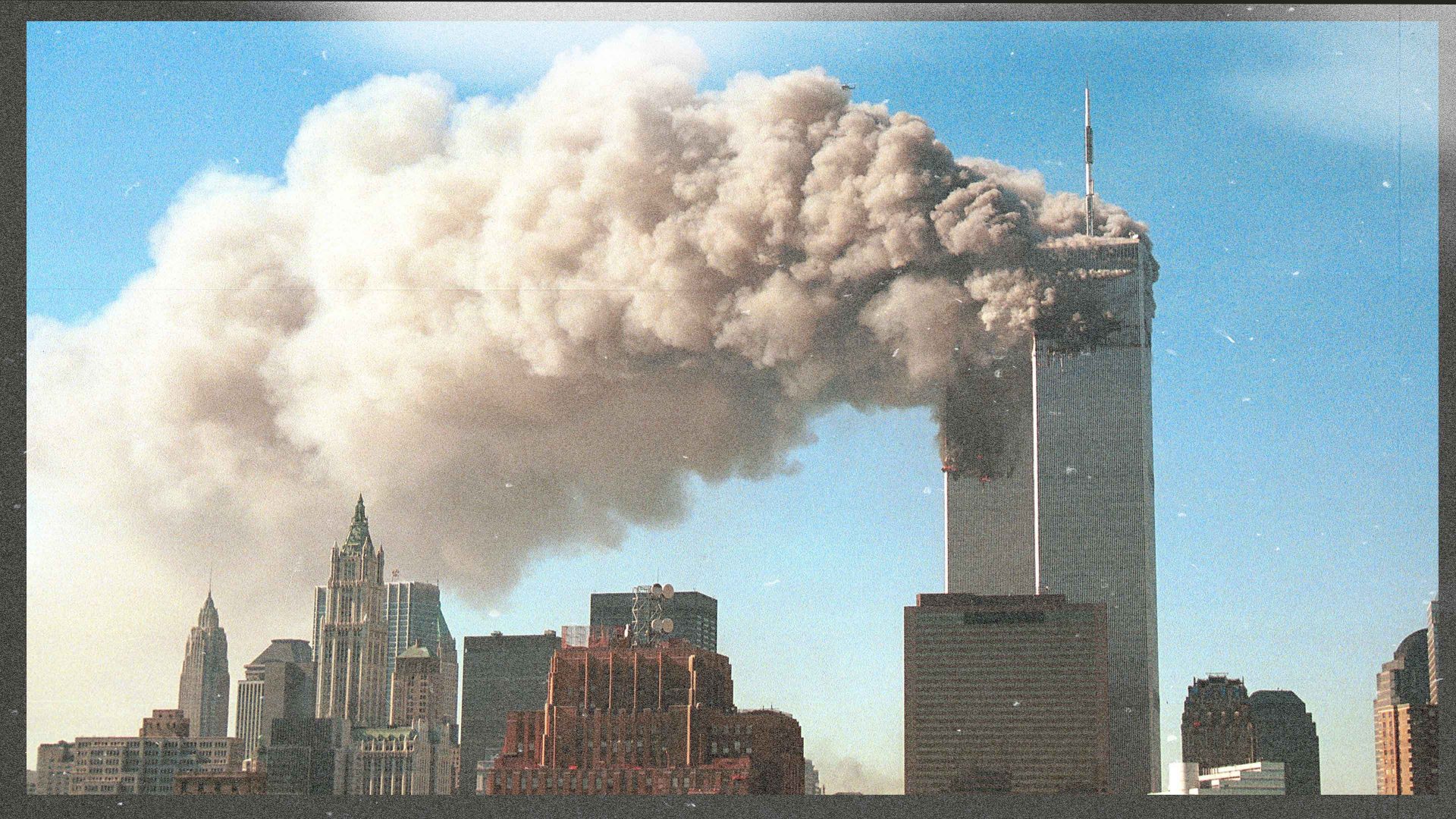
I did not see the footage of the hijacked planes crashing into the World Trade Center until more than three months after the attack. Twenty-five years later, I can vividly remember where I was when I heard about 9/11. But unlike most people, I was soon living inside the war it unleashed.
My phone rang at 9am on September 12 as I sat on the upper bunk of a sleeper train rattling from Urumqi to Kashgar, in China’s remote western region of Xinjiang. I was waking up to the gravelly black Taklamakan Desert and waiting for a conductor to deliver a thermos of tea.
“Just calling to say hi,” said my editorial assistant, Li Xuehui, from Beijing.
“No, you’re not,” I said, “you never call anyone to say hi. What do you want?”
“Well, I thought you might like to know what’s going on in New York,” she said.
Yeeeeessssss, go on.
“Thirty thousand people are dead and the president is missing,” she said. And with that the phone went dead. Neither of those things was true, but nobody knew very much that morning, least of all me.
What I could not have known was that Miss Li’s call to me on a train crossing one of the loneliest parts of the world would mark the beginning of a quarter of a century that took me into Afghanistan and Iraq to cover the wars that followed; into the lives of soldiers, spies, politicians, profiteers, warlords, Taliban, terrorists and ordinary people. And eventually into captivity myself.
I spent many years watching the consequences of 9/11 unfolding, at close quarters. I watched as the convictions that launched the “war on terror” gradually began to unravel and then collapse.
Suggested Reading
Afghanistan, the land of catastrophe
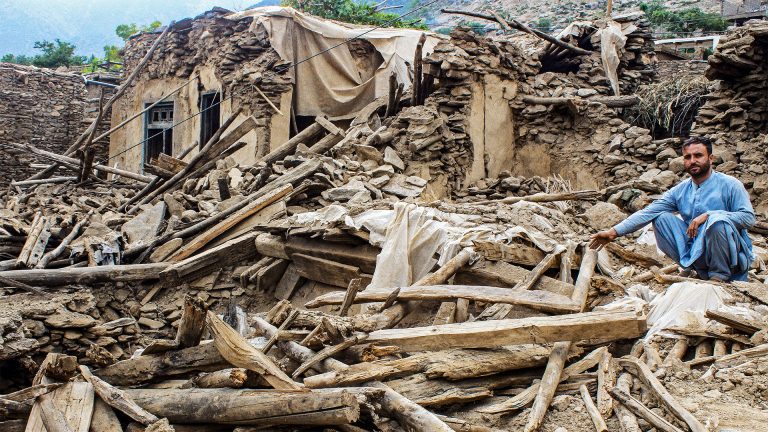
Twenty-five years later, the Taliban are back in power in Afghanistan. Al-Qaida survives. The people who paid the biggest price for the war are largely absent from the anniversary reckonings of what it achieved and what it destroyed.
And still I remember that train. When I finally arrived in Kashgar, about 10 hours after the phone call, the Chinese government had already banned the 9/11 footage. The largely Uighur Muslim population of the old Silk Road town was subdued and afraid.
I went from the Kashgar railway station to a wooden cafe, where men wearing velvet skull caps sat on benches at long wooden tables and watched me and whispered to each other: is she Muslim? The television suspended in a high corner showed a Mandarin Chinese soap opera, or talent show. No one was watching. The world – their world – had just changed. And not for the better.
A thousand miles away in Karachi, my friend, the late photographer Stephen Shaver, an American, was being chased through the streets by crowds of men enraged that their country’s leader, general Pervez Musharraf, was siding with George W Bush in what was starting to look like war.
Either you’re with us, or you’re with the terrorists, Bush had said, in promising revenge against al-Qaida, Osama bin Laden, and the Taliban regime in Afghanistan that had given them shelter. Musharraf knew which side his bread was buttered.
Bush’s binary flashed around the world. Nato, for the first and only time, invoked its Article Five provision that an attack on one member was an attack on all. Pakistan became a US ally while elements of its state continued enabling the Taliban.
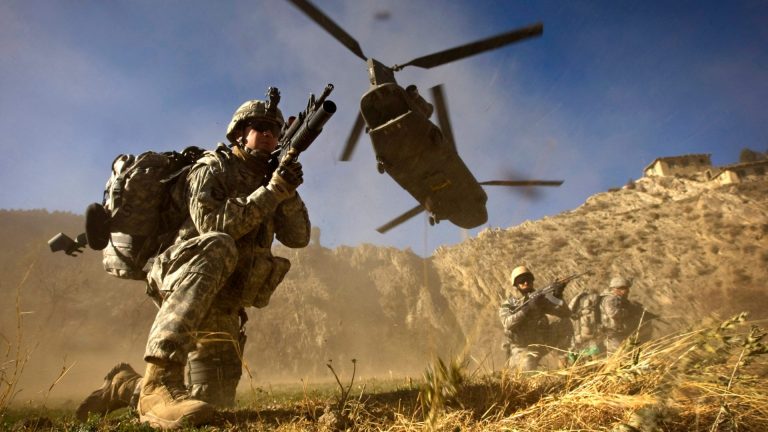
I flew to Uzbekistan and from there crossed the Amu Darya river into northern Afghanistan, as a guest of the Northern Alliance, in time for the American invasion. I witnessed the bloody siege of Qala-i-Jangi, the tessellated mud fortress of the warlord general Abdul Rashid Dostum, which had been overrun by foreign Taliban fighters.
I watched as a US missile slammed into its centre, sending up a huge mushroom cloud, and later sat at Dostum’s knee amid the rubble of the fort (he was on a throne-like chair) as he gave a press conference afterwards. He put captured Taliban in metal shipping containers. Some of those prisoners were dropped from helicopters. But the Taliban leadership escaped and fled across the border into Pakistan where they found sanctuary, regrouped and launched an insurgency that lasted for 20 years.
Life in Kabul was a surreal mix of fear and fun, characterised by a fin-de-siècle feeling of living on the edge of danger, with death and loss never far. Suicide bombings shattered the windows; restaurants had layers of armed security; young men, stoned and bored, manned ubiquitous checkpoints; government ministers were propositioned over wine delivered in Nato planes, or whisky that arrived on flights from New Delhi.
My friend and colleague Ahmad Sardar was shot in the head at point-blank range, along with his wife and three small children, as they sat down for a New Year’s Eve dinner in a five-star hotel. Miraculously, one of the kids survived.
In the midst of this, brilliant young Afghans pursued education, scholarships, careers in public service, believing that the pledge of the international community to stand, as the slogan went, “shoulder to shoulder” with Afghanistan meant their country could build a future in the modern world.
That was the promise. They believed it. That’s the difficult thing to remember now.
Suggested Reading
Trump’s own Afghan scandal
It ended quickly – but for those of us paying close attention, not surprisingly. After 20 years, the westerners left. The Taliban returned. People I know well, friends, colleagues, fled, or tried to. Today, many are in exile, separated from family, dealing with the mental and emotional shock and grief.
Some who remained are doing their best living under a movement that the war was supposed to have defeated. Others are in hiding, after five long years, waiting for change, for jobs, food, school, hope.
By luck, I was on one of the last commercial flights to leave Kabul before the Taliban took control. When I returned a year later, the Taliban detained me, interrogated me, threatened to imprison and kill me, and forced me to make statements repudiating my own reporting.
But the war on terror has left another legacy, far from Afghanistan or Iraq. On September 12, 2001, the men I saw whispering in that cafe in Kashgar already seemed to understand that something seismic had happened. China would seize on the language of the war on terror to recalibrate repression of the Uighurs as counter-terrorism, with mass detentions, torture and other abuses.
Governments of Muslim nations that loudly condemn America’s wars have largely looked away in silence, as the Chinese government has forced a million Uighurs into detention camps.
Twenty-five years later, I think often about those men sitting at the long wooden tables murmuring among themselves beneath a television no one was watching. They could not possibly have known just how bad it would be.
Neither could I.