
“My name is Matt Withers. I picked up the Daily Telegraph, and I woke up in 1993. Am I mad, in a coma, or back in time? Whatever’s happened, it’s like I’ve landed on a different planet.”
One could be forgiven for thinking of the iconic opening monologue of Life On Mars upon glancing at Britain’s most increasingly unhinged newspaper today. Or at least expect to find a review of Ace of Base in concert, a piece on how much the latest ITV Telethon raised or a profile of English football’s thrilling new prospect Nick Barmby.
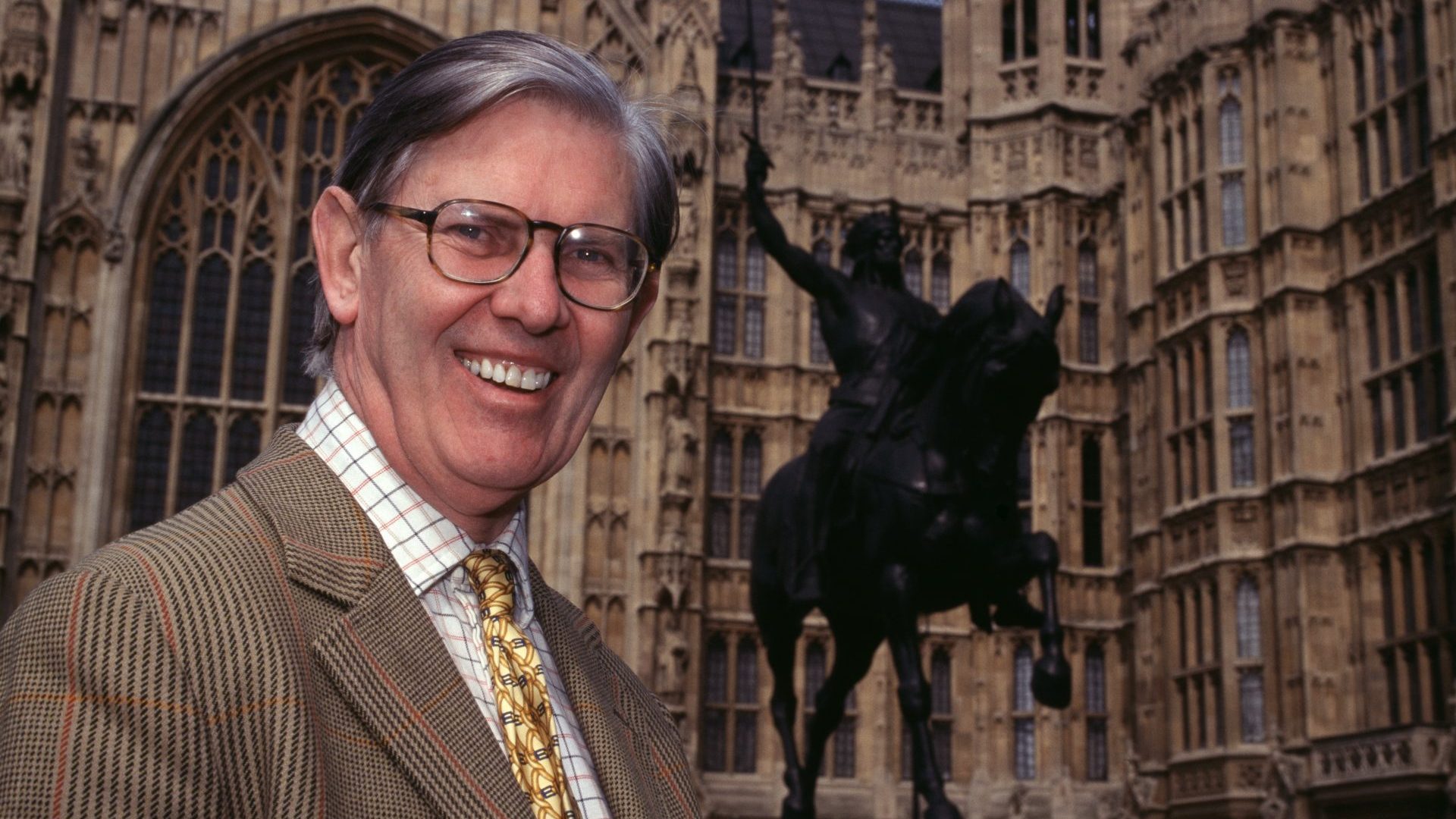
For there was a comment piece tearing apart Keir Starmer’s proposed Brexit reset from the exciting, fresh new face of Kemi Badenoch’s Conservative Party… Sir Bill Cash.
Bill Cash! Admit it, if pressed, it would have been a toss of a coin if he was still with us or long since gone to that great dining club in the sky. The man who was one of John Major’s b*stards as far back as 33 years ago, who as a founder member of the European Research Group spent many years “researching Europe in Peter Lilley’s office” (the original “Netflix and chill”), who was the chief lawyer among the ludicrously self-styled “star chamber” who made Theresa May’s life so miserable.
And here he is, in 2026, still leading the anti-federalism charge in a national newspaper, as incongruous as tuning into Claudia Winkleman’s chat show and discovering her guests are Robert Pattinson, Dua Lipa and the Krankies. Is the Telegraph trying to cock a very ironic snook at its very German, very pro-European new owners?
Under the headline “Starmer’s Brexit reset is an assault on British democracy”, the now 85-year-old reheats the same arguments he has been making for decades, to the extent of using the word “Maastricht” – ask your parents, kids! – in the second paragraph. And – as was the case under Major, and every subsequent leader of the Conservative Party up to and including May – that argument is born of wistful nostalgia, misremembered history and myths.
“My long years of campaigning have been focused on challenging the decision to join the European Community in 1972 by a small margin of votes in Parliament, and without asking the voters in a referendum,” writes Cash, who apparently slept through 1975.
Now though, Starmer wishes to take us back, and for no good reason. Because, as Cash claims: “Despite the mendacious propaganda being generated by the Government and rejoiners, our trade with the EU has not been undermined by our departure.”
New World readers won’t need reminding that exports of goods to the EU have struggled under the weight of new customs checks and regulatory barriers, that goods exports to the EU in 2024 are roughly 18% below their 2019 levels, that complex paperwork is required to prove a product was actually made in the UK, that there remain major hurdles for the food and drink sector, where physical inspections add cost and delay. All things this reset aims to tackle – but based on “mendacious propaganda”, apparently.
Suggested Reading

Rejoining Europe: the policy which could ironically unite Britain
And what’s more, they have no democratic mandate for it! Because, although you and I might remember Labour winning a landslide victory less than two years ago, “all this subterfuge was done with fewer Labour votes in the 2024 election than Jeremy Corbyn in 2019” – a complete non-sequitur, but to Star Chamber Bill, apparently rendering it somehow illegitimate.
But best of all is Cash’s objection as to how Labour is reported to plan to sign Britain up to EU single market rules, through secondary legislation arcanely known as Henry VIII powers. “Most egregiously, the laws will be made by statutory instrument via an autocratic procedure aptly named after Henry VIII, not by primary Acts of Parliament,” writes Cash. “This is reminiscent of aspects of the European Communities Act 1972 which led to our undemocratic subjugation and the rubber stamping of EU laws.”
Many readers will remember the last time a government used Henry VIII powers with regard to European legislation – by Boris Johnson to “get Brexit done”. Johnson’s Withdrawal Agreement Bill included widespread Henry VIII powers to change UK law to align or diverge from EU rules without new acts of Parliament.
But Cash brushed this off. “For those who suggest this Henry VIII procedure was used when we left the EU in 2020, it was justifiable because our democratic self-government had been undermined by the European Communities Act 1972.” Oh – that’s alright then!
Tempting as it is to just laugh at such ghosts of Brexit past as Cash – and we have, just now – his reappearance is a reminder of two things.
Firstly, that he is 85 – around six years older than the average life expectancy of a man in the UK – is a reminder that, as Peter Kellner wrote in our pages last December, “the pro-Brexit majority in 2016 has gone. It has literally died out”.
Since the referendum, more than six million Britons have died. And since we know that turnout among older voters was higher than average, and that those over 65 backed Brexit by 64-36%, among people who are alive today and who voted in the 2016 referendum, remainers exceed leavers by 14.3-14.2 million. Cash is literally arguing on behalf of the dead.
And secondly, a reminder that Keir Starmer has always been lucky in his opponents. In running for the Labour leadership, he only had to beat Lisa Nandy and the Pointless answer Rebecca Long-Bailey. As leader of the opposition he faced, in Boris Johnson and Liz Truss, the two worst prime ministers in British history, and in Rishi Sunak the wettest.
This is a golden opportunity for Starmer to reset our relations with Europe and put Britain back on the right track again. Because if the best the opposition can put up is an octogenarian ex-MP last politically relevant the year Mr Blobby topped the charts, they’ve given up the ghost.
 Most popular


My truly deranged encounter with Trump apologist Kellyanne Conway


Suella Braverman’s book has sold only 106 copies. This is why

The moral depravity of Robert Jenrick


Hungary’s lesson to the world: Populism isn’t permanent