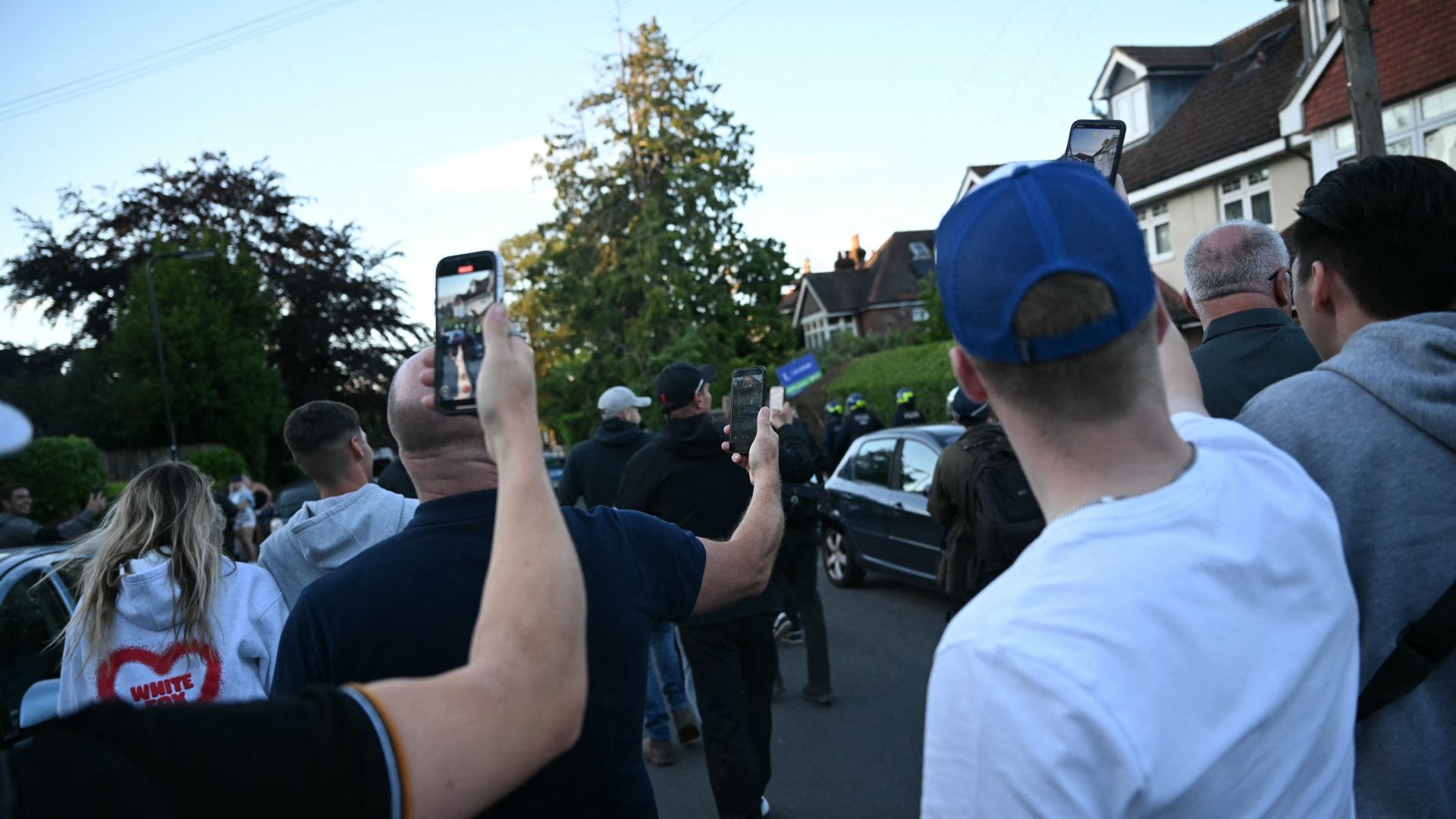
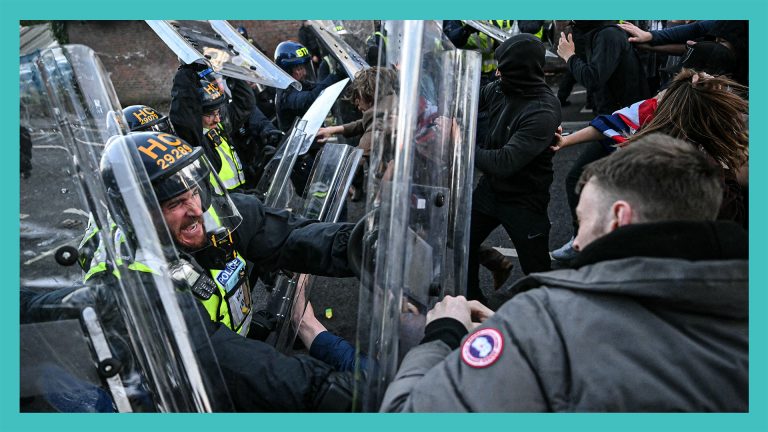
Spend a few minutes analysing the videos posted from the “protests” following the murder of Henry Nowak and, among the puffed-up lads in sportswear and the balaclava-clad casuals, you’ll see dozens of young men with their phones raised, turning chaos into content to feed their feeds.
And on those feeds you see clips like the one where, for example, a wheelie bin’s contents is set alight as it trundles – painfully slowly – towards a waiting line of riot police. As it reaches them, the camera turns to frame a man, who is “reporting from the front lines”.
“When it comes to exploitation of the most vulnerable in society, you have to expect this sort of reaction… civil unrest is the inevitability [sic] of mass-migration… cities and areas demographically replaced… this is what happens when people no longer recognise the areas they previously knew from their generations and families and ancestors.”
As a piece of reporting it’s not going to win any Pulitzers, but the clip circulating on X after the protests in Southampton illustrates a broader trend, which is driven by smartphones and social media. Everybody wants to be a creator.
Suggested Reading
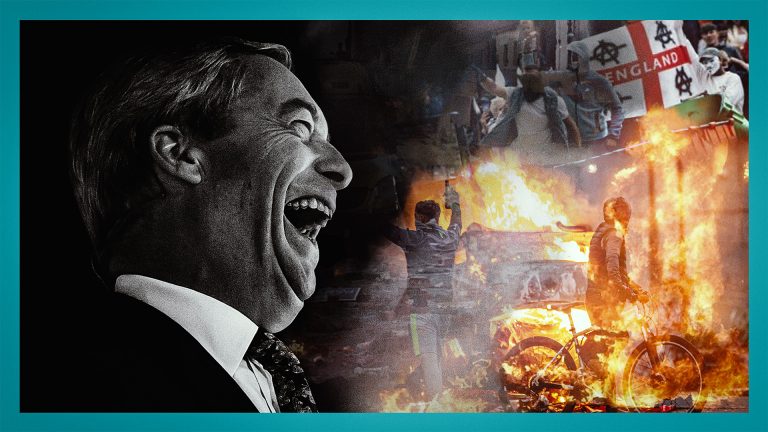

Nigel Farage and the politics of murder
This, per se, isn’t new. After all, cameraphones have been a fixture of our lives for nearly 15 years now, and “citizen journalism” has been a thing since X was Twitter. The past couple of years, though, have seen a shift in how social platforms reward, promote and prioritise content, and this is leading to real-world shifts in how events like those in Southampton play out.
People are trying to capture footage of a protest in the hope of winning that hour’s algo-lottery. Social media platforms have shifted towards “creator payouts”, which are systems that pay out actual cash to eligible users who hit the engagement motherload in terms of views, shares, comments and reactions. That means the more extreme the situation the better, as it will increase our chances of getting a big viewcount and a big payout.
If your clip of an angry, sunburnt man lobbing rocks at a copper is the one that tickles the algorithm the right way, that’s potentially worth a good few hundred quid, so why wouldn’t you film and post it? It all feeds Elon’s right-wing outrage machine.
These incentives create their own flywheels. After all, if you’re filming in the hope of getting some good footage, you’ve got an incentive to stoke the fires. You need it to kick off.
In another clip from Southampton, the police line being charged by a group of men, one of whom is incongruously dressed in a brown tweed suit, his fists raised in a vaguely-pathetic parody of the Marquis of Queensbury. “Who’s that guy in the suit?”, someone off camera shouts, roaring on the fighters. They’ve found a potential viral star. This is great content.
Suggested Reading
Our ‘pure cold rage’ should be at Farage and Robinson
The ability to report events in near-realtime has been one of the genuine boons of the digital age. Documenting high-tension interactions between the state and the people is a vital part of helping ensure policing that is proportionate – particularly important given the circumstances surrounding Henry Nowak’s death. Whether this reporting is improved by systems that incentivise violent footage that feeds into specific, racially-motivated narratives propagated by the world’s richest man is debatable.
Think of it like this. A specific narrative around the reasons Henry Novak died is developed by right-wingers and racists on X. It is promoted by politicians like Rupert Lowe, who is in turn promoted to millions of people by Elon Musk. This promotion earns Lowe money.
When riots – stoked by this rhetoric – inevitably break out, the same system incentivises violence by further rewarding those who capture the most extreme footage, granting them money, or fame, or both.
This is how things work now: screwfaced men performing anger for the camera on muggy nights in a town or city near you, as the person filming promises to split the profits on the viral payout. Everything is content and civil disobedience pays. Welcome, everyone, to the creator economy.
 Most popular
Suella Braverman’s book has sold only 106 copies. This is why
The Brexit majority has gone for ever – rejoin now has a majority of 9 million
The mask has slipped – now we can see the real, shameful face of Reform
The riots in France are being stoked by Russia and Iran