
It’s 2026. Every song ever (-ish) is available to stream from a small device in your pocket, in exchange for a monthly fee or some annoying ads. Enjoy it, because, according to the music industry veteran Jimmy Iovine (co-founder of Interscope Records who also helped build Beats by Dre, sold to Apple for $3bn to help launch Apple Music), it’s on its way out.
Iovine has claimed that “the streaming services, to me, are minutes away from being obsolete,” going on to say that “right now, music streaming is a utility… All the services are exactly the same, they do the same trick. If one of them lowered their price the rest are toast, because there’s no unique offering… there’s no margins, they’re not making any money.”
Oh, and they’re terrible for artists too. “It’s one-dimensional. It’s an ATM machine. You put your money in, you get your music… They don’t do anything for the artist. The artist wants to communicate with their fans, period… and the streaming services are still saying, ‘We’ll put you on our list if you’re nice to us.’ That’s bullshit.”
It’s not new to hear an ageing industry bigwig saying something controversial – but it’s worth taking a look at Iovine’s points, because it’s clear that streaming certainly isn’t without its issues.
Suggested Reading

Did AI just win its first literary award?
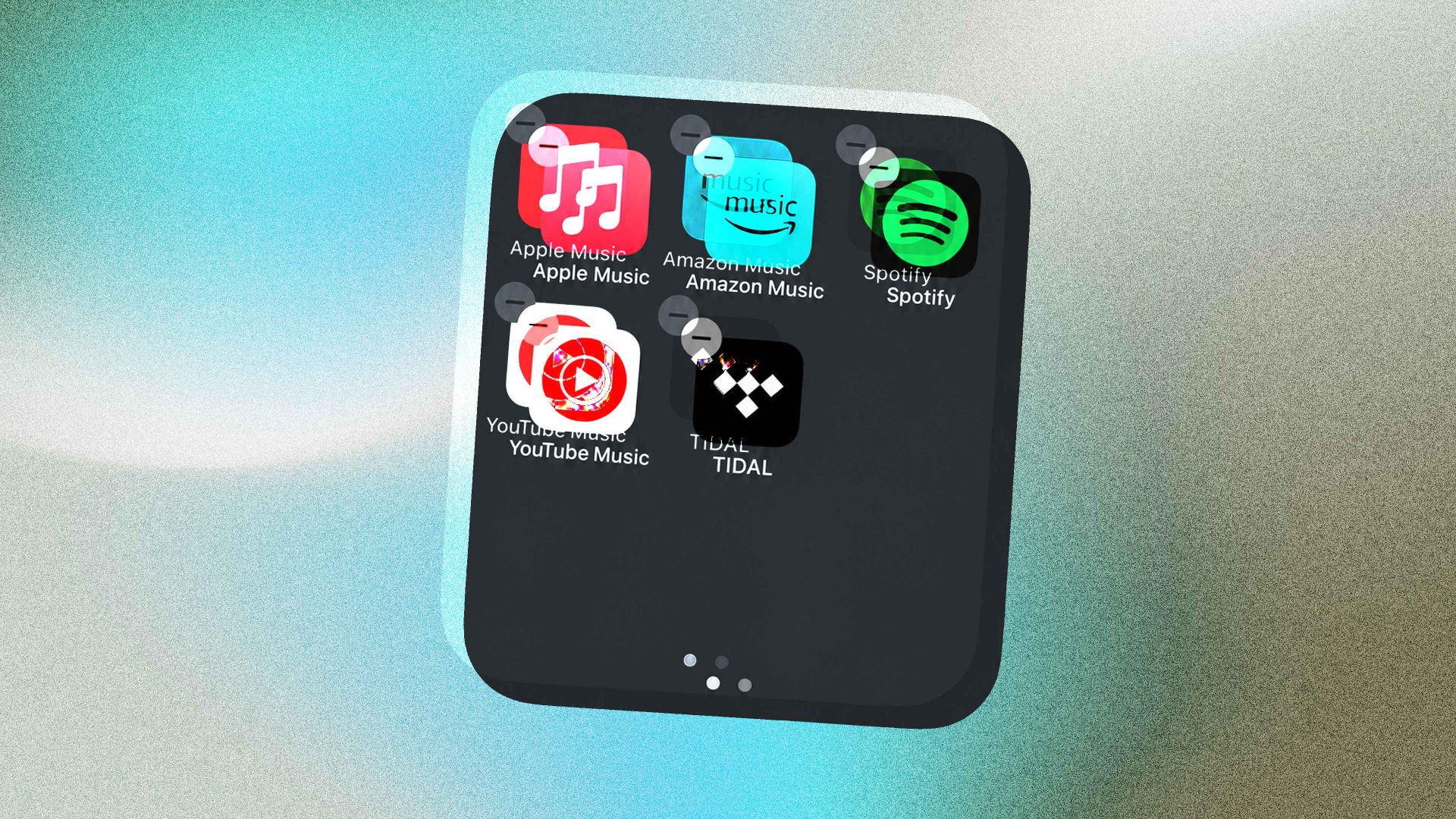
It’s true that the catalogues being offered by the major players are remarkably homogenous. Each of Apple, Spotify, Tidal and Amazon boasts of having “over 100 million” tracks, and while Spotify in particular has been keen to bolt on additional services to keep users engaged (videos! chat! Spotify fucking Wrapped!) and Tidal, for example, sells itself on audio quality, it’s hard to argue that these are meaningful differentiations.
Would you really stick with one platform if another suddenly dropped its prices? It’s not certain that any of them has a meaningful moat.
And while it’s true that streaming services enjoy weaker margins than other software businesses, and that big tech companies such as Amazon and Apple can afford to run their music businesses as brand-building loss-leaders, it’s also true that Spotify posted operating income of €701m in Q4 2025. Their gross margin was 33.1%, a number that would make most accountants very pleased indeed.
Where Iovine does have a point, though, is in the degree to which artists are being short-changed by the deal. It’s been clear for a while now that streaming revenues offer a fraction of the revenue to most artists that was once provided by label deals and record sales.
Spotify’s own data shows that a mere 4.4% of acts stand a chance of generating at least $131,000 a year, not great numbers if there are four or five of you in the band. For a time in the 2010s at least, it was thought that this shortfall could be made up through gigging, merch sales and the like.
But in 2026, with venue closures and soaring costs impacting live revenue prospects, this equation doesn’t work for anything like as many artists as it might once have done. What’s the point of immense potential reach if it won’t earn you any cash, and you can’t afford to go on tour to play for all these theoretical new fans?
It’s also true that Spotify cares significantly more about your relationship with Spotify than it does your relationship with the artists you stream through it. After all, you are a data-rich vector, and data is money. It’s Spotify, not the band, that knows your email address, runs the fan engagement programs, targets the right people with presale and merch emails and gatekeeps the data on exactly who an artist’s “top fans” are. For the performer, this makes it harder to build that connection with fans… and to make money out of it.
Suggested Reading

Will we all end up as Chinese AI death clones?
Then, of course, there’s the spectre of AI-generated music slowly infecting streaming. In 2025 we saw the emergence of the first few big AI tracks and artists, from multimillion-streamed “band” The Velvet Sundown to the viral country track “Walk My Walk”.
As the tech continues to improve, more will inevitably emerge, squeezing out human performers and diluting the revenue pool further for everyone who isn’t Taylor, Bad Bunny or Drake. Will people really still want to listen when one track in four is entirely machine-made?
For all Iovine’s shouting at clouds, there’s no realistic prospect of streaming services going anywhere anytime soon. We like the infinite jukebox, after all. There is, though, a real prospect of a more differentiated music model emerging in the coming years, one built more on a smaller but more lucrative audience.
After all, it might make more sense for artists to have a thousand fans that each contribute £100 a year rather than ten thousand who each contribute £0.001. We’re living in a world in which our experience of culture is more fractured, increasingly personalised and tailored, so why not lean into that?
We can expect smaller, savvier acts to start building community for themselves alongside, or even instead of, the big streamers, to try and build the revenue-driving relationships that are a prerequisite of any self-sufficient career in the arts.
In 1991, Scottish artist Nick Currie wrote a remarkably prescient essay on how this nascent technology called “the internet” might affect the music industry. He concluded that, in the future, “pop artists must drop their claims to universal stardom”, instead focusing on developing small-but-sustainable markets for their work.
“In the future,” Currie wrote 35 years ago, “everyone will be famous for fifteen people.” Maybe the future of most music is less about streaming to millions and more about connecting with the few thousand who matter.
 Most popular

Suella Braverman’s book has sold only 106 copies. This is why

The Brexit majority has gone for ever – rejoin now has a majority of 9 million

The mask has slipped – now we can see the real, shameful face of Reform


The riots in France are being stoked by Russia and Iran