Something strange is happening to the second world war.
The terrible conflict of 1939-45, in which at least 75 million died, has rarely been more prevalent in mainstream culture. Andrew Scott’s Oscar-worthy performance as the D-day meteorologist group captain James Stagg in Pressure is showing at multiplexes all over the country.
Peter Berg’s The Mosquito Bowl, based on the true story of the American football game played at Guadalcanal in December 1944 by Marines before the battle of Okinawa, is released on November 13.
Also in the pipeline are Michael Morris’s The Nightingale, based on Kristin Hannah’s bestselling 2015 novel, starring Dakota and Elle Fanning as two sisters living in Nazi-occupied France; and Anthony McCarten’s The Price of Peace, a dramatisation of the 1945 Potsdam conference, with Guy Pearce as Harry S Truman, Jared Harris as Churchill and Merab Ninidze as Stalin.
The latest (and excellent) doorstopper by Max Hastings, Plunder: The Last of the War in Europe, 1945, tells the gruelling tale of the final weeks on the western front; while Antony Beevor announced in June that his next book will be a study of the Battle of Britain. World War II: Behind Enemy Lines, a four-part Netflix documentary series narrated by Josh Brolin, is set for release later this year. World War II with Tom Hanks, a 13-hour narrative history, has been one of the podcast sensations of 2026.
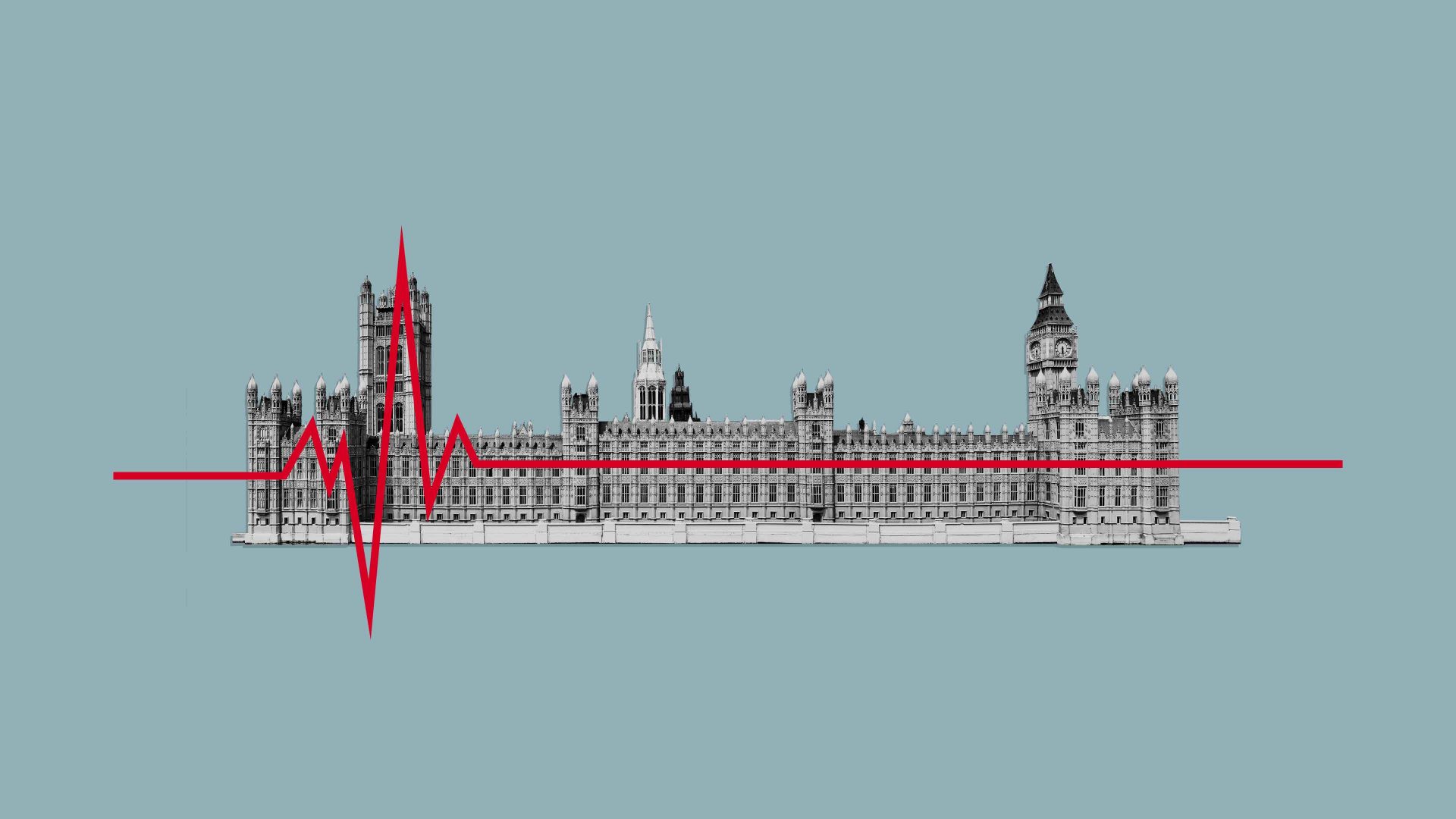
What this flourishing industry conceals, however, is that the significance of the second world war is changing, and fundamentally so: an incremental process whereby the source code of the international rules-based order, a shared civic narrative about right and wrong and a secular religion in which Hitler and Holocaust represented the ultimate evil is losing its previously vice-like grip upon the moral imagination of the west.
One of the most important books of 2025 was Alec Ryrie’s The Age of Hitler and How We Will Survive It, the paperback version of which is published on October 1. Ryrie is a distinguished historian of Protestantism and the Reformation, who, in this case, ventured from his usual terrain – to penetrating effect.
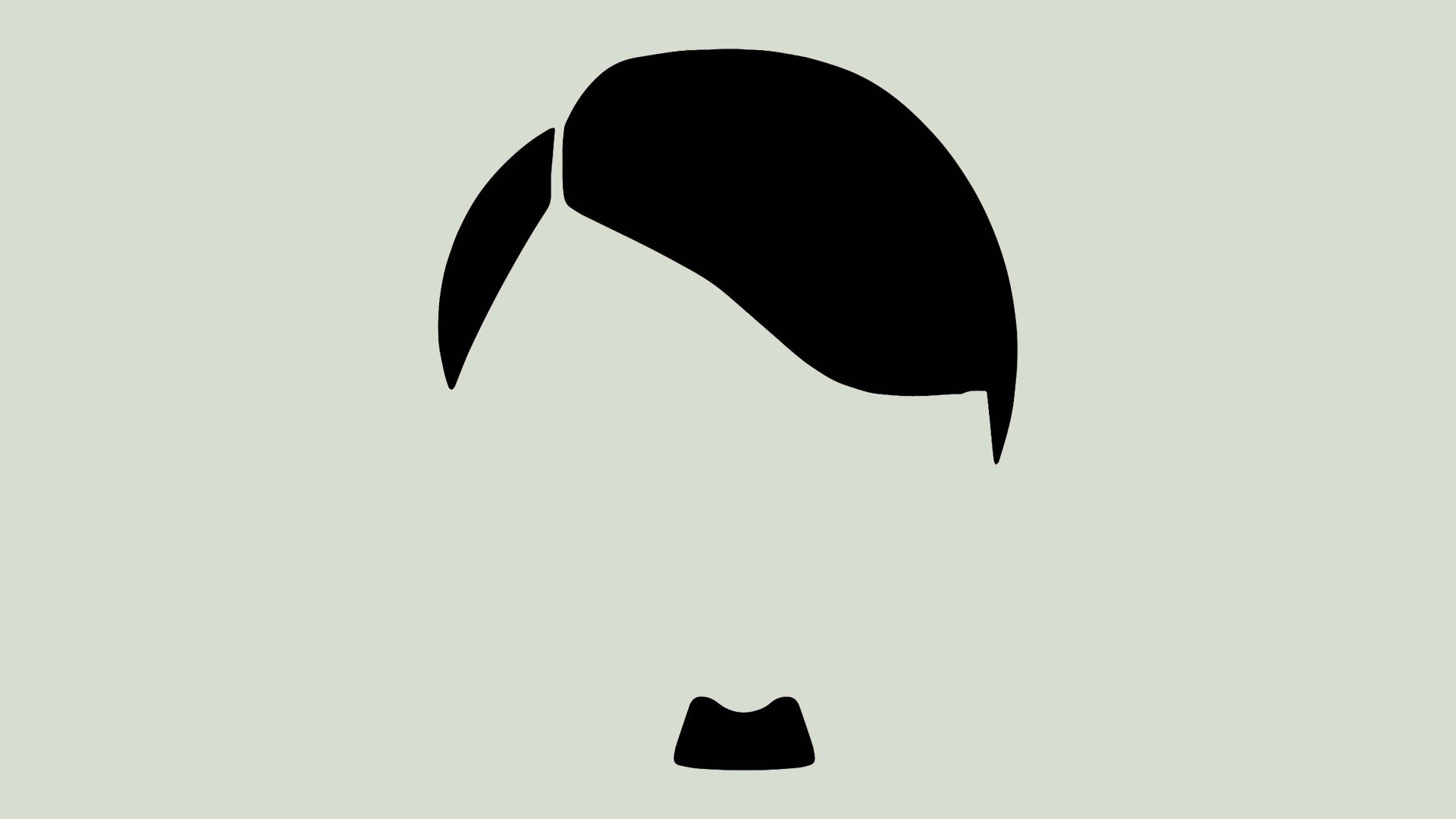
“A century ago,” he writes, “the most potent moral figure in western society was Jesus Christ. Now it is Adolf Hitler.” In this sense, the age of Hitler began not in 1933, when he was appointed chancellor of Germany, but in 1945, when the world united around the principle that the horrors he had unleashed must never be allowed to happen again.
From this first moral proposition flowed almost every feature of the modern western world. The United Nations, Nato, the Treaty of Rome, the international codification of human rights, the foundation of Israel, the exclusion of ethnonationalism from respectable politics: all were direct consequences of the war and the ethical guardrails agreed in its aftermath. Even in the chilliest depths of the cold war, the free west and the Soviet bloc still shared the common language of anti-Hitlerism.
Postwar Keynesianism was driven in large part by a determination to prevent economic depression of the sort that had nurtured the far right in Europe. Democratic nation-states, albeit to differing degrees, embraced the principle that welfarism and public services were not only desirable but a precondition of social solidarity. Nye Bevan was quite clear that the second world war had revealed “the shape of a national health service”.
I have been reading Charlotte Beradt’s The Third Reich of Dreams: The Nightmares of a Nation (1966), an extraordinary collection of the contemporaneous dreams of more than 300 Germans between 1933 and 1939, freighted with trauma and agonised foreboding. “These dreams – these diaries of the night – were conceived independently of their authors’ conscious will,” writes Beradt. “They were, so to speak, dictated to them by dictatorship.”
Out of print in English for four decades, The Third Reich of Dreams deserves to be read alongside other standard contemporary or near-contemporary accounts such as Victor Klemperer’s diaries, Sebastian Haffner’s Defying Hitler and Primo Levi’s If This Is a Man.
I have also recently encountered Max Picard’s long neglected but astonishing Hitler In Our Selves (tr. 1947) – given a welcome return to public discourse by the US commentator Rod Dreher – which plots the discontinuities, dislocations and loss of belief in a transcendent order that underpinned the rise of Nazism.
In his despatch from the immediate aftermath of the war, Picard, a German-Swiss writer and philosopher, writes with a vividness matched by wisdom: “The emptiness was there before Hitler, but it had not yet acquired its specific expression; Hitlerdom lent to emptiness the expression which belongs to it: the cry, not the language, for emptiness has no language.”
To read, or re-read, such texts is to confront afresh the diabolical exceptionalism of Nazism, the Third Reich and the price that the world paid for their eruption into history. It is a warning that retains the character of an electric shock.
And yet, as Ryrie cautions us, what he calls the “age of Hitler” is now drawing to a close. The movies, the books, the documentaries, the podcasts continue to roll off the cultural production line and to find enthusiastic audiences. But their significance is undergoing a profound shift: from shared moral narrative to the (very different) category of blockbuster heritage.
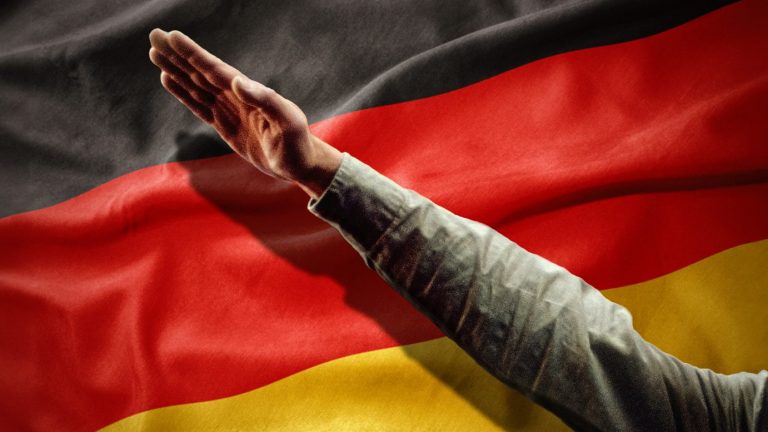
As Annette Dittert wrote last week, the rise of the AfD – most recently, its electoral successes in Saxony-Anhalt on September 6 and Mecklenburg-Vorpommern on Sunday – reflects a complex convergence of powerful forces; but among them is undoubtedly a yearning “to wipe away the deep shame Germany feels about its own history – the very shame on which democracy was built after the second world war.”
As for the UK: according to a More in Common poll last year, only 36% of under-35s knew that the Battle of Britain occurred during the second world war, against 87% of over-75s. As long ago as 2017, a survey found that 30% of adults were not aware that the blitz occurred during WWII.
Suggested Reading
The new, organised far right threat to Britain
In a sense, this was demographically inevitable. On the day I was born in 1968, about 52% of the global population had been alive on or before the end of the war on September 2, 1945. Today, that figure is closer to 1.5%.
Fewer than 200,000 Holocaust survivors are still living, with a median age of 88. As the era of living testimony draws to a close, so too the rise of social media, post truth and digital mayhem has wrecked the old moral crash barriers. Holocaust revisionism of the sort once confined to pariah figures such as David Irving is now common coin, especially but not only online.
Most egregiously, the 28-year-old far right activist and white supremacist Nick Fuentes has made his name by declaring that “Hitler was fucking cool” and “I don’t care about Auschwitz”. In October, he was granted a two-hour softball interview on Tucker Carlson’s hugely popular podcast, an episode which proved to be a pivotal moment in the fracturing of MAGA. Crucially, JD Vance – still the most likely GOP presidential nominee in 2028 – refused to denounce Carlson for mainstreaming a neo-Nazi.
Alongside Fuentes and his millions of “Groyper” followers are anti-Churchill grifters like Darryl Cooper – an alarmingly influential US pseudo-scholar and podcaster who has been turbocharged by Carlson (yes, him again) as “the best and most honest popular historian in the United States”. According to Cooper, Churchill was the “chief villain” of the war; Hitler’s forces did not plan to slaughter millions of Jews; and the conflict could have been ended much earlier.
Churchill should, of course, be scrutinised and criticised like any significant historical figure. But – in a classic example of the so-called “horseshoe effect” – he has become a hate figure for far right and far left alike.
For woke activists, it is now routine to characterise him not as the man who, in 1940, embodied Britain’s lonely stand against Nazism, but as the very personification of colonialism, imperialism and racism. His statue in Parliament Square is frequently the target of vandalism: most recently in February when it was plastered with slogans in red paint, including “Zionist war criminal,” “Free Palestine” and “Globalise the Intifada”.
Everywhere one looks, the decay of the moral order fashioned from the memory of the war is visible. On the 25th anniversary of 9/11, a group of neo-Nazis wearing swastika armbands chanted “Sieg Heil” and “Free Palestine” in Lower Manhattan only a few hundred yards from the memorial site.
If the “age of Hitler” is coming to an end, what comes next? Ryrie himself hopes for a new “synthesis” that recognises the teeming pluralism of modernity but recovers the values of “rooted civilization”: easier said than done, when there are so many competing value systems.
Dreher, whose Weimar America (published by Basic Liberty next May) promises to be one of the most significant non-fiction titles of 2027, looks to a reclamation of strong religious conviction, culture and liturgy, while candidly acknowledging that the odds are stacked against such an outcome.
Suggested Reading
The stolen Nazi artworks, the AfD and antisemitic stereotypes
For secular thinkers, the challenge is no less daunting. The immune system of the postwar international order and liberal democratic settlement is shot. Many public intellectuals have tried, or are trying, to restore its moral energy and to craft new narratives for the scope and limits of freedom, the rules of coexistence, the strengthening of solidarity.
Too often, however, they give a higher priority to not causing offence than to the hard choices that fortify a society and make it resilient – or even to demand the most basic standards of integration that are a precondition of functioning pluralism.
In place of identity politics, the Columbia University intellectual historian Mark Lilla proposes a civic liberalism animated by “what we share”. But who defines that, especially in our hyper-fragmented information ecosystem?
In the updated edition of Democracy’s Discontent (2022), the Harvard philosopher Michael J Sandel calls for a “formative politics” capable of cultivating civic virtue. It is an appealing prospect, as far as it goes, but one that amounts more to scholarly optimism of the will (wouldn’t this be great?) than to a practical blueprint (here’s how to do it).
In Thick and Thin (new edition, 2019), the Princeton political theorist Michael Walzer offers a useful distinction between the “thick” moral cultures that shape particular peoples – communities, languages and local traditions – and the “thin” moral vocabulary of rights and justice that can be universalised. He prevails upon the “divided self” to negotiate between the two.
Here, however, Walzer’s formulation falters. The new populist creeds derive much of their power precisely by promising to end this internal negotiation between different sides of the self: they replace ambiguity with certainty, division with belonging, and moral improvisation with a total account of reality.
In the story of WWII, liberal democracy had a map that almost everyone could read and a mythology that engaged the collective moral imagination. Now that map is worn to tatters. We need a new state-of-the-art GPS system to guide us through the age of populism, permacrisis and multipolarity.
The war lives on in our imagination and on our screens. But in our collective conscience – well, it is over. What will take its place? What could?