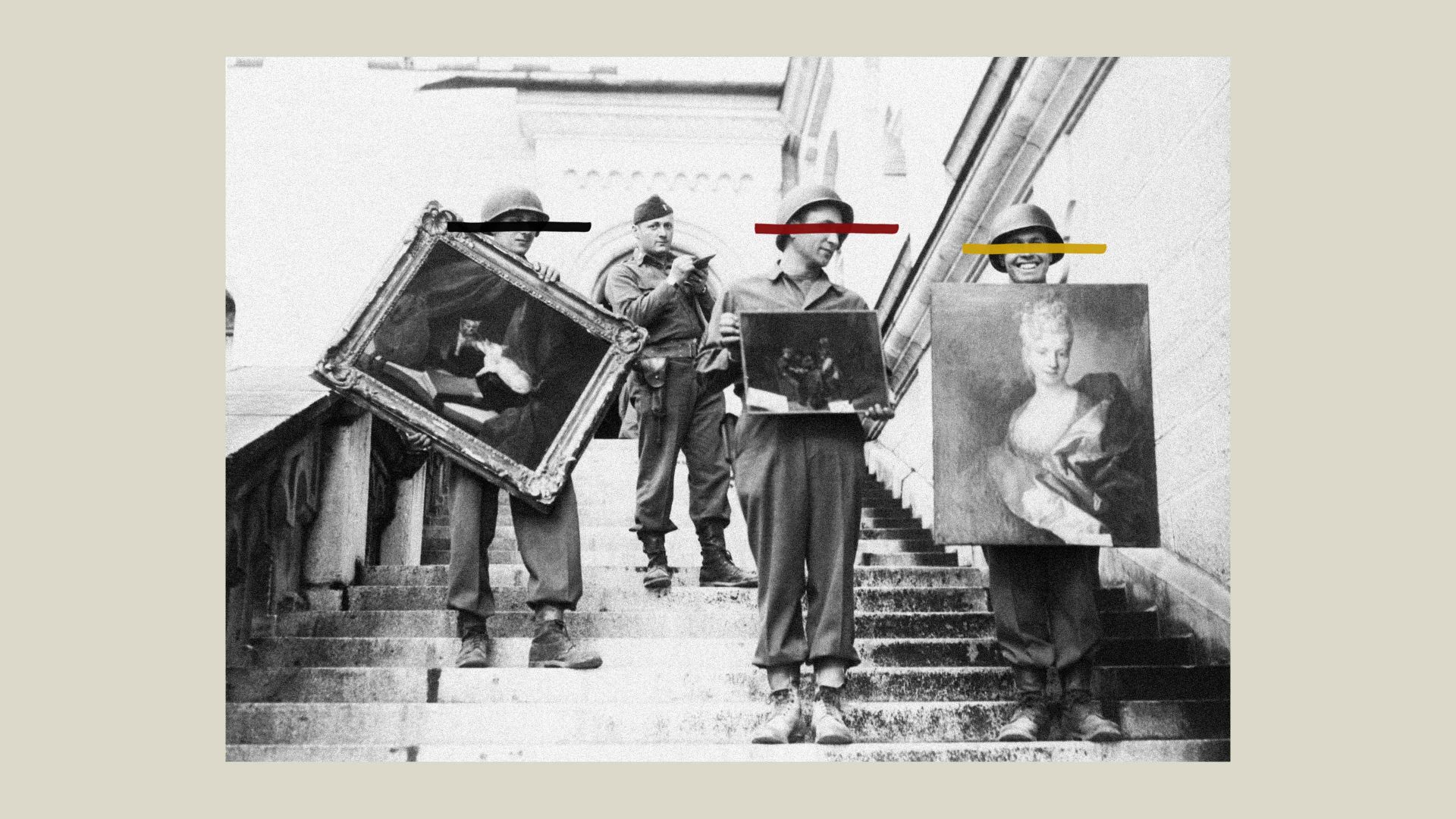
More than 80 years since the end of the second world war and nearly 40 since the Wall came down, you’d expect the question of Raubkunst – Nazi-looted art – to be largely solved. It isn’t. For many victims and their heirs, the stolen past is still very much present.
This summer, after a long dispute, Bavaria’s Kulturminister Markus Blume announced the restitution of Picasso’s bronze bust Fernande/Beatrice to the heirs of the Jewish art dealer Alfred Flechtheim.
As recently as 2024, a restitution request for the bronze had been rejected. For his family, that must have felt like a second expropriation, after 1933.
Suggested Reading


The Bayeux Tapestry’s medieval message for our times
Why the change of heart? The short answer: decades of catching up. The long answer requires some history.
Hitler’s regime is estimated to have stripped its victims of more than 600,000 works of art across Europe. The allies returned some 450,000 by 1951. For the owners, mostly Jewish exiles, Shoah survivors, and the heirs of those murdered, what remained proved considerably harder to trace: passed through many hands, sold at auctions, tucked into private or public collections.
Unlike Gustav Klimt’s famous portrait of Adele Bloch-Bauer, whose case later became the film Woman in Gold, most looted art wasn’t on public display.
In 1998, Germany and 40 other nations signed the “Washington Principles of Nazi-confiscated Art”, promoting “just and fair solutions”. In 2003, a German “Advisory commission on Nazi-era loot” was set up. There was, however, a small catch: claimants could only bring a case if the other side agreed to mediation. And even then, the recommendations were not binding.
The result: in two decades, roughly two dozen cases were resolved. More art did return – more than 7,455 pieces and 24,700 books – but mostly through settlements outside the commission.
Last year, Germany finally changed gear: a new arbitration tribunal, staffed by 36 judges – some of them very prominent – can now issue binding decisions. Crucially, claimants can also make an appeal to it unilaterally.
The stated aim is that no museum should dodge its own history, as plenty of them had managed. How thoroughly and how eagerly they checked the provenance of items in their collections often depended on the individual institution. At the Bavarian State Painting Collections, to name just one, restitution lawyers spotted “a glaring deficit”.
Having a new tribunal alone has accelerated matters: in recent months, for instance, the Pinakothek and the National Museum of Bavaria have returned artworks to the heirs of the Berlin banker Jakob Goldschmidt and the collector Curt Goldschmidt, both of whom escaped Nazi Germany. In Jakob’s case, proof came through a private 1933 photograph of his Tiergarten townhouse salon, showing two late-15th-century reliefs hanging above a sideboard.
As US ambassador to Germany James D. Bindenagel noted in Frankfurter Allgemeine Zeitung, efforts to identify and return stolen art are “gaining momentum across the country”.
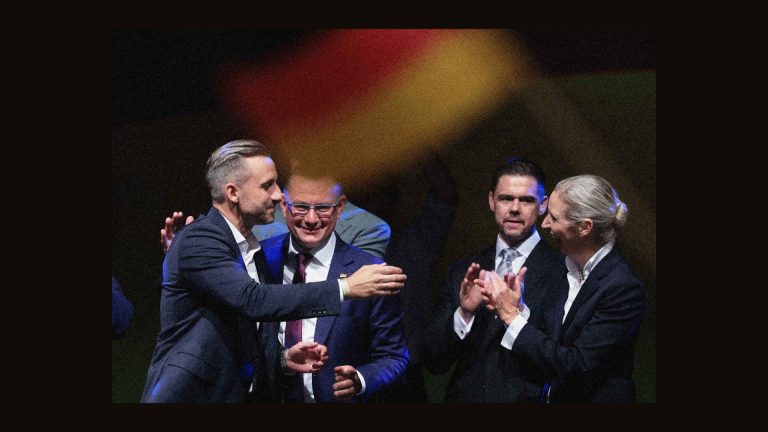
And then there is the AfD. Its manifesto for Sachsen-Anhalt calls for an end to what it describes as an unprompted “Generalverdacht” (blanket suspicion) against all museum holdings, and condemns the alleged “artificial perpetuation of feelings of guilt”.
With an AfD state government, funding for the German Lost Art Foundation (DZK) will be under threat. But “the central aim”, in Bindenagel’s judgement, “is to perpetuate antisemitic stereotypes about wealthy Jews supposedly always intent on accumulating riches.” And suddenly, the endeavour for restitution is portrayed as theft of the nation’s heritage.
In this version of history, the crime is not stealing the art, but giving it back.