The great literary love of DJ Taylor’s life is George Orwell. The novelist and critic first discovered him when he was 13 and has remained true to him ever since. In Taylor’s magisterial 2023 biography Orwell: The New Life, he proclaims his subject “a writer to whom no other 20th-century titan comes close.”
But Orwell wasn’t Taylor’s first literary love. Before he picked A Clergyman’s Daughter off his parents’ bookshelves he was besotted by another 20th-century titan, one whose cultural impact is today more far-reaching and whose books have sold over half a billion copies.
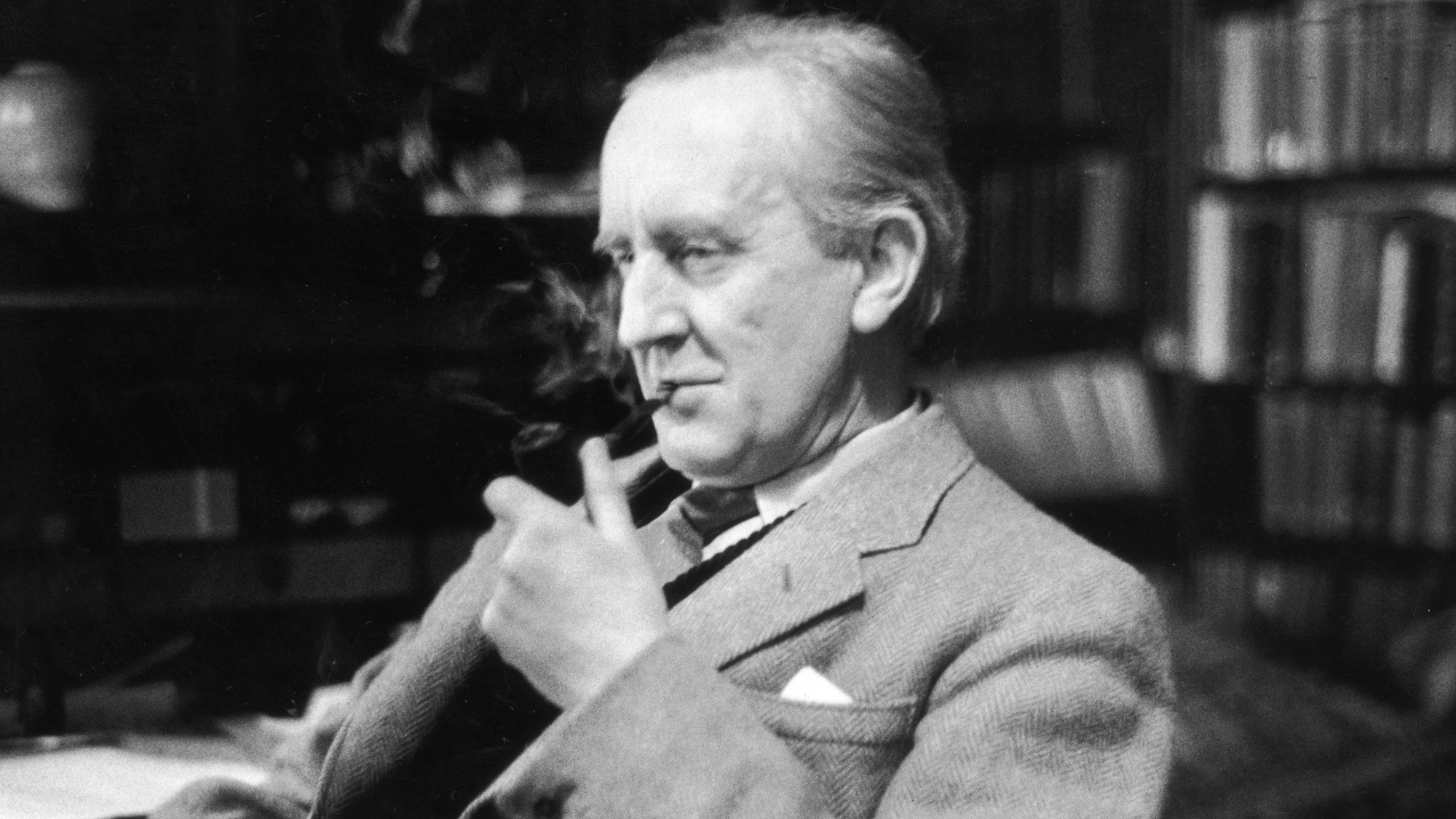
“No other writer,” Taylor tells us in his new book, “meant more to me as a child than John Ronald Reuel Tolkien.”
The King Under the Mountain is not a standard Tolkien biography. Instead, Taylor blends a solid account of Tolkien’s life with critical study of his work and what he calls “a series of fan’s notes”.
By doing so, he examines who the author of The Hobbit and The Lord of the Rings was, what kind of worlds he moved in and created, why his fiction endures and how it captivates – or rather intoxicates, resembling as it did for Taylor’s pre-teen self “a virus that rapidly colonised your bloodstream and took long years to extinguish.”
Taylor begins by charting Tolkien’s early years. Born in South Africa in 1892 to English parents, his colonial childhood was disrupted by the death of his father and his relocation to Birmingham. Key formative events and experiences followed.
Suggested Reading
Robert Harris’s new Roman epic is bloody good
At the age of eight, Tolkien converted to Catholicism. Four years later, his mother died, leaving him and his younger brother in the care of an impoverished aunt. At King Edward VI School, he developed a love of, and a gift for, ancient languages – so much so that he started to invent some of his own.
At Oxford, Tolkien initially pursued a Classics degree before transferring to the English School. A year after graduating with a first-class degree, he married childhood sweetheart Edith Bratt, with whom he went on to have four children.
Following a spell on the Western Front, which was cut short by trench fever, he put his linguistic talents to use in his post as reader in English language at the University of Leeds. In 1925, aged 33, he returned to Oxford – according to Taylor, his “spiritual home” – to take up a professorship in Anglo-Saxon. There he remained until his retirement in 1959.
It was late one night around 1930 that Tolkien began extracurricular work that would change his life. While marking exam scripts, he took a sheet of paper left blank by a candidate and, on impulse, scribbled the words “In a hole in the ground there lived a hobbit.” He kept at it, mapping the land of Middle-earth and chronicling the adventures of Bilbo Baggins, Gandalf the wizard and a band of dwarves on their quest to confront a treasure-hoarding dragon named Smaug.
The Hobbit was published in 1937 to great acclaim. Its epic sequel, The Lord of the Rings, finally appeared in three instalments in the 1950s. Critics were divided but readers were enraptured.
By the time Tolkien had hung up his gown, his magnum opus had become a publishing phenomenon and he – much to his chagrin – a cultural sensation. Eventually he had to hire a secretary to respond to the daily deluge of letters he received in English, French, German and occasionally Elvish.
Taylor handles Tolkien’s biography with aplomb. Standout chapters include one on the Inklings, that “rackety equipage” of dons headed by Tolkien and his good friend CS Lewis, which gathered regularly to drink and discuss members’ literary works in progress.
In another chapter on the notable undergraduates who were taught English by Tolkien at Oxford, we find the likes of Kingsley Amis, who loathed the syllabus with its over-emphasis on difficult and dreary literature from the Middle Ages, which had “the redoubted impediment of having Tolkien, incoherent and often inaudible, lecturing on it.”
Equally interesting are the tangential strands Taylor weaves in and around Tolkien’s life story. Some points double as springboards that lead to wider analysis. After taking us up to Tolkien’s death in 1973, Taylor explores aspects of the author’s afterlife, from the “hippyfication” of The Lord of the Rings to how his “spoor” can be found all over the late-1960s alternative music scene.
A section about Tolkien’s exclusively male social group leads to a discussion of his attitude to women and his treatment of female characters. Taylor argues that those fictional figures comprise two types – vividly rendered, earthy, resourceful hobbit-women and more fanciful grande dames and stately elf-maidens.
In his favour, Tolkien championed increased educational opportunities for women. But he also made clear his belief that female students are fully dependent on what men tell them, have a limited range of comprehension and don’t fare well intellectually when they leave their tutor’s care. He addressed his audiences in lecture theatres as “Gentlemen”, regardless of how many women were present.
One former student, the writer Penelope Fitzgerald, branded him “the odious Tolkien”. Taylor, more charitably, simply calls him “a man of his time”.
Insightful essays serve as interludes between chapters. In “Tolkien and Politics”, Taylor informs us that Tolkien was a man who “in almost every compartment of his daily life, seems to have gloried in his reactionary opinions.”
He railed against modernity. He was suspicious of innovation. He supported Franco in the Spanish civil war (although apparently on religious grounds).
However, not all of Taylor’s standalone studies work. “On Fairy-stories” and “The Shire: A Sociopolitical Survey” are for die-hard aficionados only, while the scant and shoehorned-in “Tolkien and Orwell”, which opens with the line “As far as we know, Tolkien and Orwell never met”, probably won’t please anyone but Taylor.
Fortunately, these weak spots are few and far between. Taylor excels every time he turns his attention to Tolkien’s major works.
We get astute close readings of “the two ur-texts” and sharp evaluations of their literary merits. A page on oral styles in The Hobbit is especially memorable, with Taylor arguing that trolls speak in stage-Cockney, hobbits sound Edwardian-comic and elves resemble Evelyn Waugh’s Bright Young partygoers in Vile Bodies.
Suggested Reading
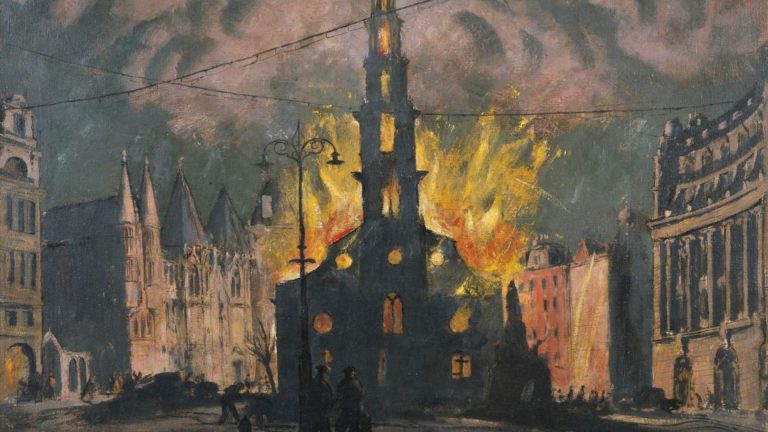
The strange beauty of London in flames
Taylor’s book is no hagiography. It is refreshing to witness him switching to critical mode: The Silmarillion, published posthumously in 1977, is rightly dismissed as turgid. He declares The Lord of the Rings “one of the greatest adventure stories ever written”, but grants it is marred by dull passages, doggerel verse and an “absurd view of human relationships”.
Tolkien infamously had no truck with biography. In a letter to WH Auden, he described himself as a writer “whose instinct is to cloak such self-knowledge as he has, and such criticisms of life as he knows it, under mythological and legendary dress.”
Taylor strips those layers from this man of mystery. We view Tolkien as a devout Catholic and an arch-conservative, a perfectionist and a procrastinator, an outsider and a recluse, one who had a brilliant mind and a fertile imagination. Taylor’s enthralling book brings the king under the mountain out into the open for all to see.
The King Under the Mountain by DJ Taylor is published by Constable