
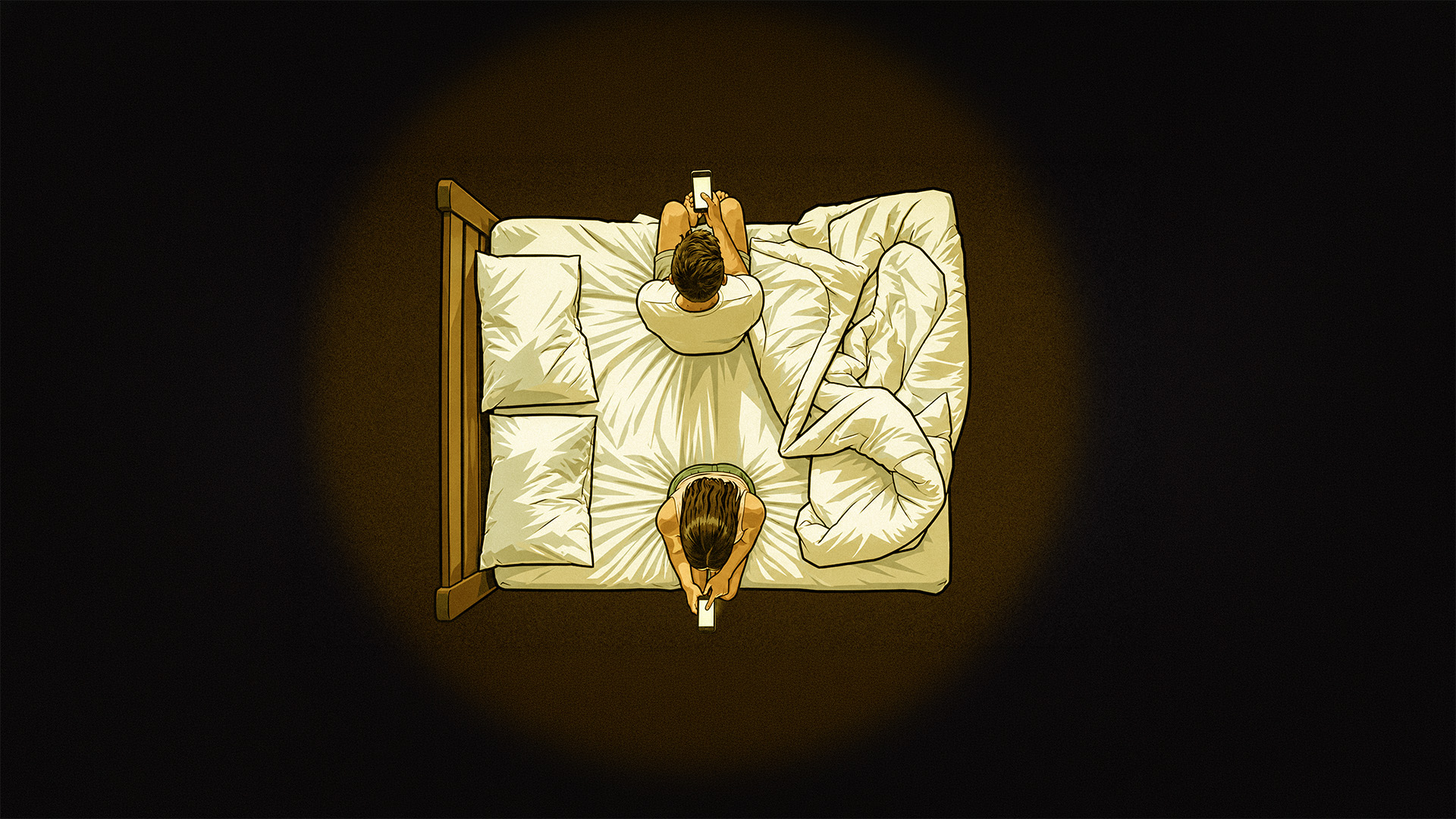
Oh look! Our monthly instalment of Why Gen Z Is Miserable has arrived, ready to dominate the media conversation for the next week. Is it about how they’ll never afford a house? Never get a job? Are all going to perish in a climate-induced apocalypse? No. It’s that they never have sex.
This is a subject that has hardly gone unreported. You can barely open a newspaper without encountering some hand-wringing column on the prudishness of young people, or the impending demographic catastrophe of declining birth rates.
A new survey by Natsal, the national study of sexual attitudes and lifestyles, has provided the latest ammunition. Among 16-24-year-olds, 38% of women and 28% of men reported never having had sex. Across the population aged 16-44, the average frequency of sex has halved since 1990, from four times a month to two.
Grown-ups have spent the better part of half a century being dissatisfied with how much sex young people are having. In the eighties, they were having too much sex and dying of AIDS. In the nineties, they were dancing naked to acid house and dying of Es. In the noughties, the girls had become ladettes, drinking too much, swearing too much and, presumably, having too much sex again. Now, apparently, we’ve gone too far in the other direction.
And yet, paradoxically, the current younger generation has been raised in the most sexually permissive society in history. That raises the question: what has happened to make them apparently so reluctant to get down to it?
I’m 22, so perhaps I can offer some insight from the front line, because it has not exactly escaped my attention. In fact, as someone currently living through this supposed sexual recession, I have a few thoughts.
Of course, the first culprit everyone will reach for is pornography. And there is certainly something to be said for it. According to Natsal, 86% of young men and half of young women had watched pornography in the past year.
For young men in particular, it goes without saying that an adolescence spent watching professionally produced, algorithmically delivered pornography cannot be entirely unrelated to their expectations of sex, their confidence in bed, and their understanding of what a sexual encounter is supposed to look like.
Suggested Reading


Is this the moment MeToo died?
Technology has made it possible to outsource an extraordinary number of the inconveniences of being alive. We no longer need to go to the supermarket, speak to a travel agent, or visit a bank. We can have our dinner delivered, our friendships maintained through a screen and our entertainment tailored to our precise specifications. It was perhaps inevitable that sex would get the same treatment.
For men, that might mean pornography. For women, it can look rather different. The enormous popularity of “romantasy” (erotic fiction) and increasingly sophisticated sex toys suggests that female sexuality has also found a comfortable home in the private sphere.
You can have a fictional knight who looks exactly as you imagined him, behaves precisely as you would like, and never leaves his skidmarked pants on your bedroom floor. Increasingly, you can even have an AI companion programmed to say exactly the right thing. The real world, with its disappointing men and their inexplicable inability to text back, has some competition.
I’m not suggesting that reading a bit of smut or owning a vibrator is somehow responsible for the collapse of western civilisation. But what happens to sex when sexual gratification can be so easily obtained without the involvement of another person? Real sex requires negotiation, vulnerability and, often, the discovery that someone you quite fancied has the conversational skills of a damp tea towel. These are sacrifices you must make and skills you must learn in order to find happiness.
However, Natsal found that people who had never had sex were actually less likely to watch pornography or masturbate. So it would be too easy to say that young people have simply replaced sex with their phones.
Perhaps, then, it is the strange contradiction of living in a hypersexualised culture. Sex is absolutely everywhere. Last year the Sabrina Carpenter song Tears topped the UK charts, the chorus of which is: “I get wet at the thought of you… tears run down my thighs.” You have Sydney Sweeney appearing in adverts for betting companies wearing nothing but a baseball bat. Scroll for long enough and you will inevitably get some AI generated fetish content on your timeline.
When everything is sexualised, sex itself begins to lose some of its mystique. It becomes another aesthetic, another consumer category, another thing to look at rather than something to do. We are, in a rather peculiar sense, both oversexed and undersexed.

There are also some much more boring, material explanations. Take housing. According to the Office for National Statistics, the proportion of young men aged 20-34 who live with their parents is now almost 35%.
I have written about this before, but it goes without saying that it is difficult to cultivate a flourishing sex life when your mother is downstairs watching The Great British Bake Off. There is a reason that moving out of the family home has traditionally been associated with adulthood and independence, and it is rather hard to feel like a sexually liberated adult when you are sleeping in the same room in which you did your GCSE revision.
Then there is work from home culture, which removes a great deal of opportunities through which people used to meet naturally; the office flirtation, the post-work drink, the Christmas party. These are all, in my opinion, God given human rights. I met my partner through work and single female friends, forced to endure the hellishness of dating apps, often speak of me as if I’d caught the last chopper out of Saigon.
And of course young people are drinking less, too. The old adage is that they’ve got less money and pints are more expensive, so that means fewer nights out, meaning fewer drunken conversations with strangers in the smoking area, meaning fewer one night stands. Change the record on this one, it’s been written about so many times I’m almost falling asleep at my keyboard.
The decline in drinking can be connected to something larger and much more interesting, which also speaks to the decline of sex: the extraordinary rise of optimisation culture among young people.
Gen Z and younger Millennials are obsessed with being healthy, productive and, above all, attractive. We have sleep scores, step counts, running clubs, protein targets, skincare routines and a bewildering assortment of powders to put in water (I don’t know what these powders do – it’s been so long I’m too scared to ask).
This is partly because young people feel so little control over the larger trajectory of their lives. The traditional milestones of adulthood seem to look more like a snakes and ladders board these days. When you cannot control whether you will ever own a home, you can at least control your carb intake. When you cannot guarantee a successful career, you can guarantee that your Pilates attendance is impeccable.
The trouble is that this mentality has begun to creep into our romantic lives, too. Instagram tells women that before they can possibly be considered attractive, they must have had a pedicure, a Brazilian blow-dry, eight weeks of hot yoga, and a complete understanding of their Kibbe body type.
And for what? I struggle to imagine that many men have ever found themselves halfway through taking a woman’s clothes off and thought: “her Victoria’s Secret thong doesn’t match her Ann Summers bra. Consider my erection gone.”
It is this point I find most frustrating of all. I have noticed a growing tendency among young women, particularly, to approach relationships with a rather isolationist understanding of personal development.
We have, quite rightly, been told that the world in which women were financially, socially and legally dependent on men was a bad one. We can now support ourselves, leave unhappy relationships and pursue lives that do not revolve around finding a husband. Cheers to that.
But somewhere along the way, something has shifted. I know plenty of young women who seem to regard a relationship as an almost inherently compromising experience: something that will inevitably distract them from their ambitions or threaten the hard-won independence they have spent their twenties cultivating.
Suggested Reading
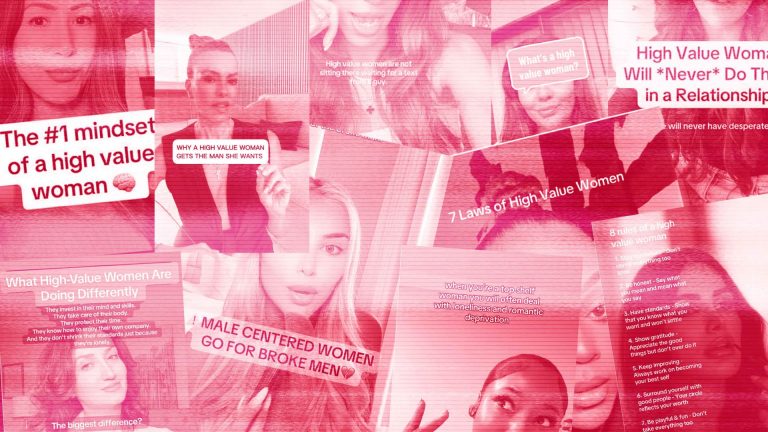
The toxic female influencers who will ruin your life
There is also an increasingly common belief that you ought not to date until you have got your life 100% in order, with a stable career, the perfect body, a flourishing social life and a perfect credit score to boot. But when, pray tell, exactly is this supposed to happen? At 35, once you’ve bought a flat and completed your therapy homework?
And then there is the growing moralisation of sex itself. So many things seem to have become taboo. An office romance? That’s an HR violation. A two-year age gap? Predatory. A disagreement? A red flag. Someone who doesn’t text back immediately? Emotionally unavailable.
Most depressingly of all, these increasingly popular ideas seem to misunderstand what relationships are for. We do not simply meet someone once we have finished developing as people – we develop alongside them. And when fewer people are having relationships, the concept of finally getting into one, only to break up is even more terrifying. But it shouldn’t be. I think it’s beautiful that you can have a lot of meaningful relationships in your life that teach you about different things, good and bad.
Sex requires a degree of emotional risk. You have to put yourself in a position where you might be rejected, embarrassed, disappointed or simply a bit rubbish. But, admittedly, it is difficult to do that when you have spent your formative years online, where every mistake can be screenshotted, circulated and ridiculed by people you have never met.
However, I won’t pretend that the Natsal figures didn’t surprise me. Off the back of them, the Telegraph produced an interactive quiz in which you enter your age and details about your sexual activity to discover how you compare with the national average. I was informed that I was considerably more sexually active than the average woman my age.
For a brief moment, I felt like some sort of female Don Juan. Then I looked at the actual figure. The average frequency of sex for a 22-year-old woman was zero. The same was true for a man.
More than half of young people have had fewer than two sexual partners. To be clear, I don’t think being a virgin is embarrassing, nor do I think anyone should be having more sex than they want. But the scale of the change is striking.
It also makes me wonder whether we are increasingly living in two quite distinct societies.
As a young professional living in London, with a university education and a reasonably active social life, I know very few people whose experiences resemble the figures in this survey. My friends date, go out, have relationships and, presumably, have sex.
This is not to suggest that my social circle is representative of the country. Quite the opposite. It is to suggest that it is probably rather easy for people like me to mistake our own experiences for the universal experience of being young.
A growing number of young people are living with their parents, working insecure jobs, struggling to afford a social life, or spending much of their time at home. They may have left school without going to university, moved back to a small town, or found themselves increasingly isolated from the social environments in which relationships tend to develop.
Their lives are not necessarily less interesting or fulfilling, but the opportunities to meet people and form intimate relationships may look very different.
And if that’s the case, perhaps it’s time we started worrying about a new category of young people. Forget Alan Milburn and his NEETs. We need to talk about the NHSOIRs (Not Having Sex Or In Relationships). Pity it’s not nearly as catchy.
 Most popular


Will AI kill capitalism? I built a new kind of simulation and found the answer


Inside the cult of Anthropic: The ‘good guys’ who could kill us all

Why Vanity Fair turned on Taylor Swift


Did fame warp Russell Brand – or was he a predator all along?