When Trump, Putin and Xi met in Shenzhen last Thursday, there was no mention of Ukraine or Iran. Two of them are now stuck in wars of their own making with no end in sight. Lame duck Trump is less than a year into Iran, but Putin is heading for the fifth anniversary of his full-scale invasion of Ukraine. Only Xi arrived without a war of his own.
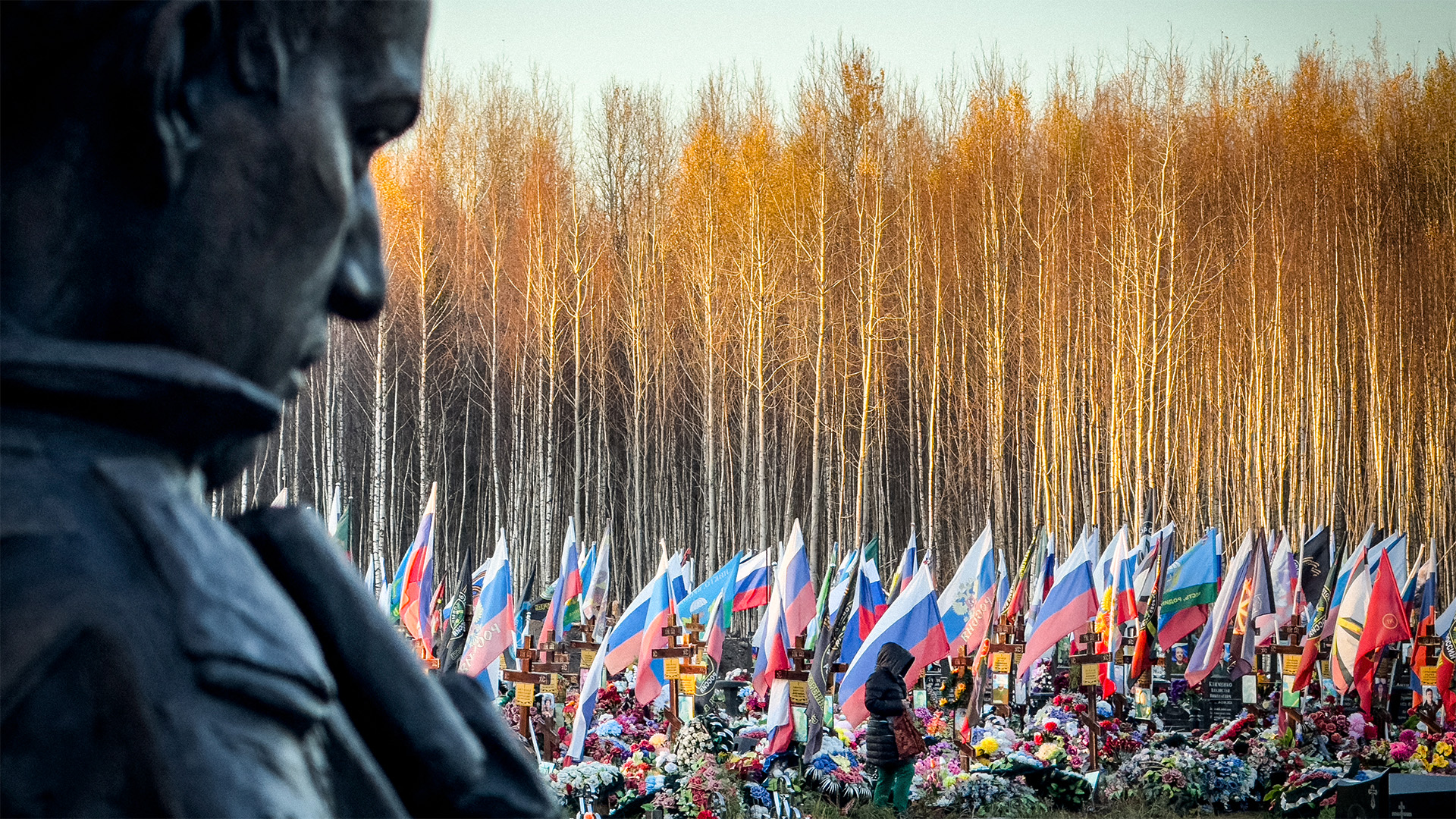
When it comes to Putin’s war, it’s worth starting with the numbers. Russian fatalities in Ukraine are now more than four times the sum of all American deaths in all conflicts combined since the second world war. Accurate figures are debatable, but the Center for Strategic and International Studies, a US think tank, estimates that there have been around 1.4 million Russian battlefield casualties in Ukraine, including 450,000 deaths. Russia is currently losing eight soldiers for every one of Ukraine’s.
Russia’s own statistics leaked this week admit over 490,000 dead, and the true figure is probably higher – potentially 700,000. Russia is currently losing eight soldiers for every one of Ukraine’s.
CSIS blames these hideous losses on the poor training of Russian recruits, corruption and a failure to adapt to modern warfare. Russia’s military is underperforming. But perhaps what matters most is who the casualties are. These soldiers are not all from Moscow or St Petersburg. A disproportionate share of the frontline burden has fallen on young men from outlying, left-behind regions that may not even identify as Russian.
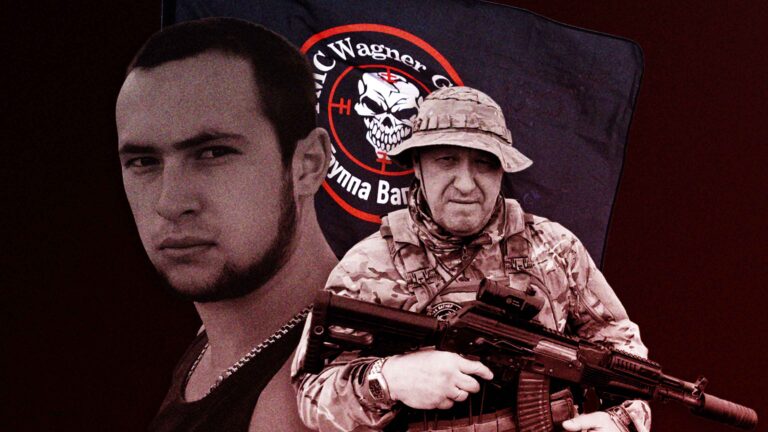
To feed the meatgrinder, Putin has turned to minorities and migrants, using poverty as the recruiting sergeant. Just the signing-on bonus can be many times the average annual salary of someone from the Caucasus. The Royal United Services Institute argues that Russia hasn’t avoided mass mobilisation – it has normalised it.
Suggested Reading
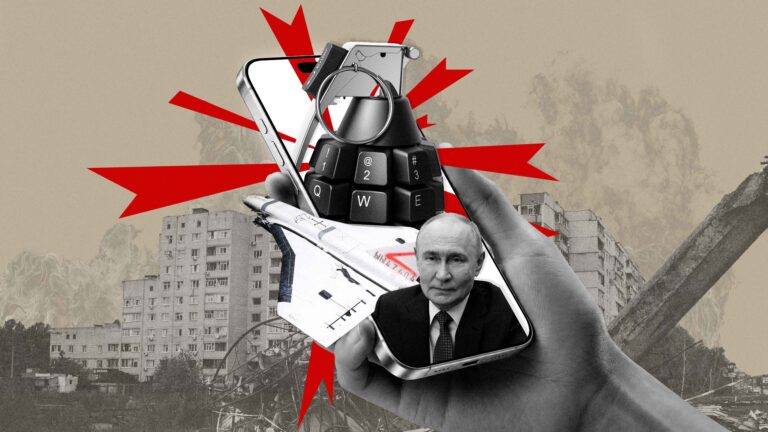

The frontline of our war with Putin is the phone in your pocket
The Russian general staff knows that twenty-first century wars cannot be fought with twentieth century methods and is trying to adapt – but Russians are still dying in their tens of thousands every month. The question for Moscow is how long the losses can be sustained.
Part of the answer lies in another question. Why do the soldiers fight at all? They are told they are fighting not just against an enemy but for a wider Russian identity that includes Ukraine and Belarus. A war framed around a shared civilisation is easier to justify at home and the losses easier to bear.
Putin insists they are all one people – and yet many of the men sent to die for a grand “Russian” idea are from non-Russian republics. The dead of Dagestan may make less trouble for the Kremlin than the sons and daughters of the Moscow suburbs, but are they really motivated to fight for Mother Russia?
At some point the supply of young, unemployed, poor men will run out and the voices of the mothers and fathers of those who remain will grow louder. A cross-society mass mobilisation would be a clear sign that the current approach has failed, and if it reaches the Muscovite families Putin has so far protected he could face real trouble. But we shouldn’t expect an implosion any time soon. There have been too many predictions of imminent collapse and they have all been wrong.
We should be thinking wider. A bogged-down, failing army in Ukraine does not mean a harmless Russia. Its navy, air force, cyber forces and espionage teams have not been worn down in the same way as the military and are increasingly active.
Pro-Russia hackers attacked Norwegian government digital services in August. Germany blamed Russia for sabotage at Leipzig/Halle airport in September. Russian precision-strike missiles landed 50km inside Poland on Friday as European troops exercised nearby. Precision missiles don’t land 50km from their target. These aren’t accidents, they are messages.
And Ukraine is making the same choices, too. In the last week alone it has carried out successful drone strikes against Russian ships in the Baltic off the coast of Finland, and in the Mediterranean off Libya. The war is spilling over – on both sides.
Russia can’t win on the traditional battlefield and so it has every reason to be inventive. It will press its aims laterally, where defences are weakest and responses slowest. A leader whose army is bleeding cannot dictate terms. But a regime that is slowly losing its army and learning to fight with fewer men will look for other ways to hurt Ukraine, and ultimately us.
We need to keep backing Ukraine, but also to harden our infrastructure, strengthen our cyber defences, and watch Russia’s navy and air forces as closely as its infantry.
 Most popular


Why Vanity Fair turned on Taylor Swift

I read David Walliams’s autobiography – and one revelation in it could spell trouble


The noughties were rotten – and we were all part of the problem


Did fame warp Russell Brand – or was he a predator all along?