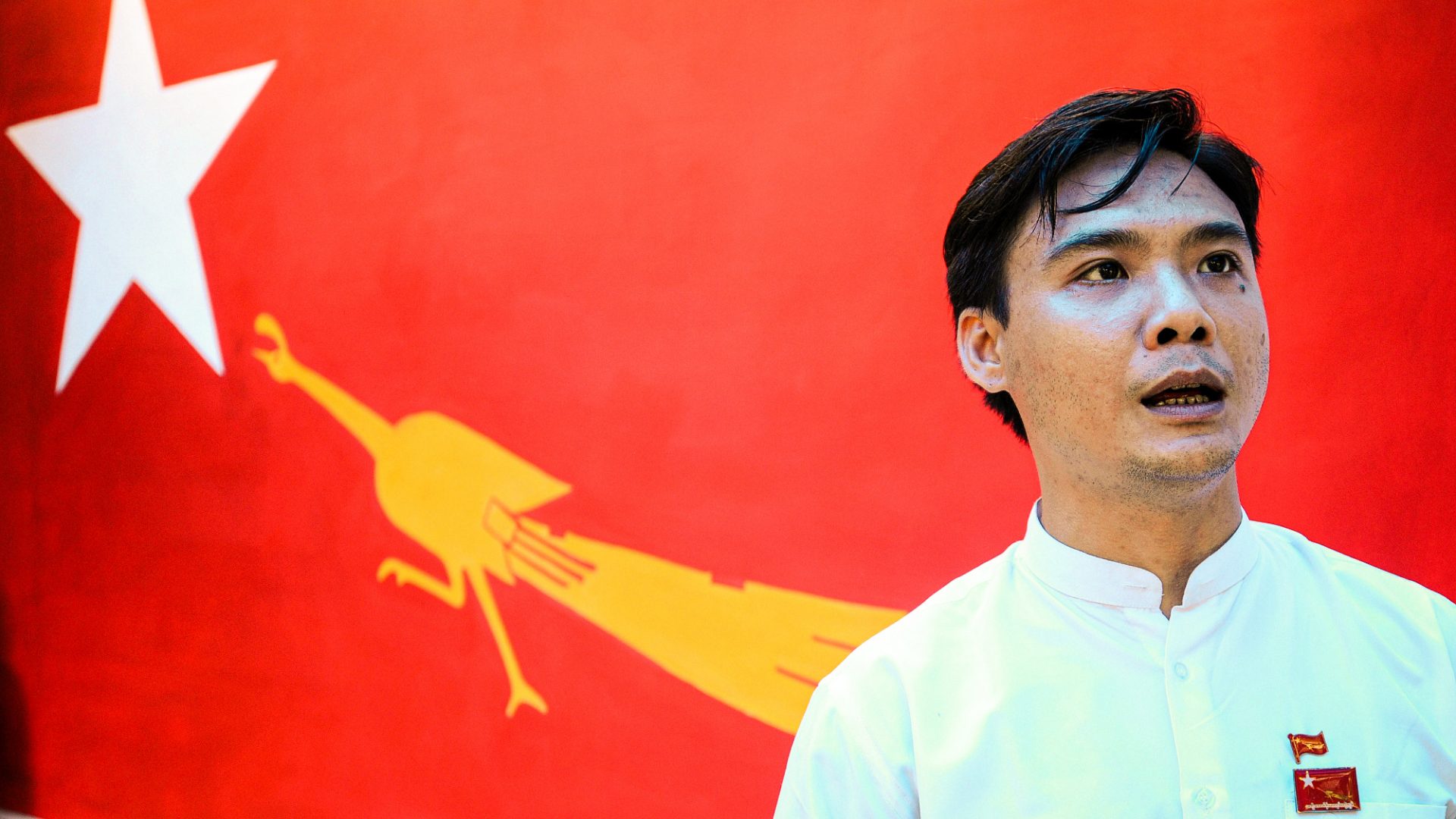
March 26, 1981 – July 23, 2022
Late at night in a Myanmar nightclub, a DJ loops traditional music to create a backing track. In front of him, three young men in low-slung jeans rap into their mics as a crowd of hundreds bounce along.
The group, who owe a debt to the Beastie Boys and Run-DMC, are called Acid, and their stage names include Black Acid, Smoke Acid and Acidic Acid. Centre stage, the only rapper not wearing a basketball top is Phyo Zeya Thaw, aka “Nitric Acid”, who is dressed in a smart buttoned-up short-sleeve shirt as they belt out tracks from early 90s New York hip-hop as well as songs they have written themselves.
The nightclub fills with their energy, and the crowd recognises some of the tunes from cassettes of their album SaTin Gyin (Beginning) that have been blaring out in teenage bedrooms. The group’s “indigenous Burmese poeticism” takes it to No 1 in their home country, where it stays for two months.
Acid speak to something deep within an isolated nation grappling with military dictatorship. “They talk about what’s real, not politics, but everyday life,” one of their fans says. “The problem is everyday life here is bad.”
Phyo Zeya Thaw, the group’s creative force, wrote about the frustrations of living under a military government that controlled everything. Of the 15 songs Acid recorded, the government censored five, part of a creative process that involved every lyric having to pass through the hands of the thin-skinned junta. “Anything that felt like criticism they cut out or changed,” he said.
Music was everything to Zeya Thaw. When thousands of protesters, including Buddhist monks and students, were met with military gunfire in the 2007 Saffron Revolution, he co-founded Generation Wave, a pro-democracy network of rappers, activists and young people. Unable to give a public voice to his frustration with oppressive rulers, he devoted his energies to this covert network. Generation Wave graffiti started to appear as the group distributed pamphlets, videos and messages spreading their word, their mission clear: to promote peaceful resistance against the military government.
Suggested Reading
Inside the notebooks that built Bruce Lee
At the age of 27, he was arrested while out at a restaurant, and sentenced to six years’ imprisonment for “illegal organising”. He was one of thousands jailed, the regime cracking down on its dissidents. Amnesty International called him a prisoner of conscience and called for his immediate release. Instead, he spent three years behind bars, released in 2011 when the military agreed to give up some of its powers.
“I feel sad,” he said when he was freed, “not because of my imprisonment… I feel sad for the future of our country. I wish to say to people, ‘Have the courage to reject the things you don’t like, and even if you don’t dare to openly support the right thing, don’t support the wrong thing.”’
Zeya Thaw realised the best way to speak to young people, whose voices he knew were vital for regime change, was to be officially elected. Less than a year after his release from prison, he won a seat in Myanmar’s House of Representatives, becoming an ally of Aung San Suu Kyi and winning again in 2015, sitting on the Committee for International Relations, talking only of the positives, that through music and working together you can bring change.
“For me, at first, I was involved in politics because of hatred… but hate doesn’t bring positive results,” he said. “If you want to build a brighter future for future generations, you need to develop a positive state of mind.”
With his country now under a settled leadership, Zeya Thaw was able to travel, make new music and spend time working with young people. He got engaged to hip-hop artist Thazin Nyunt Aung and raised money for a charity for HIV-positive orphans. In 2017, the “Back to Millennium” concert celebrated Myanmar’s hip-hop scene, a reformed Acid headlining a bill of artists nearly all of whom had been influenced by those early performances and SaTin Gyin.
In February 2021, a military coup overthrew the democratically elected government and Zeya Thaw was arrested again. Following closed-door trials, he was sentenced to death. On July 23, 2022, along with three other advocates of democracy, he was executed in Myanmar’s first use of the death penalty in over 30 years. He was 41 years old.
Zeya Thaw’s wife has carried on his work, continuing to make sure the young people of Myanmar have a voice, that the energy from those early Acid nightclub performances, the passion behind Generation Wave and the influence her husband had as a politician would not be in vain.
“Music can make us brave,” Zeya Thaw declared when he was first released from prison. He promised to be a man who “never stopped, never went soft, just found more creative ways to tell the truth.”