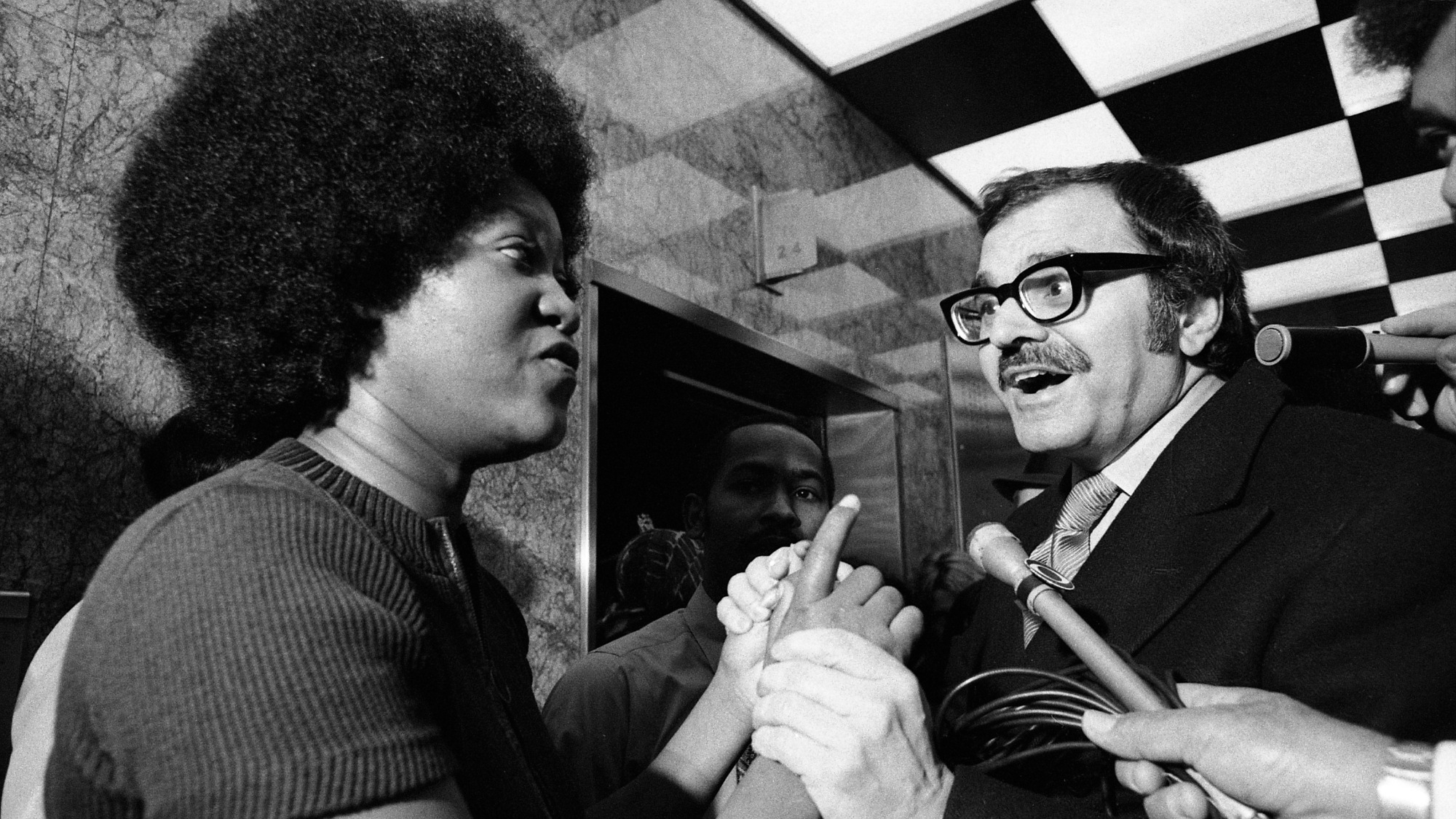
October 2, 1938 – December 1, 2022
Inside the West 80th Street community centre, Dorothy Pitman Hughes is encouraging a little boy to speak. He has become so shy he is barely saying a word, at the daycare centre or at home.
She stands him by a mirror. “Look at that hand,” she says to him, holding up his hand. “Look at those shoulders and how strong and beautiful they are.” The boy’s face brightens with each compliment as they work their way around his body, praising each part for its uniqueness, its strength, the special role it plays in his life.
Looking on is a journalist from New York magazine who has heard stories of the difference this young Black woman is making in one of the most rundown areas of the city and is observing her methods for her weekly City Politic column.
Suggested Reading

Diego Maradona and football’s greatest love story
So inspired and excited by her visit, and their conversations, the journalist, a little-known writer and activist called Gloria Steinem, arranges to meet this incredible woman again. It is not just the love and patience in the face of poverty that has captivated Steinem, but the realisation that this is a daycare with a difference.
To help the children, Hughes is helping their parents and carers, supporting women experiencing domestic violence, providing food, assisting with housing needs, advising on how to access social services. This woman is changing people’s lives by looking at the holistic causes of poverty and not just its effects.
The two women animatedly discuss their worlds, talking of race, gender, class and of community: “We must live our own revolution,” Hughes says. “We must begin to change ourselves.”
They take their conversations to the lecture halls, to the stage, attracting bigger and bigger audiences, Hughes regularly taking her baby daughter with them: “I held the baby while Dorothy spoke, then vice versa, and I’m sure there were audience members who thought we had somehow had this baby together.”
At an early age, Hughes dedicated herself to activism, and to helping others. Her grandmother worked as a cook on a site where Ku Klux Klan meetings were organised, able to tip off the community about impending threats and plans.
Hughes’s mother’s twin sister was a leader of the women’s group at the local church. Activism and organising were in Hughes’s veins: she grew up knowing that to have a good life you need to help others, to be part of a community.
She started the daycare centre in the late 1960s, looking after her young daughter, Delethia. She offered to look after other children, knocking on doors: “I’m at home with my baby during the day. I’ll take your kids too.”
Soon she found her own premises and started charging five dollars a week. Certain that for this to succeed the parents should be involved with the running of the centre, she created a governing board, empowering parents to be part of this revolutionary way of helping a community by empowering its women by sharing childcare responsibilities.
Her relationship with Steinem was not just a friendship but a meeting of two resolute forces for change, their bond a symbol of unity for the movement. When asked about sexism and racism, Hughes was always quick to add a third “ism” to the list, the final hurdle that needed to be overcome, one of classism, something she knew was equally damaging to black women: “we are dealing with it, but classism has to go out with sexism.”
An iconic image of Hughes and Steinem standing together, demonstrating the Black Power salute, appeared in the October 1971 issue of Esquire, a powerful symbol of solidarity between Black and white feminisms, offering a blueprint for intersectionality before it was even a word. The two spent their lives dedicated to change, forming the Women’s Action Alliance, bringing together activists to support women’s equality, and they co-founded Ms magazine, one of the most influential publications of the women’s liberation movement, created to celebrate women and give them a voice.
Suggested Reading

How Stan Lee made superheroes of us all
In 2013, the two recreated the infamous pose, fists clenched, defiant, iconic. As well as a testament to a lifelong friendship founded on activism, the image represented a call to arms, Steinem again heaping praise on the woman she first met at that rundown day centre decades earlier, where she first learned about the power of grassroots activism.
Pitman Hughes’s attitude was simple: that you can’t achieve anything if you do not try, problems become easier to overcome if there is someone to stand by your side; that revolution can be achieved through pragmatism. Or as she put it: “I would think that anything you want to do, call me, we’ll get it done.”