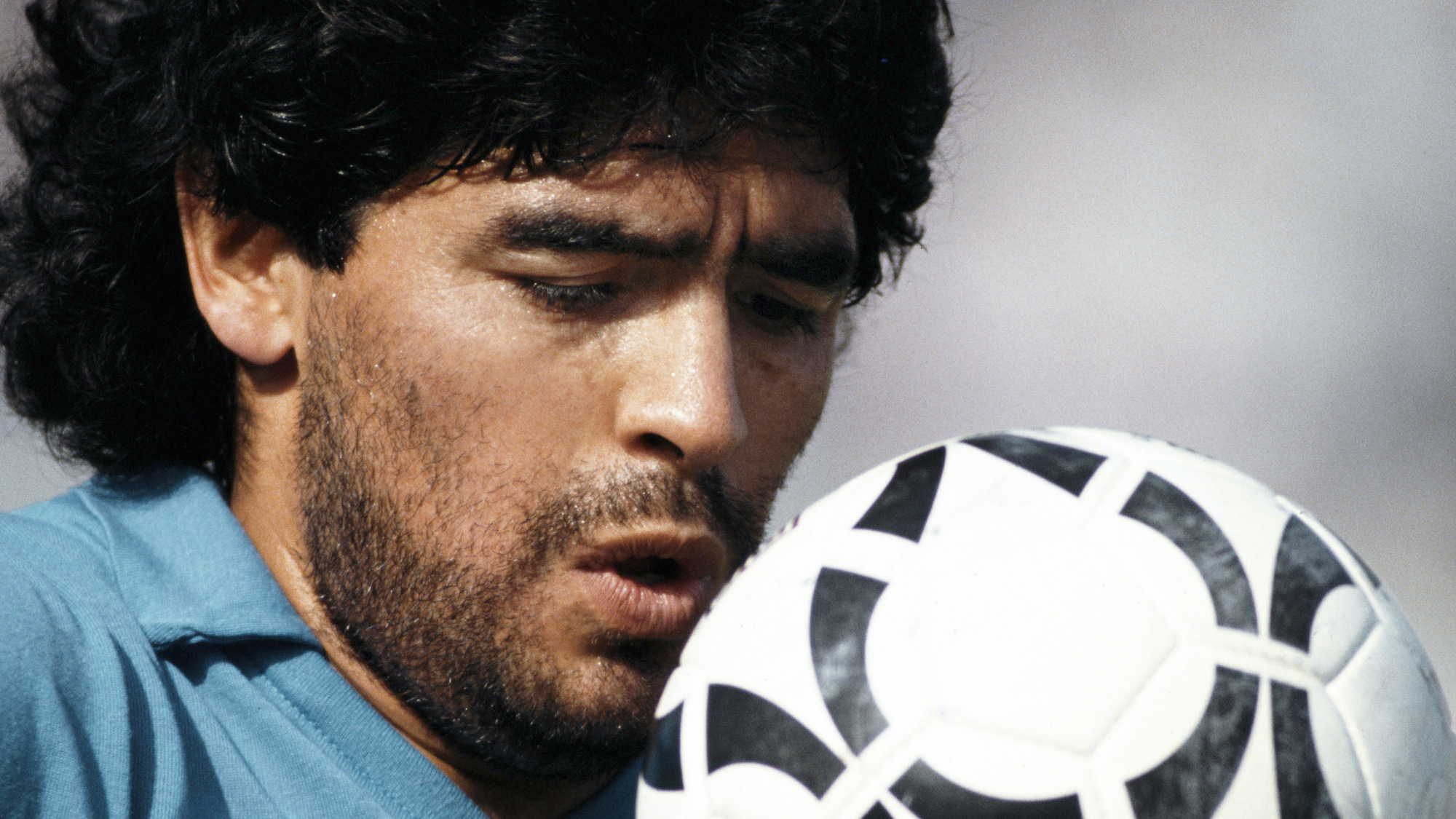
October 30, 1960 – November 25, 2020
With 18 minutes to go at Stadio San Paolo, Juventus are struggling to break down their opponents in a game they should easily win. One of the strongest club sides in the history of European football look like drawing 0-0 against Napoli, but maybe a point away from home will be enough in their pursuit of yet another Serie A title.
About to take a free kick inside the penalty area, Diego Maradona, playing his second season in Italian football, has other ideas. The ball is gently teed up for the Napoli number 10, who lifts it around the wall and into the top corner with perfection. There is euphoria in the stands as Napoli win the game 1-0, beating Juventus for the first time in a decade.
Despite the temporary setback, Juventus win the 1985-6 league title, Napoli finishing in third place, but this time it feels different. Their world-record signing has started to settle into his genius, the swagger is back. The outsiders of Italian football, a team abused by every other set of fans in the country, allow themselves to believe the title could be coming to Naples for the first time in history, and all because of one person.
There was risk for both parties in the signing of Diego Maradona from Barcelona in 1984, “a pact between two outcasts”. Had it not been Napoli, a team battling financial difficulties for the past three seasons in Serie A, Juventus and Inter Milan were also in the running.
“Everyone asks me now: why not Juventus, why not Milan, why not Inter? Well, because the only one who bothered to offer me something was Napoli,” Maradona said later.
Maradona had been struggling to live up to a lifetime of hype, his ability to do anything with a football attracted national attention as an eight-year-old, his dribbling skills alone were enough to join the youth system of Argentinos Juniors. His photograph in the sports magazine El Gráfico had the caption: “A 12-year-old from Corrientes. He already knows it all.”
The history of sport though is filled with promising young stars who never quite lived up to expectations, and time on the sidelines meant that despite his clear ability to do things no other player could do, his time at Barcelona was studded with frustration, his final game ending with a mass brawl and a three-month ban by the Spanish authorities. A struggling Italian team in a city ridiculed for its poverty and links to crime felt far from the next logical step… but like the greatest love stories, it’s heartbreaking to think there is a chance they might never have met.
In the summer that followed Napoli’s gritty, feisty, third-place finish, his Argentina team stepped off the plane for the 1986 Mexico World Cup, when all of this hype, promise and talent was put on display for the whole world to see. The 1982 campaign had ended in disgrace, with Maradona sent off against Brazil.
In 1986, Napoli’s Maradona oozed through the stadiums of Mexico with the confidence of someone who finally felt they belonged somewhere – two of the most famous goals of all time, in the quarter-final against England, were followed by two goals in the semi-final against Belgium of a deftness and skill possessed only by one man. Returning to Naples, the city he now called home, he celebrated his World Cup triumph by scoring the only goal in the first game of the season. Months later, defying all odds, Napoli won the league for the first time in their history.
Suggested Reading
How Stan Lee made superheroes of us all
For a man who found playing football so easy, Maradona found daily life off the pitch just as difficult, his private life a sad story of addiction, a conviction for assault, paternity suits, health problems and associations with crime gangs. Nonetheless, the best (and often worst) characteristic of football fans is loyalty, and in Naples, he is still worshipped for the joy he brought to the city, a hero’s welcome each time he returned.
The muralled streets again filled with light blue scarves and No 10 shirts when news came through of his death in 2020, when the city mourned its icon. Less than two weeks later, the council approved the renaming of the stadium that had swelled with supporters at his unveiling, the ground where, week after week for seven years, he reduced 50,000 people to awed silence as he placed his foot on the ball and looked his opponent in the eye with the most piercing stare in the history of football.
It was a place where one man made dreams come true: Stadio Diego Armando Maradona.