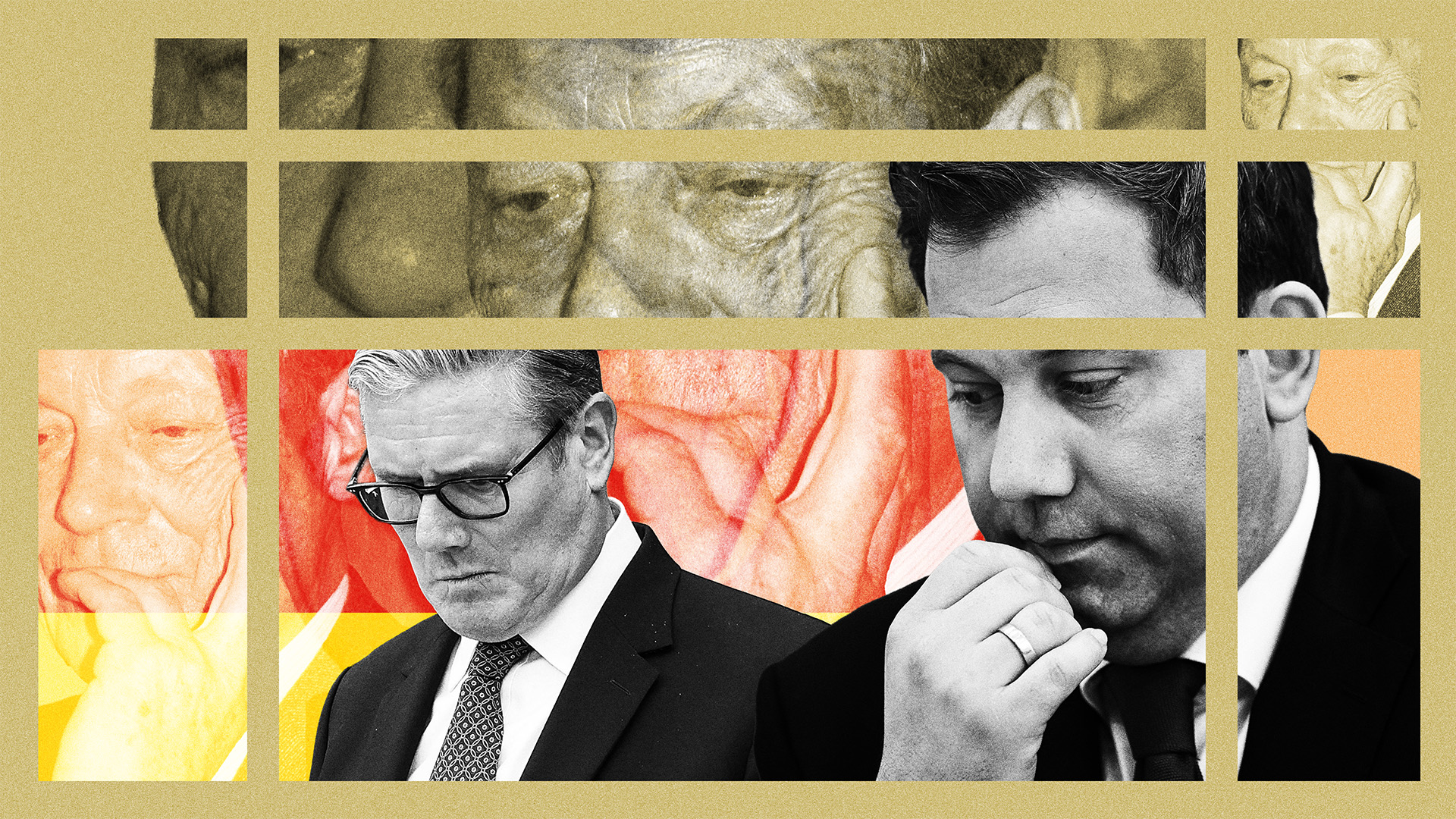
Which is worse: an acute disease or a chronic one? Britain’s Labour Party and Germany’s Social Democrats suffer from each of these afflictions. They share many of the same traits – split between trimmers and radicals, lacklustre leadership (I’m being polite) and, most importantly, a loss of identity.
While Keir Starmer’s fate may be in more immediate peril, the long-term demise of the SPD is the most entrenched. That is because, shorn of much of an industrial and post-industrial working class that has deserted it for the far-right AfD, it has almost no voter base left on which to call.
Or rather it does, but any organisation that relies on a rump of state employees, welfare recipients and OAPs is demographically not long for this world.
Suggested Reading

France’s version of GB News and Fox News is caught in a racist firestorm
Except for one notable period, the SPD has been seen as the preserver of the status quo, the land of post-war milk and honey, immutable employment rights and generous benefits. The exception was in the early 2000s, when Gerhard Schröder introduced reforms that by German standards were so radical – forcing people to sign on for work and cutting social security payments for various groups to reduce a budget that was getting out of control – that they were regarded as a kamikaze mission.
Despite his opposition to the war in Iraq (which helped shore up support for him), Schröder was punished in 2005 at the ballot box. Throughout her long period in office, his successor, Angela Merkel, never dared to say anything complimentary about Agenda 2010, as the reform programme was officially called. It was too toxic. And that from the leader of the Christian Democrats, the centre-right.
Now the same beckons, but this time the SPD is not in charge; its leader Lars Klingnbeil is playing second fiddle in the present coalition led by a CDU chancellor who is avowedly more right wing. Friedrich Merz is desperate to crack on with a much-delayed reform agenda of his own. With his government committed to a huge increase in defence spending, and with global politics in turmoil and the economy in the dumps, he too is feeling the squeeze.
Merz and Klingbeil are both suffering badly at the polls, but the former at least has a potential route out of the mire. The SPD’s dilemma is more intractable.
Suggested Reading
Can Germany, finally, cut red tape?
Klingbeil – who is vice-chancellor and finance minister – is on board with the reform agenda. But he’s not popular within his party, and the membership is generally hostile to change. He is therefore damned if it goes along with Merz’s plans, and damned if it doesn’t.
How the once-mighty party has fallen. So far 2026, or “super election year” as it has been dubbed by pundits, has been disastrous for the SPD. In the wealthy southwestern state of Baden-Württemberg, it took only 5.5% of the vote, its worst result in post-war history, barely managing to pass the 5% threshold for parliamentary representation, a hurdle originally designed to keep out extremists.
Two weeks later, in Rhineland-Palatinate, after 35 years in power, it was decisively relegated to second place behind the CDU, with its worst-ever election result in that state.
Its average in national polls has fallen steadily to 15%. Younger, more metropolitan and socially liberal supporters have drifted to the avowedly left-wing Die Linke (which the British Greens are seeking to emulate). Its socially conservative, anti-immigration voters in smaller towns long ago embraced the AfD.
That is not a passing fad; whatever happens elsewhere, such as in Hungary, the far right’s rise, in the short-term at least, seems embedded.
Suggested Reading
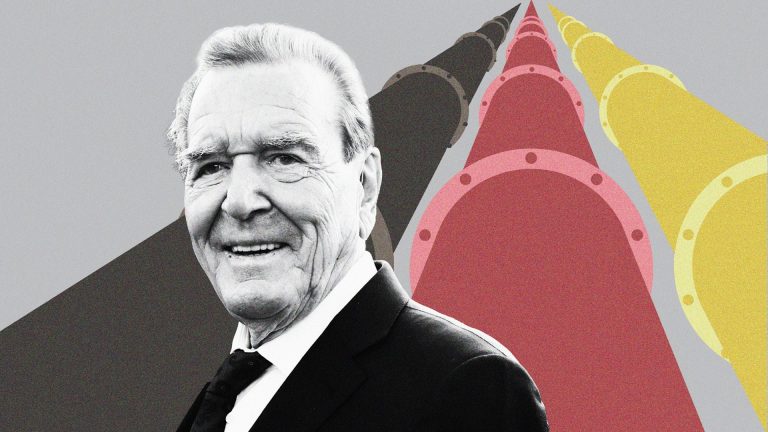
Gerhard Schröder isn’t doing himself any favours
Only a year ago, the SPD celebrated 150 years since its formation – the oldest party in Germany and one of the oldest of the present type in the world. Such was its strength when it was founded in the late 19th century, such was the alarm caused in the ruling classes, Bismarck sought to buy off workers with the first employment and social-security rights.
The party has been in government, either in charge or as the junior partner, for all but four years of the 21st century, including most of the Merkel era. Yet the electoral system, which requires coalition and consensus from the centre, has masked its gradual decline.
For sure, all mainstream groups have been struggling. The Greens are back to where they started. The liberal Free Democrats have all but disappeared. But the fate of the SPD most emotionally expresses the anxiety of now.
I’m reminded of its illustrious history during a visit to the northern port city of Lübeck, a Baltic Sea port, proud shipbuilding centre and one-time capital of the Hanseatic League, with close trading links to London back in the day. The surrounding state, Schleswig-Holstein, is run by the CDU, with the Greens in coalition. The SPD came a hapless third.
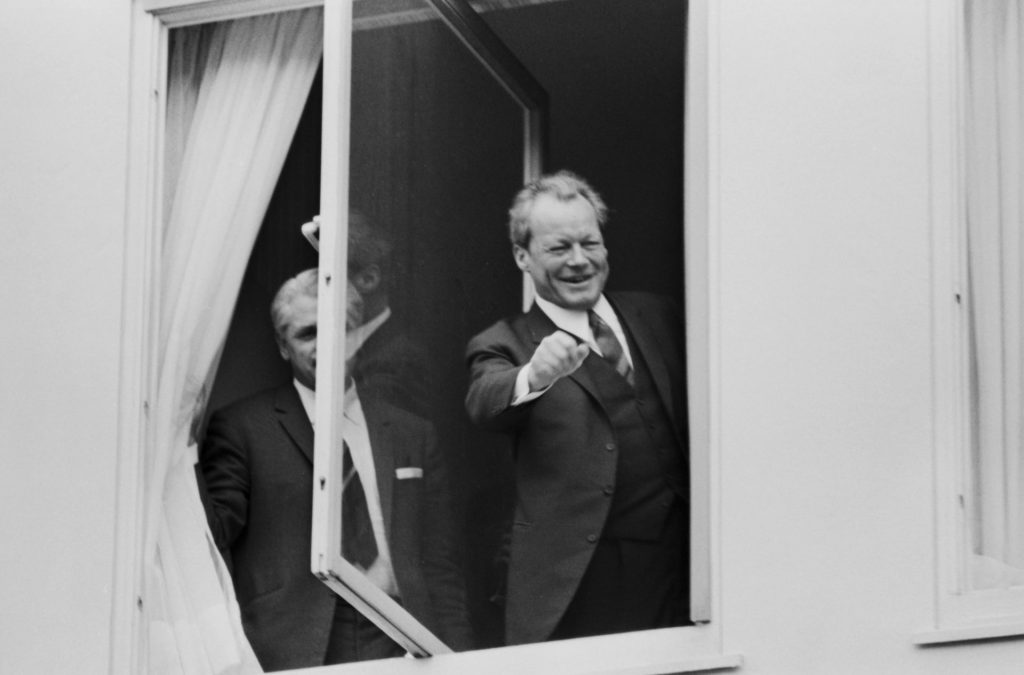
This is also the birthplace of the party’s most famous forefather: Willy Brandt, the man who revived social democracy after its failures during the Weimar Republic, followed by the Third Reich, and then the paternalist conservatism that took root in the decades straight after the war.
The Willy Brandt House, in the tourist heart of the centre of Lübeck, is more than a museum. As its curator, Hendrik Grosse-Homann, explains, it is an education centre.
Some of the visitors are weekend tourists from parts of Germany; some are local school trips; others are Scandinavians who see him as one of their own. In recent times, he tells me, couples have been coming to pay homage and to mark their 50th anniversary as party members – having joined the party in the Brandt years.
Brandt’s life story was colourful and ideological. Aged 16, he joined the party, became a journalist and within weeks of the Nazi takeover, he fled in disguise, first to Norway and Sweden.
On his return to Germany after Hitler’s defeat, he became a big shot in the politics of West Berlin. As governing mayor from 1957, he was the face of the resistance of the city when the wall was put up in 1961. John F Kennedy joined him in that; Germany’s chancellor, Konrad Adenauer, wasn’t that fussed.
After several failed attempts, Brandt finally became chancellor in 1969. This was the time of protest, Germans finally coming to terms with their history, of maximum upheaval, and of social change. Homosexuality was decriminalised, divorce made easier, the voting age was lowered from 21 to 18. Meanwhile, education was reformed, the welfare state considerably enlarged.
He also embarked on Ostpolitik, an attempt to improve ties with the Soviet Eastern bloc. This was Brandt’s legacy, in merely five years, before he was forced to quit in 1974 when his closest aide, Günther Guillaume, was unmasked as an agent of the GDR.
Brandt was charismatic, courageous and deeply controversial. “Many Germans came to see in him and his Norwegian-born wife Rut a German equivalent of the Kennedys,” says Grosse-Homann, as he points out photographs of the chancellor before adoring crowds.
The item that most intrigued me was a poster from the mid-1920s at the start of the exhibition. In large red letters, its headline reads: “Nothing changed?”
It comes from the embattled social democratic government, and it rhetorically exhorts workers to compare the situation that they faced at the end of the Kaiser era in 1918 with the years that had followed. It lists the achievements: “A worker as president, universal suffrage, workers’ committees in companies, eight-hour day, unemployment benefit”.
Not bad, you might say. Except that within less than a decade, the Nazis had taken over.
And that has always been the problem of the centre-left: whatever is done is never enough. Resentment grows, the search for simple solutions follows. Or to put it another way, why stop there?
The problem for the SPD and for many – though not all – its sister parties is that, shorn of the old voter base, Brandt’s successors don’t know which way to turn.
The likes of Klingbeil and Starmer soldier on, paralysed by fear and caution, rather than staking out clearly what they stand for and what they are prepared to fight for. While the prime minister may be eking out the last weeks or months of his premiership, Klingbeil is likely to survive, because the coalition has nowhere else to go.
But unless it works out what it stands for, it will disappear into the periphery of politics. That is a far cry from the heyday of Willy Brandt.
John Kampfner’s new book, Braver New World, is published by Atlantic.
 Most popular
My truly deranged encounter with Trump apologist Kellyanne Conway
The moral depravity of Robert Jenrick
Is this the real reason Trump keeps falling asleep in public?
Suella Braverman’s book has sold only 106 copies. This is why