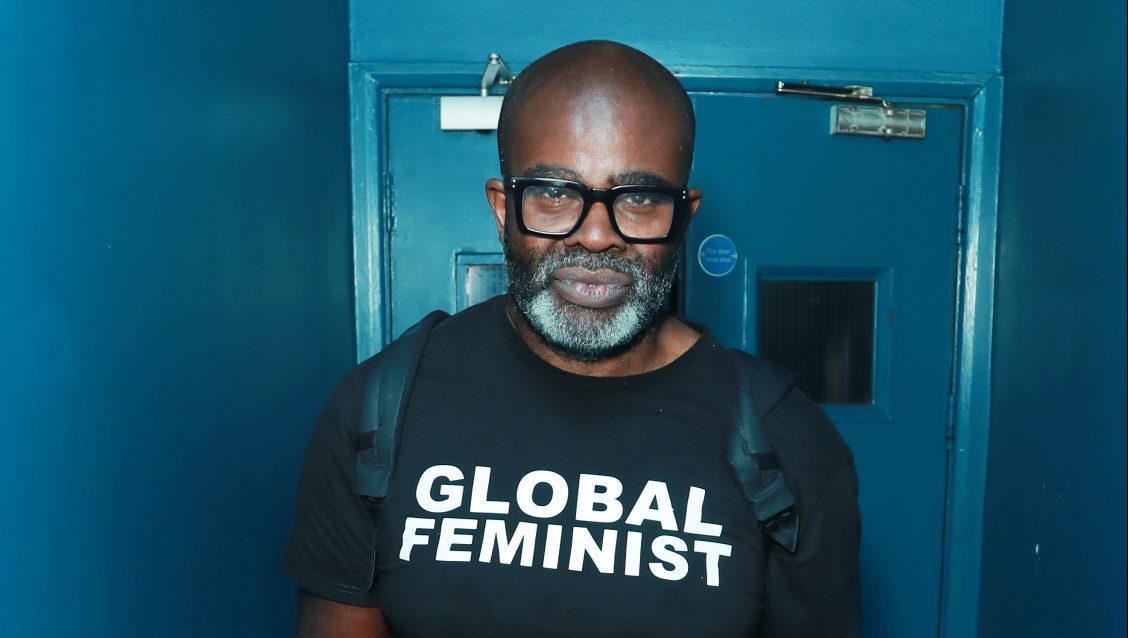
Something chilling is playing out in the pages of our national media; a cynical attempt to have the chair of the Southbank Centre, Misan Harriman, fired. For something he never said.
As an example of sheer personal unfairness, it is remarkable. But it presents a revealing case study in how British media operates when in pursuit of its quarry: relentless, vindictive, hypocritical, co-ordinated and expertly treading the laws of defamation like a high-wire act.
Since this entire sinister debacle is rooted in a wilful misrepresentation of what Harriman did and said, it’s important to lay out some facts as objectively and precisely as possible. Precision being the one thing his detractors are most determined to avoid.
After the Golders Green attack on April 29, in which an attacker stabbed three people – a Muslim man and two Jewish men – Harriman shared a post on Instagram noting that the first victim, a Muslim, had been omitted from the Metropolitan Police’s own account of the attack and from the overwhelming majority of media coverage.
He commented: “Wait, so there was a third victim on the same day who was Muslim? And our press isn’t reporting it?” A simple statement of fact and valid observation about an example of asymmetry in news reporting.
Spoiler alert: This will soon be presented as Harriman “promoting conspiracy theories” about the stabbings.
(Incidentally, Harriman’s first reaction to the stabbings, an unequivocal expression of solidarity with the Jewish community, didn’t conveniently fit the narrative of what was to follow and has been entirely ignored.)
Then, days later in the aftermath of Reform’s local election surge, Harriman posted a video about community-building and the mechanics of society. He quoted Jewish-American intellectual Susan Sontag: “She said, when thinking about the Holocaust, 10% of people in any population are cruel no matter what, and 10% is merciful no matter what and the other – this is important – the other remaining 80% could be moved in either direction. It’s such a profound way to look at us. In the context of yesterday’s election result it is something which I think is really topical.”
An edited clip of his five minute video was put on social media with the accusation that he had conflated Reform and the Nazis. So far, so social media.
Then came the newspaper headlines:
The Daily Telegraph: “Southbank Centre chief compares Reform victory to Holocaust”
MailOnline: “Fury as arts chief ‘compares Reform voters to Nazi supporters’”
GBNews: “Arts chief branded ‘crass moron’ after ‘comparing Reform voters to Nazi supporters’”
Daily Express: “Outrage as Reform UK rise compared to Nazis by chairman of iconic UK arts centre”
The articles, some written by arts correspondents, represent as stunning a contortion of the truth as anything I’ve ever seen in 40 years of journalism in the UK. And yet they are totally unsurprising, given the press’s well-rehearsed reaction to an uppity so-and-so with too much say about the Middle East.
So who, you may well be asking, is this Misan Harriman anyway? If you aren’t active on social media there is a fair chance you won’t know of him. If you are, however, it’s almost certain you do. His social media reach is enormous, often exceeding a hundred millions views a month.
He’s a Nigerian-born Brit (one bit of info they never leave out, interestingly), an Oscar-nominated filmmaker (one bit never mentioned, interestingly) and one of the most in-demand photographers in the world. He is also the most prominent Black cultural figure in Britain today.
Harriman’s crime, in the eyes of his detractors, is to be a frequent commentator against, notably, the actions of Israel in Gaza but also numerous other humanitarian crises in the world. I’ve followed his output for some time. I don’t agree with all of it, but never has he come close to crossing a line into antisemitism or any other form of far-spectrum political controversy.
He is, however, precisely the kind of figure the right-wing media establishment finds both threatening and, as evidenced here, useful.
Threatening because he has credibility, integrity and a platform to rival their own.
Useful because attacking him serves multiple purposes; intimidating other public figures who might similarly conflict with their agenda and simultaneously feeding the permanent grievance machine that is their business model.
This concerted campaign has had nothing to do with antisemitism and everything to do with power. Harriman is a prominent, successful, outspoken Black man who chairs a major publicly-funded cultural institution and who refuses to be silent about Gaza, about racism, about injustice.
Suggested Reading

The right wing campaign to cancel Misan Harriman continues
The latest incremental upping of the pressure has arrived in a leader column in The Times, calling for the Charity Commission to investigate Harriman.
In three paragraphs, the UK’s “paper of record” distorts the record to a quite remarkable degree:
Harriman, it says, has “no great pedigree” in the performing arts (nonsense, see above). He was a “curious choice” for the role in the first place (nonsense, at the time the appointment was celebrated; Nicolas Serota said: “His proven commitment to innovation and to the diverse voices of the UK will be especially valuable”). Harriman suggested “there was some kind of conspiracy in coverage of the Golders Green outrage (also nonsense, see above). And he juxtaposed the “rise of Reform UK with the rise of the Nazis and the Holocaust (ditto).
It continues. Harriman is the “head of a high-profile body in receipt of public funds.” His remarks “risk driving away sponsors”. A letter signed by 20,000 people, “including Gary Lineker” (!) has called press reports a “dishonest smear campaign” and Harriman’s comments “carry weight” (two facts correctly reported in this confection). The Charity Commission should scrutinise him (and, they hope, have him fired).
The strategy is plain. A relentless procession of manufactured outrage from a variety of sources, some relevant, some bewilderingly random. But all of a mind that Harriman must go. Calls will be made to Southbank sponsors, testing their appetite for controversy. Pressure on the Charity Commission will be unrelenting.
Next thing may be a government minister encouraged to add his or her voice to the absurdity. All until the Southbank Centre wobbles and the newspapers claim their scalp, and contain the threat from uppity voices whose significant influence they oppose.
And yet. As much as this is a story of how the press confects an outrage to suit its broader agenda, and gives its readers a face to hold in contempt with total disregard for actual facts, it may also turn out to be a story of the once all-potent press’s increasing flaccidity.
Suggested Reading

Misan Harriman: A lens on a world in protest
In Harriman, they may have picked on the wrong guy. His social reach exceeds many of the titles trying to bring him down. He has a multitude of powerful supporters willing to back him and make a stand against this contrived nonsense. And he has nearly 100,000 members of the public who have complained to the press regulator Ipso – a UK record. What Ipso will do about it remains to be seen.
For now, he has the firm support of the organisation he leads and there is no indication that any of the corporate sponsors, many of which Harriman himself brought it, are buckling. So his dismissal seems, if not implausible, then certainly unlikely.
In any case, he is due to leave at the end of the year as his second three-year term ends. One wonders what kind of successor the Southbank might find after seeing the way Harriman has been hounded.
Misan Harriman is not an antisemite. Misan Harriman did not compare Reform to the Nazi Party. Misan Harriman did not proliferate conspiracy theories about the Golders Green stabbings. These are the objective facts of this story.
You would imagine, in a perfect world, that the case against Misan Harriman would be impossible to contrive. But we don’t live in a perfect world. We live in a world of the manufactured outrage machine, and it’s coming now for Misan Harriman.
It may just have met its match.
The New World’s journalism is entirely funded by its subscribers. Join them today at the link above.
 Most popular

My truly deranged encounter with Trump apologist Kellyanne Conway

The moral depravity of Robert Jenrick


Is this the real reason Trump keeps falling asleep in public?

Suella Braverman’s book has sold only 106 copies. This is why