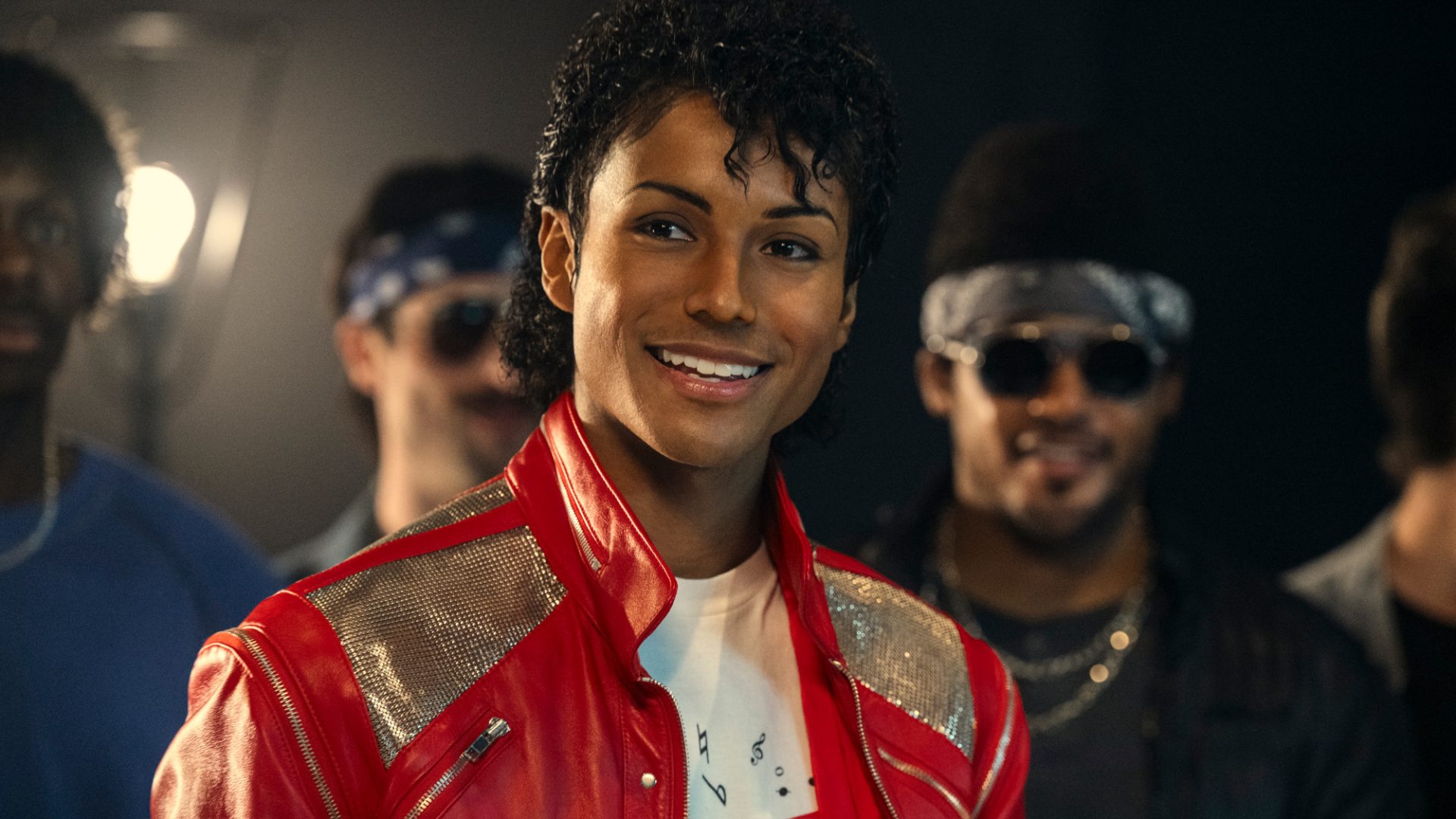
As the Michael Jackson film Michael comes out, I am stuck in a moral quandary. Do I not go and see it because of multiple credible claims that Michael Jackson was a paedophile who sexually abused children for years, or do I not go and see it because it looks shit?
Endorsed by the family and with the King of Pop’s nephew Jaafar Jackson playing his uncle Michael, the trailer has all the familiar bio-beats. There’s the mother promising her son he is going to live a “special life”; the stern father telling him he’ll do as he’s told (Colman Domingo plays Joe, the father who ruthlessly geared his family into The Jackson 5, a pop phenomenon, the Destiny’s Child to Michael’s Beyoncé).
There’s poverty turning into success, as the shitty CGI snow of his Indiana home town morphs into the shitty CGI sun of a New York street on which he stops traffic.
There’s the faithfully created moments: There’s the moonwalk, and the Thriller video! There’s hit after hit after hit, and the credit from the “producer of Bohemian Rhapsody,” God help us all! Oh, and there’s Bubbles, the monkey!
What there isn’t – in the trailer, or the movie itself – is much on the claims against Jackson, some of which led to a criminal case in which he was found not guilty on all charges. This was going to be used in a framing device so the film would begin with the pop singer under police lights and have the trial as its third act. A potential triumphal finish – remember the female fan releasing doves as each “not guilty” verdict was read out? – was scrubbed when it was discovered that one of the clauses in a settlement with a Jackson accuser prohibited his depiction in any film.
Another third act was written, and now drama will be added by Jackson setting his head on fire while filming a Pepsi commercial. Which is Bad, but not that bad.
The estate doesn’t really need to worry. Unlike the former admirers of Woody Allen and Roman Polanski, many of Jackson’s fans seem relatively indifferent to the accusations. His songs continue to get downloads and radio time, the concert rehearsal film rush-released after his 2009 death was a huge success, as were jukebox musical MJ and the Cirque du Soleil Vegas show ONE.
The film-makers might have come up with a better name though: there was a film called Michael in 2011, the synopsis of which reads: “Five months in the life of a pedophile who keeps a 10-year-old boy locked in his basement.” Hmmmm. I would have gone with Blame It on the Boogie.
Even if it were not for all this, I would struggle with Michael. Because, what is it with music biopics? What’s the appeal?
Are they movies for people who don’t like going to the cinema? Not so much films than a pop-up version of a Greatest Hits album, based on a story everyone knows already, with moments where you go, “ah that’s how it happened,” like this exchange which tells you how The Doors got their name in Oliver Stone’s film The Doors:
“We’ve got to get a name for the band,” says Ray Manzarek (Kyle MacLachlan). “I’ve got one… The Doors,” says Jim Morrison (Val Kilmer).
“I like it! The Doors of Perception, Huxley.” “The quote’s actually from William Blake,” corrects Morrison which makes you want to kick the Lizard King right in his Crystal Ships.
Later, Ray will noodle on his keyboards in the background until you hear the beginning of Light My Fire. At which point he shouts to the rest of the band members: “I think I’ve got it!” So that’s how it happened!
Or how about this from Bryan Singer’s Oscar-winning shit-basket Bohemian Rhapsody, when the band play their new single Bohemian Rhapsody to a pointless Mike Myers character.
“If they’re not careful, by the end of the year, no one will know the name Queen,” shouts the enraged and fictional (who therefore can’t sue) record executive.
It’s the unspoilerable story of success, because we already know the end. The doubters will be proved wrong; critics will be turned on; the public will go wild; the excesses will be redeemed by stadium gigs and recovery and/or death. If the lead character is dead and the bandmates are Executive Producers, then the anodyne dial will be turned right up; the whitewash liberally slapped on; the groupies retrofitted to the age of consent and a lack of STDs.
Michael isn’t the only musical biopic to downplay/eliminate child rape. Great Balls of Fire, which charted the rise of controversial rock’n’roller Jerry Lee Lewis, played by Dennis Quaid’s grin, made his 13-year-old cousin/wife into Winona Ryder at the height of her fame. Interestingly, Terrence Malick did a version of a script which was turned down by the studio for being too dark. Now that might be one I would have paid to see.
The actors won’t play their characters, they’ll play their instruments – this is always emphasised, and it’s almost always bullshit – and they’ll become their characters. As Joaquin Phoenix became Johnny Cash in Walk the Line; Angela Bassett became Tina Turner in What’s Love Got to Do With It; and Jamie Foxx became Ray in Ray.
This always feels like an exchange: I’ll help you sell some of your back catalogue if you give me some of your cool. Timothée Chalamet can rock up looking like Bob Dylan, and Jeremy Allen White rolls his sleeves up and belts out songs like The Boss.
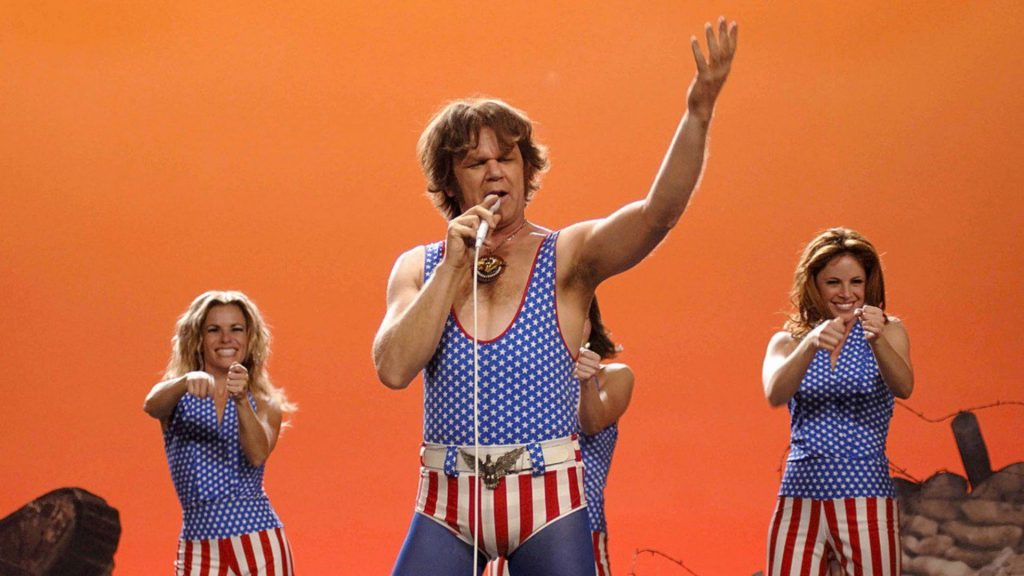
The tension in all these films is in the unwritten rule that they have to explain/justify the life with the art. In the best biopic ever made – Walk Hard: the Dewey Cox Story – a stagehand is trying to find Cox (John C Reilly) and get him on stage, when he is stopped by another member of the band. He tells him: “You’re gonna have to give him a moment, son. Dewey Cox has to think about his entire life before he plays.”
For Dewey Cox, he has to overcome killing his brother in an ill-advised machete game. For Johnny Cash, his brother dies in a sawmill accident. For Ray Charles, his brother drowns in the washtub. The main lesson seems to be if your brother can play a musical instrument, run the fuck away.
Then there are the drugs and the booze. The heroin for Charlie Parker (Forrest Whitaker) in Clint Eastwood’s Bird; and all the drugs for Miles Davis (Don Cheadle) in Miles Ahead, James Brown (Chadwick Boseman) in Get On Up, and Chet Baker (Ethan Hawke) in Born to Be Blue. And of course, the dangers of taking a bath in The Doors or a dump in Elvis.
It’s telling that we want to see our artists in this way. It’s as if we secretly hate them. We want to see them suffering, burning in the fires of excess, stumbling on stage, having their hearts broken and being thrown in the clanger. Or mad like John Cusack is mad in Love & Mercy, but not actually Brian Wilson mad. Not unphotogenically mad.
The artists in biopics are Dionysian lunatics, outsiders who danced too close to the rim of the volcano; who are always exploited by the record companies, are always misunderstood by their bandmates and close ones, always mistreated by their families. Until the last reel and a sudden awakening of acceptance.
But we the audience become convinced that the suffering and the art are inextricably, inevitably bound up. The drama behind the legendary performances and recordings had to happen so the performances and recordings could.
This is asinine nonsense. Suffering impedes as much as it inspires. Ditto drugs. Just ask Janis or Jimi. As for getting exploited by unscrupulous executives… welcome to capitalism, bitches.
For a corrective, watch Get Back, Peter Jackson’s revelatory documentary on The Beatles, and see how the greatest pop band that ever lived went about writing and practising songs. Look at how they ate toast and drank lots of tea. Look at how the drama between them rarely got in the way of what they were doing.

Look at how record producers actually come in – George Martin – with a bunch of useful ideas – piano lids closed, mics over here – and a “come on, lads, back to work” bit of discipline. Also listen to how plugged in they are to other bands and music, things they watched on television last night, that latest song by Fleetwood Mac, the culture of their time. How none of them were beating their chests about their feuds or their families, though Lennon would sing about his lost mother with two beautiful songs, one delicate, one furious at a later date.
Biopics generally tend towards the cliche – the Freudian sled of childhood, the Eureka! moments of success, the sunless side of inevitable decline or flameout. Music biopics do that, plus a discography. The pattern is set in stone and usually leads to disappointment. On this occasion, Michael seems unlikely to beat it.
Michael is released on April 22. John Bleasdale’s novel Connery is published by Plumeria