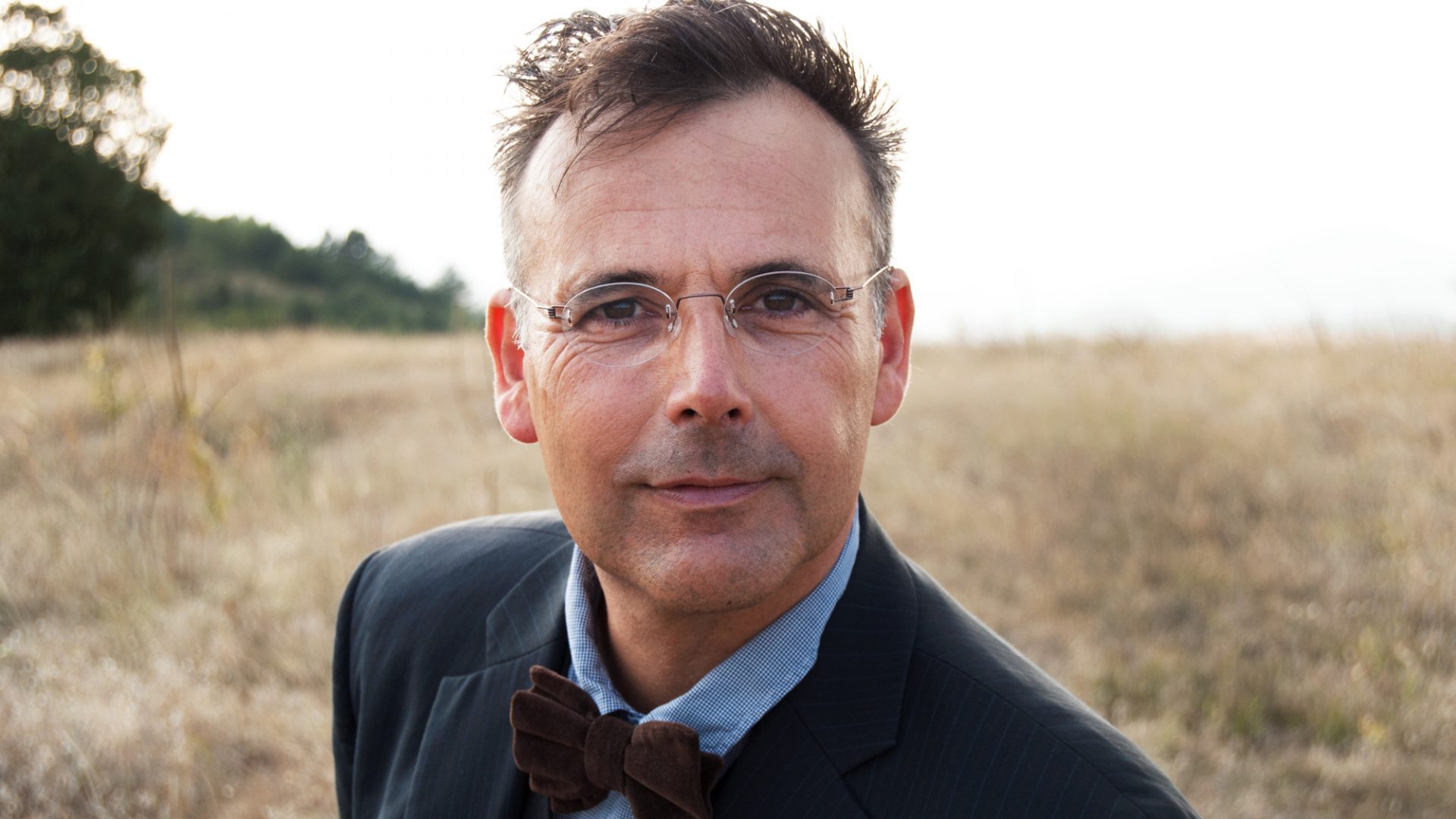
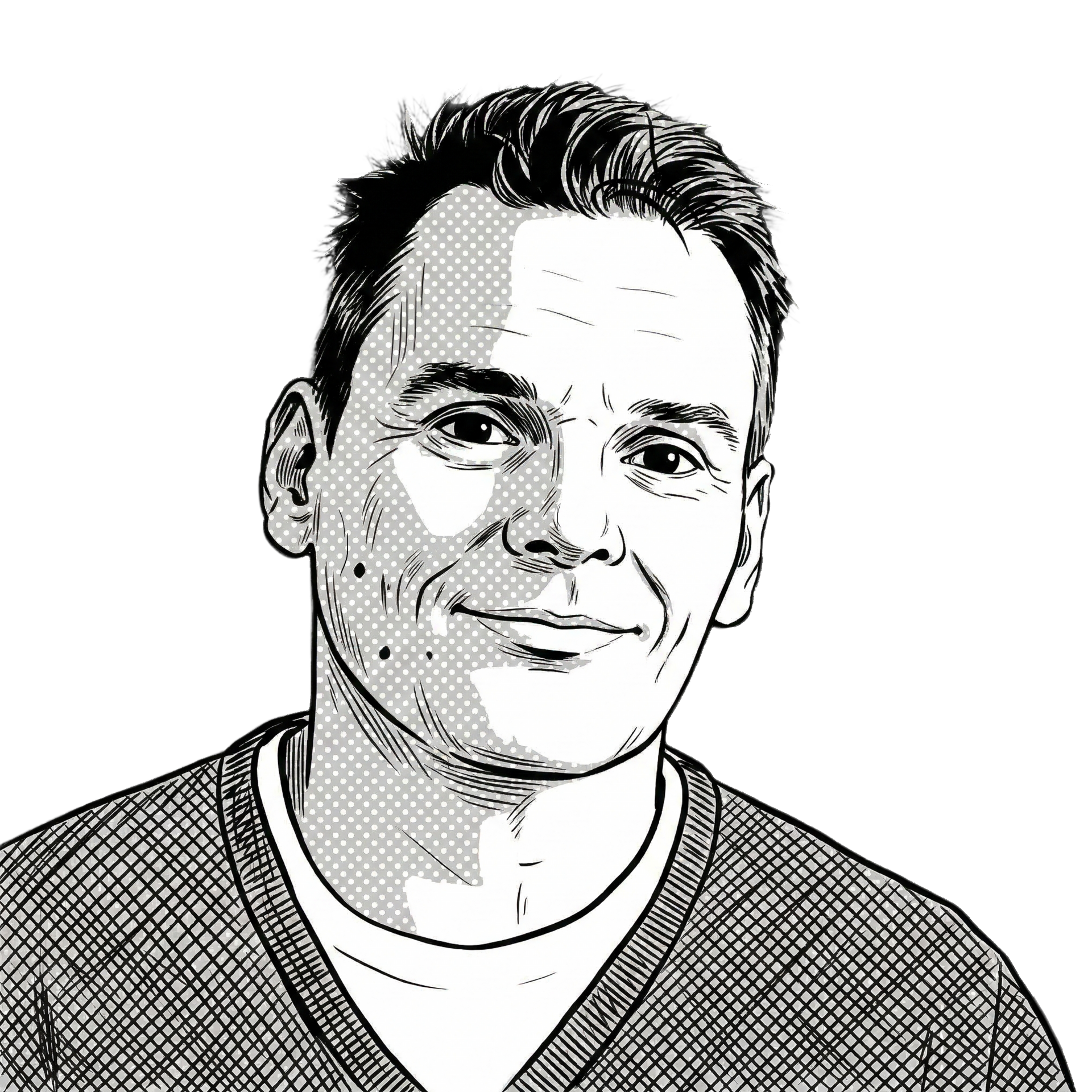
Robert Newman was once heckled while he was writing a book. Seated at his desk in his home in Kentish Town, north London, the brickbat drifted in through an open window as two men shared a conversation on the pavement outside after taking drink at the pub at the end of the street.
“Rob Newman lives there,” said one. “But he’s not funny any more.”
The memory elicits a disbelieving chuckle and only the faintest of shudders. “I thought ‘surely no one has ever been heckled at their own writing desk before,’” Newman tells me. “If I’m on stage, I’m expecting it. But when I’m writing? No.”
In fairness, sitting down to compose stories in silent rooms, Robert Newman doesn’t write like a stand-up working for laughs he’ll never hear. In preference to yukking it up, his novels – of which the recently published Intelligence is the latest – tend to align complex ideas with enthralling human drama.
The plotting and pacing are matters of artful equipoise. “In [comedy] you worry about losing the audience,” he says, “but I learned to slow down and not be quite so frenetic.”
On its surface, Intelligence is a rollicking yarn about espionage and reconnaissance in Britain and mainland Europe during the second world war. But as the action zips along like the black and white pictures Newman so admires – His Girl Friday, say, or The Philadelphia Story – enduring matters catch the eye. Amid themes of class, sexism, cultural bequeathments, and environmentalism, he even has a stab at the foundational headscratcher of human ethics: Am I my brother’s keeper?
“Let me ask you – all of you – the following question,” posits an academic during a discussion of philosophy at Somerville College, in Oxford. “If you could prevent a world war between… two nations by killing one person, would you do it?” With the spectre of war darkening the skies of Europe once more, the query becomes more than conjectural.
“One of the questions [the book] asks is, ‘Does the theoretical stand up when shit gets real?” Newman tells me. “The more obvious question would be, ‘Would you kill Hitler to stop what is coming?’”
Asked to consider the matter in its increasingly germane application – “would you shoot Donald J Trump?” – the author falls silent for just long enough for me to wonder if I should turn him off and then on again. “I try not to give him too much headroom,” is the overdue reply.
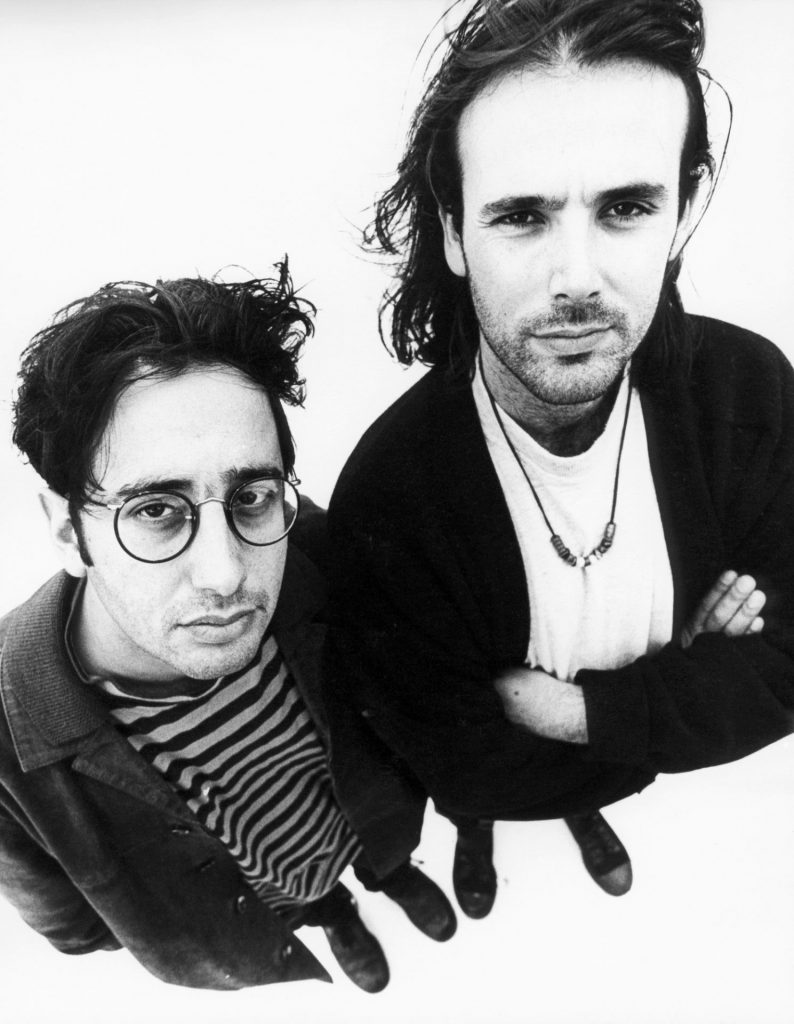
Wearing a cycling helmet and a hi-vis gilet, Robert Newman arrives early for his interview with The New World. Anticipating a scimitar-tongued brainiac whose talents – as one half of the famously quarrelsome double act Newman & [David] Baddiel, half a lifetime ago – inspired the NME to declare “comedy is the new rock and roll”, instead, over coffee and orange juice amid the agreeable hush of the first-floor cafe at the Camden Garden Centre, my hour is spent in the company of a man who might plausibly pass as a lovable absent-minded professor.
But while a fondness for sentences that dissipate like steam from a white Americano makes corralling his words on to the page a challenging proposition, elsewhere, evidence abounds of a discerning certainty about the correct order of things. Apropos of nothing, he says: “You can see how weak this new [British] Saturday Night Live was when [Trump] retweeted [a sketch] from the first episode, thinking it was great. That’s not exactly speaking truth to power.”
The breezy dismissal of his own fame as a thing that “lasted for an afternoon” is fortified by the decision to dim the spotlight on his own career. As admirers and commentators cooed at a comedy duo on stage at a packed Wembley Arena in 1993, the man whose name appeared first on the marquee outside began tallying the toll on small details that mattered a great deal. For one thing, being a recognisable funny man off the telly made it difficult to summon laughter from strangers when he wasn’t being paid to do so.
“When you’re slightly famous, people think, ‘Oh, I know it’s him, he wants to let me know who he is, and now he’s doing [what comics call] a bit,’” Newman says. “And they’re thinking, ‘Yeah, all right, but I know it’s him.’” To his relief, the damage wasn’t permanent. The news that his seclusive talent has “come back now because I’m so obscure” had me chuckling for hours.
“[Being famous] was tremendous fun, until it wasn’t, and then I stopped,” he says. “I was offered a part in a film, I won’t say what the film was, but Gary Oldman was in it. And I thought, ‘I don’t really want to do that. I want to write.’
“It’s like that Elvis Costello song, I Want To Vanish, which is a beautiful song that I used to sing [to myself] at that time. I felt like I wanted to vanish.”
From a vantage point on the periphery, radicalism beckoned. Unshackled from a burdensome public persona, Robert Newman grew into his new role as the living embodiment of the kind of metropolitan bogeyman who robs readers of the Daily Mail of a good night’s sleep. Off stage, he realised with alarm that the cradle of the stroller in which he wheeled his nephew around the city stood level with the exhaust pipes of passing cars; on stage, at a music hall in Hackney, he performed a one-man show titled The History of Oil.
Twenty years later, crude matters continue to dominate. All but wincing at my clumsy request for a comment about a newsworthy traffic jam on the Strait of Hormuz, after 55 minutes on the record, Newman asks if I’d mind him sitting this one out. Not at all, I say, or I would have done had he not ventured an opinion anyway.
“It’s another reason for getting people out of cars,” he states. “[It’s] yet another massive subsidy to the oil and gas industry that people will be paying for the rest of their lives.”
Of course. But that’s how it goes, everybody knows. When a hard rain fell on a carpet of concrete, in Valencia, people drowned in their vehicles. According to the book Paved Paradise: How Parking Explains the World, by Henry Grabar, at present, the number of three-car garages under construction in – where else? – the United States exceeds that of single-bedroom apartments. It’s a hell of a problem. Looking it in the face is like staring at the sun.
“I often feel invisible,” Newman says. “I invented the phrase ‘No Planet B’” – the title of a one-man show from 2006 – “which has sort of become a global catchphrase since. All the things I was saying then people were ignoring, and now… they say, ‘Let’s get some comedians to drive in their diesel cars up to some river and say how bad the pollution is, 20 years later’”
Robert Newman catches himself. Reclaiming his poise, the matter is laid to rest with a gently spoken word.
“Anyway,” he says.
To Newman’s point, though, I don’t think of him as being invisible at all. Many years after taking a punt on his third novel, The Fountain at the Centre of the World, today, I can still recall vast chunks of its globetrotting story in stirring detail. I think of it often. In Camden Town, it was my pleasure to at last tell its creator how his artistry and clarity taught me more about human interconnectivity and the illusory divisions between haves and have-nots than any book I’ve ever read.
“That was the great lesson,” he says. “That riches for one group of people haven’t fallen from the moon. They come from taking it from somewhere else. The creation of wealth for one group of people is linked to the creation of poverty for another. We talk about wealth creation, but there’s also poverty creation.”
He should know; like almost all authors, Robert Newman has his own poverty creation empire. Marking time until the day he “makes a living out of writing books, definitively,” a wage is drawn from a (still) beloved second job extracting laughter from audiences at venues in which he can “see the whites of their eyes”. At a time when other comedians flaunt their wares in short clips on social media, with adorable dottiness, he has a website on which visitors are advertised gigs that took place last year.
At the end of his most recent tour, in February, he happened to be recognised by a member of staff at Kentish Town tube station. “I love your standup,” the man told him, “you should start doing it again.”
Absorbing the news that the disembarking passenger was in fact returning to his family after performing live in 40 towns and cities up and across the country, the inattentive admirer shrugged his shoulders and said, “Oh, well, if it isn’t on TV then it doesn’t count”.
Heading home at last, Robert Newman exited the station with the words, “I happen to disagree”.
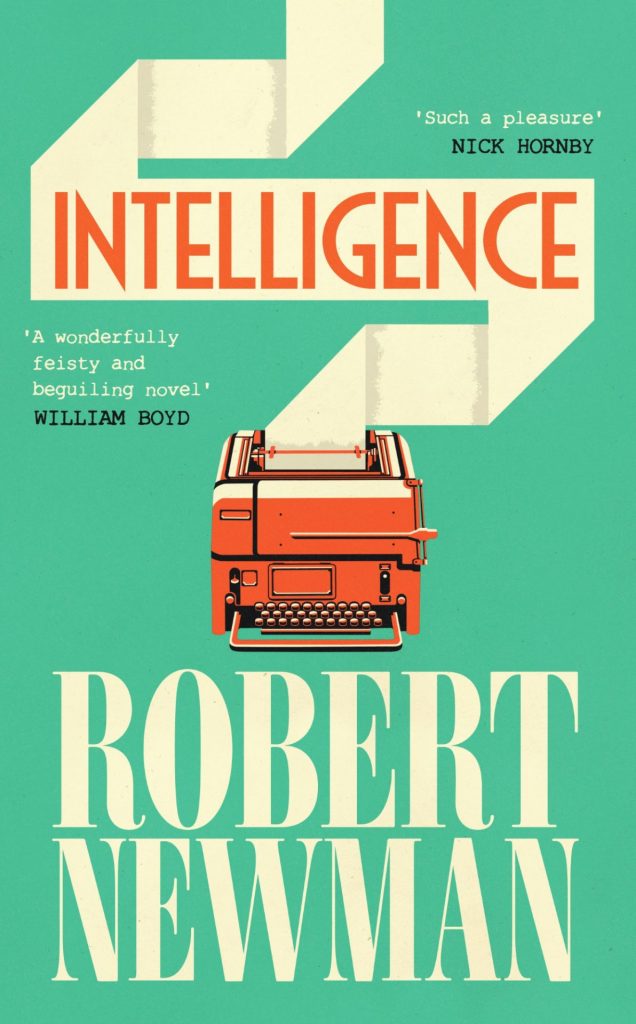
Intelligence by Robert Newman is published by Serpent’s Tail
Ian Winwood is the bestselling author of Bodies: Life and Death in Music