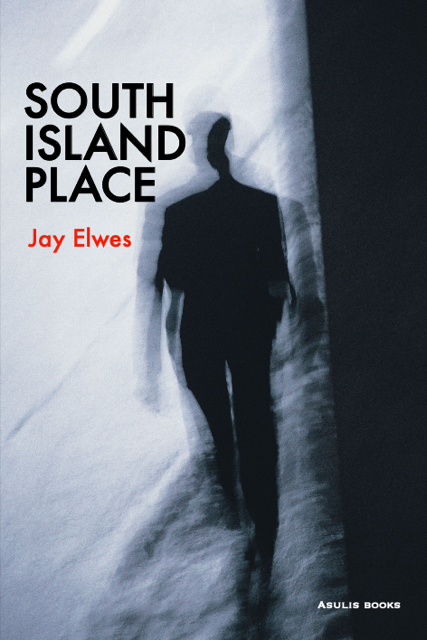
So I wrote a book. It’s a novel about a man who thinks he’s one thing when in fact he’s another. I can’t really give an opinion on whether it’s any good because I wrote the thing, but it ended up being what you might call an “anti-spy novel”. People who’ve read it have said it’s not bad.
What follows here is not some naked piece of self-promotion. Ok, perhaps there is a whiff of self-promotion to it, but the point of this is not my book, or really anything to do with the specifics of the book. The point is that writing a novel tells you something. Or at least, it taught me something and the more I’ve chewed it over, the more significant it has begun to seem.
The point is this. I put together a plan for my novel. It was a pretty decent plan, which sketched out the plot and the backstories of the characters – everything I would need to get the thing done. The urge to plan is a pretty fundamental instinct. Humanity has always longed to control the future, even though it’s obviously impossible, but you might as well give it a go.
So I gave it a go, and I put together a plan. But the book I ended up with was nothing like my plan. More than that, the end result was something that I never could have planned in the first place. The strange thing was, it was impossible for me to know how the book was going to turn out until I had started writing it.
Suggested Reading

Who killed the dad book?
This is not to claim that I was struck by some kind of divine authorial lightning. I don’t believe in that sort of stuff. The point is much less dramatic, but no less important and it is this: that a book needs to work.
This means two things. First, that 80,000 words of writing should contain no continuity errors – a character cannot put down a mug of tea, and then two lines later, put down the same mug all over again. Getting that continuity right is a pretty big task all on its own. That’s the easy bit.
Second, and much more difficult, is the fact that the characters and the situations all need to work together in a way that is logically and emotionally and tonally consistent. A person can’t talk one way then suddenly start talking in another. They can’t behave one way, and then become a completely different person, or do something that would make a reasonable reader think “naaaa, they’d never do that”. The book can’t set out on one trajectory, and suddenly switch to a new, totally different tack.
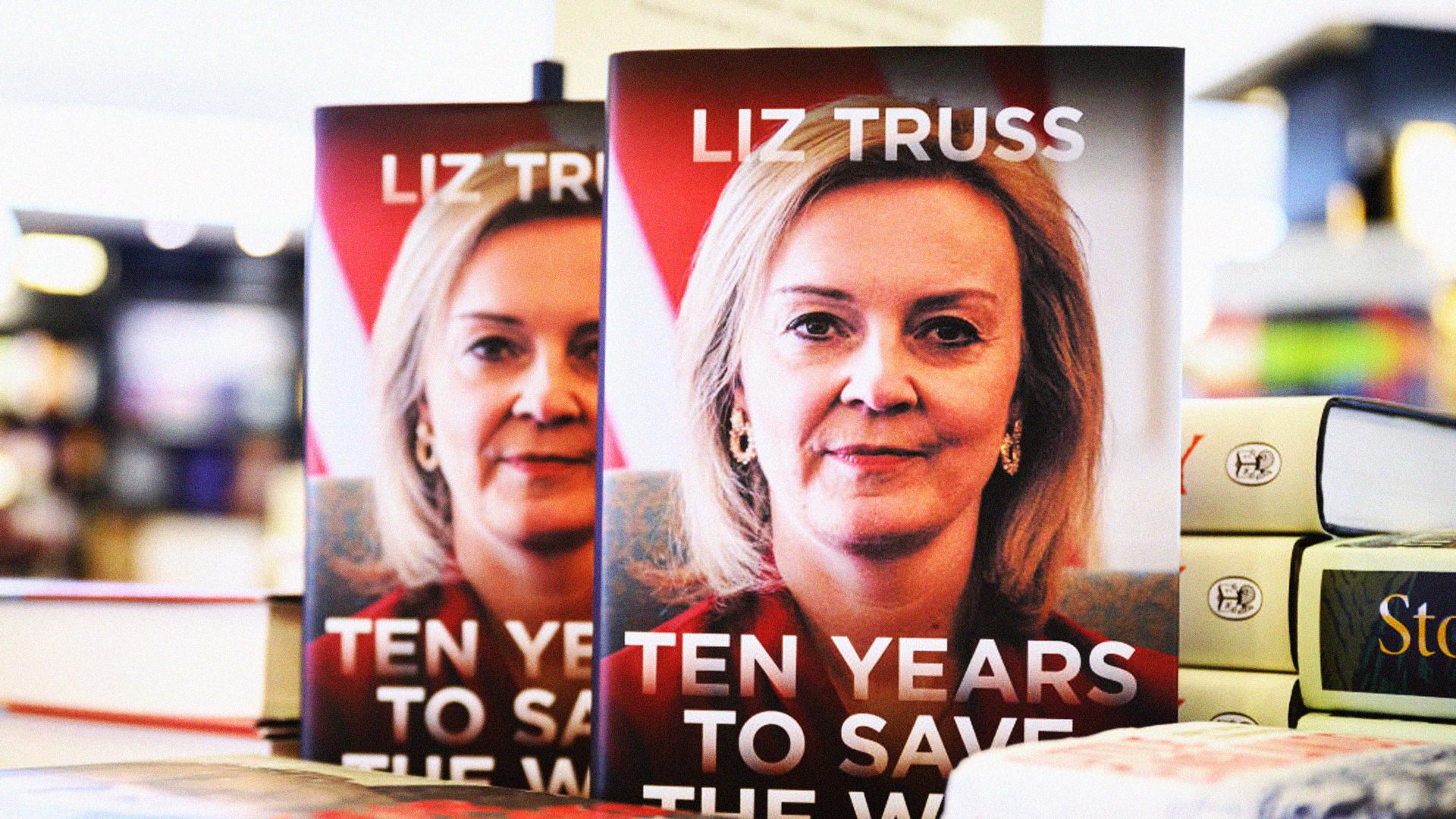
Or to bring it back to the here and now, you can’t start on an article about novel-writing and suddenly jump to, say, a meditation on Liz Truss’s mini-budget. A leap like that would be so jarring as to make the whole thing collapse into nonsense. Unless, that is, you could find a way to force the new, surprising turn into the overall logic of what you wanted to say.
Liz Truss? Novel writing? Is there any way of sticking those two together? Well, perhaps. One way of doing it would be to say that Truss’s great failure was that she wasn’t a novelist. She didn’t sit down at a desk and set out in writing the full, internally consistent account of how her mini-budget plan was going to work. That was where she went wrong, because if she had actually behaved like an author, then the errors in her story would have leapt at her off the page.
But she didn’t, and as a consequence she lost control of her plot, which turned out to be stuffed full of contradictions and outright stupidities, none of which she noticed until it was far too late. Worse, Truss thought she was the main character, but she was wrong. The lead role actually belonged to the bond market, and it ripped her plotline to pieces.
And yet she pressed on, wrapped in the delusional conviction that her offering to the nation hadn’t actually been a total failure. In her mind it had been a great success, and the real problem was that no one else understood how great it had really been.
This is the fate of people who make big, bold assertions that they don’t think through in full: they fall into a state of delusion. Look at Brexit. Putin. Look at Trump, for god’s sake – now there’s a deluded one. But would he even be capable of thinking an idea through to its logical conclusions? Or for that matter, would Trump ever be able to write a novel – and if Trump could write, would it be possible to understand him?
And so it seems that Liz Truss does have a place in an article about novel-writing after all. As does Trump. But I can’t crow too much about these smart-arsed literary insights, because the jury is still out on my book.
There will be reviews. A friend read it recently and said it was “quirky”, which was like a dagger in the ribs. And writing it was extremely tough going. About two-thirds of the way through I realised I’d made a terrible mistake which meant re-drafting pretty much the entire thing.
Suggested Reading

Smartphones have become just too good
Moments like that aren’t what you get into it for. I’d always thought novel writing involved chasing sailfish on the waters of the Gulf of Mexico, or hanging around bars in Montparnasse, drinking brandy for breakfast and smoking. But it didn’t involve anything like that, alas. So it seems that I too carry my own store of delusional ideas – just like Liz Truss, in fact. Her again?
And it’s true that I have a healthy dose of delusion mixed in with it all. But delusion comes in both a destructive and a productive form. So you can be poor old Liz, utterly blind to the destruction you’ve caused. That’s the negative variety.
But then there’s the other kind, which also involves imagining things that aren’t actually there, but which takes you in a more productive direction. Allowing yourself to imagine, say, what the future could be like. That’s a form of delusion, because it involves conjuring up something that isn’t there – nothing more delusional than that.
And if you can’t allow yourself to slip away from reality to imagine the future, then you’re never going to create anything. On a broader scale, it also rules out the possibility of the progressive society – if you can’t imagine what a better world might look like, how can we ever hope to get there? And so delusion also begins to take on a political significance.
It has to be the right kind of delusion, of course – an intentional, controlled loosening of the bonds. But here is the difference between me and Liz Truss. What I learned is that writing a book involves allowing yourself to have those delusional ideas and thoughts and instincts, but having had them you must then steamroller them into a logically-consistent whole.
If for whatever reason one bit starts to contradict another in some way, you must look at yourself and say, “no – you got that wrong”, and get rid of it. That’s something Liz couldn’t do. She ignored the inconsistencies. The reviews were not kind.
That really, is the lesson of it all: that to write a book, to rewrite a book – to edit a book – you first have to learn to edit yourself. You have to realise that the ideas you had at the outset were all well and good, but they were delusional, and they aren’t going to work. Sorry. No plan ever works, because if you imagine the future, you’ll always get it wrong.
But that’s not to say that no one should ever try it. That’s not the point at all. The point is that something will work, sure, but not your plan. This is why the greatest catastrophes of all have been visited on humanity by the system-builders.
Suggested Reading
This pro-populism book unwittingly exposes the emptiness at its heart
I didn’t know what shape this article was going to take when I began it. I had no inkling that Liz Truss was going to turn up halfway through, just as I had no idea that, halfway through the novel, which is called South Island Place, my main character was accidentally going to stage his own abduction. These things cannot be predicted in advance, which is what gives writing its strange, non-deterministic character.
Another way of putting it is that you will only know what’s going to work in your book once you have actually written it. My novel is finished, and I really wasn’t expecting it.
And, now, so is this article. I wasn’t expecting that either.
South Island Place by Jay Elwes is out now