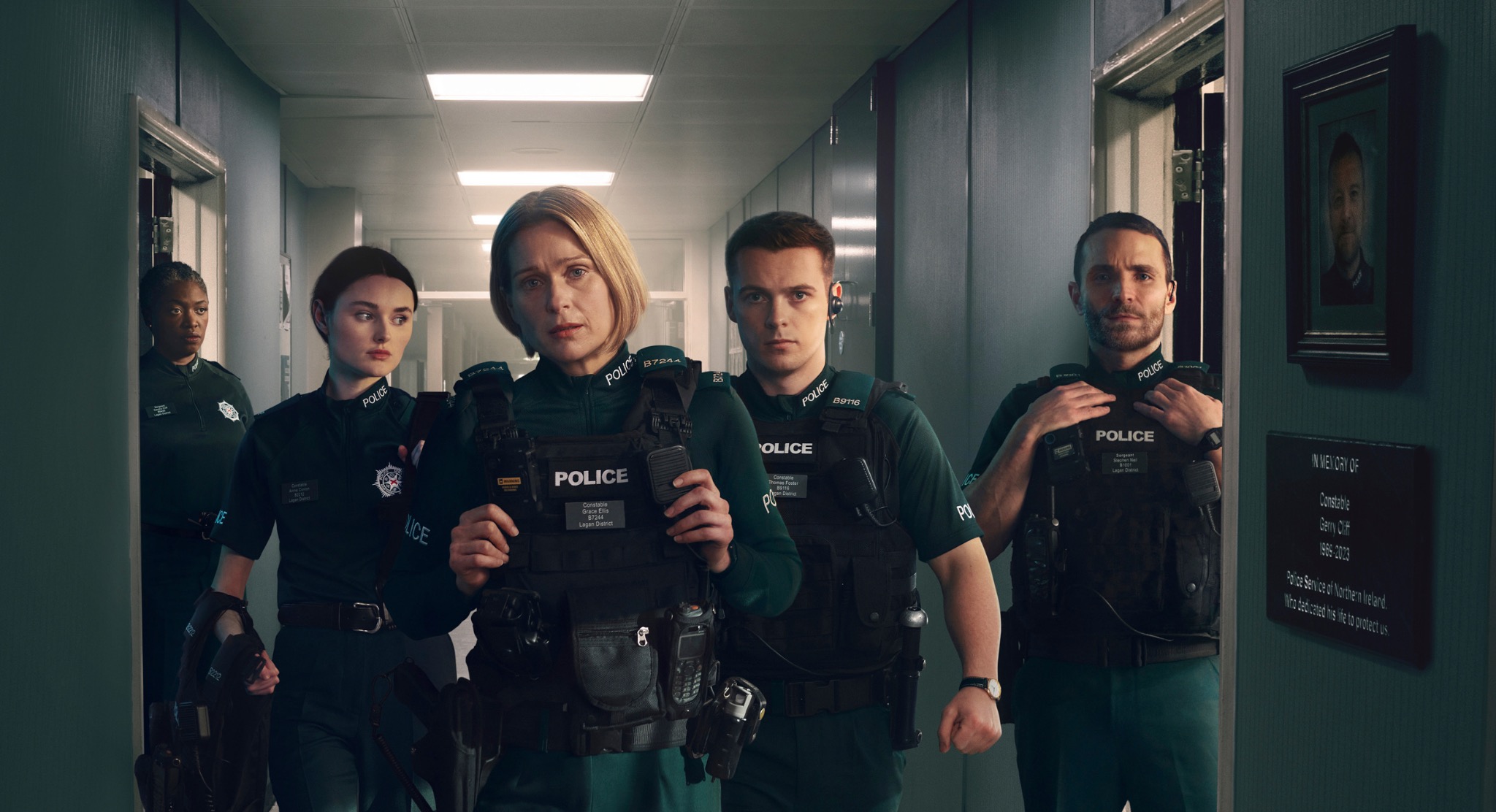
I have just inhaled the fourth series of Blue Lights, the acclaimed, award-winning BBC police procedural drama set in Northern Ireland. Unsurprisingly, the acting and storytelling are brilliant, but once again I am left wondering why I seek and find so much comfort in what has been deemed in Hollywood as “copaganda.” A catchy way of fighting back against the bad rap that policing deservedly gets in real life for being institutionally racist, sexist, homophobic and frankly unfit for service.
In 2021, I sued the Metropolitan Police and won for violating my human rights. I campaign for police reform and have been very vocal in calling out the Met’s playbook– like calling criminally accused police officers former officers even if they used their warrant cards to commit atrocious crimes.
I was instrumental in the removal of Dame Cressida Dick as police commissioner and have testified to the Casey Review and to the watchdog HMICFRS (Her Majesty’s Inspectorate of Constabulary and Fire & Rescue Services) about institutional police failings.
But when I’m at home and settling in to binge a telly series, please give me Blue Lights, The Rookie, or Rookie Blue (lighter American and Canadian versions of the trope). I am captivated by watching seasoned officers take a newbie trainee constable under their wing and help them grow into overachieving, morally sound public servants putting their lives in harm’s way to keep me safe.
Blue Lights takes things a step further as the focus is on Blackthorn Station, where in series four women occupy almost every position of power. It’s impossible to engage with the show and not empathise with the officers and their backstories, and maybe that’s the secret to expertly executed copaganda. As a viewer, there is no ambiguity in who we are meant to cheer on and where our loyalties are expected to lie.
The debut episode of Blue Lights aired on March 27, 2023 and kicks off with Grace Ellis (played by Sîan Brooke), an English single mum, in plain clothes, checking beneath her personal car for explosives. That’s juxtaposed with uniformed Constable Ellis riding shotgun in a police car in the middle of a high-speed chase. She’s been in Belfast for 19 years and a social worker for a decade of that time.
One of her fellow trainees is Constable Annie Conlon, a Catholic probationer who is forced out of her home because of sectarian threats. Sergeant Sandra Cliff, played by Andi Osho, a Black English woman, steals every scene she is in and adds a new dimension to being an outsider in Belfast and also one in the senior ranks and married to a beat cop.
Belfast as the backdrop is the other main character of the show. We absorb Belfast’s history, the Troubles, the alliances formed and the raw danger and pain when communities come up against the “peelers” (police). The accelerated atmosphere of extreme risk combined with lack of staffing, resources and support creates a brotherhood of policing; the us-versus-them of it forges bonds in fire.
Yet this brotherhood that often looks out for itself rather than the public is one I campaign against in my real life, day to day. So I’m left to question why I want to lock in to this tiny community of police in Belfast as they come up against loyalists, republicans, intelligence services, and criminal drug and gun syndicates.
Hierarchies are crucial to the working order of the show – hierarchy in the community, hierarchy within families, and hierarchy within the confines of the station. Even the police ombudsman character Geraldine Gilroy, played by Irish actress Aoibhéann McCann, is subject to the self-imposed rule of the station.
Blue Lights reminds me of the world that David Simon created for The Wire, and I loved McNulty in that show so much that I named my dog after his character. So maybe it isn’t surprising that I find comfort in a world where Constable Ellis’ deep understanding of human pain and sympathy for the people she is policing is evident.
Suggested Reading

Are you over 45 and female? Sorry, you’re not getting a job
For the most part, the team at Blackthorn are the imaginary women (and men) I wish were looking out for me without fear or favour. Their selflessness and commitment to public service, yet nuanced understanding of the unwritten rules of engagement that they have to accept and agree to in order to police Belfast makes me feel somehow safe and nostalgic for the days when I believed police became police because they were drawn to public service and not power. The days before I knew what the HMICFRS was, and back when I thought that the Independent Office for Police Conduct actually had teeth and the intention to clean up policing.
Blue Lights is such phenomenal, cinematic telly that despite the horrific conditions and risk of harm, you might watch it and see being a peeler as a career possibility. You might expect a place where women are in charge and promoted up the ranks and are at the control desk, rather than being assimilated into the systemic racist, sexist and homophobic conditions of life within the real-life Met Police.
So I guess I will continue to watch my copaganda like I do with Elf or A Christmas Carol – as a completely oddly nostalgic fantasy. One in which people go to the police and are believed and treated with respect and fairness.
 Most popular
My truly deranged encounter with Trump apologist Kellyanne Conway

Suella Braverman’s book has sold only 106 copies. This is why

The moral depravity of Robert Jenrick
Hungary’s lesson to the world: Populism isn’t permanent