There is a very well-known piece of good advice: that when you’re in a hole, you should stop digging.
Nigel Farage, thanks to his avarice, has found himself and Reform UK falling down a political chasm, after it emerged he had accepted a £5 million “gift” – and yet, as a new undercover investigation has revealed, they seem to find themselves unable to stop shovelling up cash, rule book be damned.
Verbatim, a not-for-profit investigative newsroom, staged meetings with an undercover reporting team and senior figures within Reform UK – including Nigel Farage himself, the party’s policy chief James Orr, and close Farage aide Dan Jukes. Orr and Jukes have already both resigned from Reform.
Over that time, they discussed a potential £500,000 donation from a wealthy American, who would be ineligible to donate to UK political parties under party finance rules. The senior Reform officials openly discussed a plan to funnel the donation through the donor’s UK-based son – a very similar ploy to the one Reform UK is accused of engaging in to accept donations from “Posh” George Cottrell.
The revelations, broadcast by Channel 4 News on Thursday night, have derailed any hopes for Reform UK that it could use its conference to set its agenda back on track. Nigel Farage was already personally damaged by a seemingly endless barrage of scandals, and discredited by his rash decision to prematurely launch a by-election in his own Clacton seat.
Suggested Reading

James Orr: Reform’s polished extremist
Reform UK is no longer topping the polls, and its momentum has stalled out. And now, several of its key personnel – including some untouched by previous scandals – face months of fresh investigations. The potential for damage goes beyond Farage and Reform, though: the pollster JL Partners faces tough questions, as do multiple major media outlets.
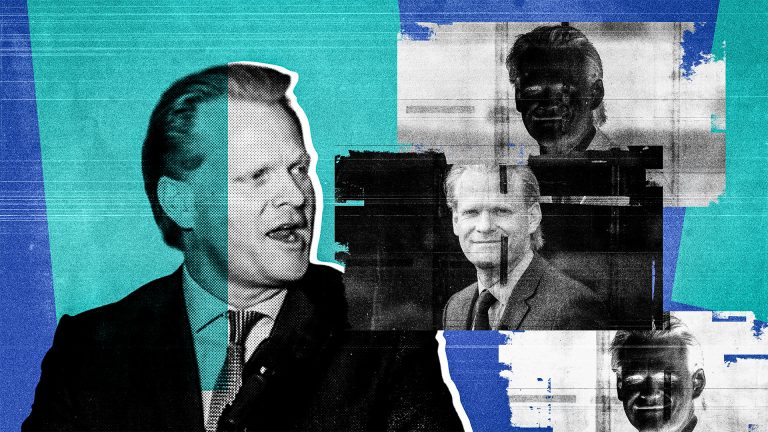
James Orr
James Orr is supposed to be a clever man. In fact, that’s pretty much his entire stock-in-trade: Orr is an associate professor of theology at the University of Cambridge, who has previously been caught boasting of using the university to recruit talent to Reform’s ideological cause – including via hosting students who may be ideological bedfellows at his Cambridge home.
Orr leveraged his role as a public intellectual into roles in right-leaning think tanks, and then into a role as the brains of Reform, as its head of policy. Reform would have a plan for government, friendly coverage assured, because clever men hired by James Orr would do that work.
Unfortunately for Orr, he does not come out of the Verbatim/Channel 4 story looking all that clever. The undercover reporting is superb, and will have taken a talented team months of hard work, but it is also the oldest trick in the book: undercover journalists have been approaching politicians and encouraging them to break the rules in front of a secret camera for at least 40 years.

The established parties are so used to this kind of trick that newsrooms had all but given up on trying them on any major politicians of note: instead, only the most desperate and venal of backbenchers or former ministers would fall for these stunts.
James Orr, however, appears to have fallen for the act hook, line, and sinker – and then he dragged his boss into the ruse, too. Verbatim built confidence with Reform by actually buying £32,500 of polling on the party’s behalf, making it clear they would be doing so from a US-based company.
This qualifies as a donation-in-kind – meaning it must be declared, if it’s from an eligible donor, and it must be refused if it is from an entity not allowed to give to a UK party. Instead, Orr claimed there was “nothing untoward” about arranging payment for a poll this way, even if he did add that “I wouldn’t breathe a word of this to anybody”.
The undercover footage even appears to show Orr bragging about having arranged similar off-the-books donations. “If there was any way of seeing it, it would technically be a donation-in-kind,” he told the undercover reporters – appearing to show he knew the arrangement was not legitimate. He continued: “Is anybody gonna find out? Am I gonna tell anyone… obviously not, so the reality is we could easily get away with it.”
Except, of course, getting away with it now looks a lot less likely. Orr will be at the epicentre of future investigations into Reform’s decision to accept Verbatim’s donations, and potentially other investigations into his apparent admissions on camera.
That attention may draw further attention to his work at the University of Cambridge – at a time when the university is already under significant pressure relating to its policies regarding safeguarding, oversight and discipline of its academics. Orr has thrust Cambridge back into the media spotlight exactly when it was hoping to disappear from it.
Orr’s reputation as a clever man is surely never coming back. He will, after all, forever be the man that suggested – seemingly in jest – to an undercover reporter that they could “literally do the old John Le Carré – you print it off, put it in a brown envelope, drop it off somewhere”. Try convincing someone you’re a genius after you’ve done that.
Reform UK
The institutional headaches for Reform UK just keep mounting up. The immediate problems resulting from this undercover investigation are obvious: it will inevitably face fresh public scrutiny and political pressure, and there will surely be fresh investigations into its decision to accept ineligible donations.
This also makes the existing investigations more difficult: Reform may have hoped it could explain away accepting a few ineligible donations as an accident, or teething problems of setting up a new party, and getting used to the rules and compliance that goes with that. The footage here makes that more difficult – and if it is used to establish a pattern of behaviour, it could make the consequences for the party all the more serious.
Beyond that, though, it just got a lot harder to run Reform. Almost all of its key players will now be facing a flurry of investigations. That fills their time, stresses them out, and requires endless negotiations as to who will pay the legal bills.
But more than that, it means no one senior in the party will want to go anywhere near fundraising – and some ambitious figures in the party will be wondering if it’s time for a change of management. Similarly, when police, electoral officials, Parliament and the press are all sniffing around, it gets very difficult to convince new donors that it’s a good time to part with their cash.
Even if everything eventually gets sorted out, the party will take a permanent reputation hit, just as Orr will. The footage doesn’t just show the people at the top of Reform being apparently willing to ignore election law – it makes them look outright incompetent and foolish as they do it. In politics, looking stupid can be even more harmful than looking malign. Reform might now be stuck with both.
JL Partners, the Times and the Telegraph
The undercover reporters repeatedly dangled a possible £500,000 donation to Reform as they held their repeated meetings with its senior staff. That, of course, never materialised. But the undercover team genuinely did pay tens of thousands of pounds to fund three polls, some of the results of which went on to appear on the front pages of the Times and the Telegraph.
Both produced headlines that were politically very useful for Reform. In April, the Telegraph splash read “Two thirds of voters want Starmer out”, while a Times headline in June reported that “Reform vote in unions at same level as Labour”. Neither disclosed that Reform had been involved in the polling.
This raises some serious issues for JL Partners, the polling company founded by former Theresa May advisor James Johnson. According to the reporting, JL Partners knew that Reform had commissioned the polling it conducted, but it received the payment for it from a US company – raising questions as to whether it did sufficient due diligence to check that payment complied with all appropriate rules.
Beyond that, British pollsters are obliged by the industry’s code of conduct to disclose who commissioned polling that is used in the media – and it did not disclose that the polls in question came from Reform. JL Partners has stressed its polls were accurate, but admitted to “weaknesses in our procedures”.
Both the Times and the Telegraph have blamed JL Partners for the failures in disclosure. “We are reviewing our future relationship with this polling company, as we believe we have been misled,” a Telegraph spokesman said. The Times, meanwhile, said it “was not made aware of Reform’s involvement in commissioning” the polling when it was offered the story.
Nigel Farage
The biggest problems, though, are surely Nigel Farage’s. The Reform UK leader has never been closer to primetime than in the last year, but over the last few months he has watched his prospects of actually becoming prime minister start to slip away – mostly as the result of his own bad decisions.
This year’s party conference, which started on Thursday with a “business day” – possibly for the best, as it would be a brave business leader indeed who showed their face next to Reform over the next few days – needed to be a relaunch. Farage needed a new idea, or a new defection, or something else that would change the narrative away from his party’s endless financial scandals.
That, now, seems a distant prospect indeed – especially as Farage himself was caught on camera thanking the undercover reporters for paying for the polling, scotching any hope of claiming it all happened without his personal knowledge. “It worked. Boom,” he told them.
Farage is surrounded by ambitious men with short tempers and thin skins. These include deputy leader Richard Tice, who he replaced at short notice – and who asked for repayments of his loans to the party in exchange for stepping down. An increasingly erratic and irritable “shadow home secretary” Zia Yusuf, and the party’s treasury spokesman Robert Jenrick round out the set – and all three of them will be wondering if Farage is still an asset to their party.
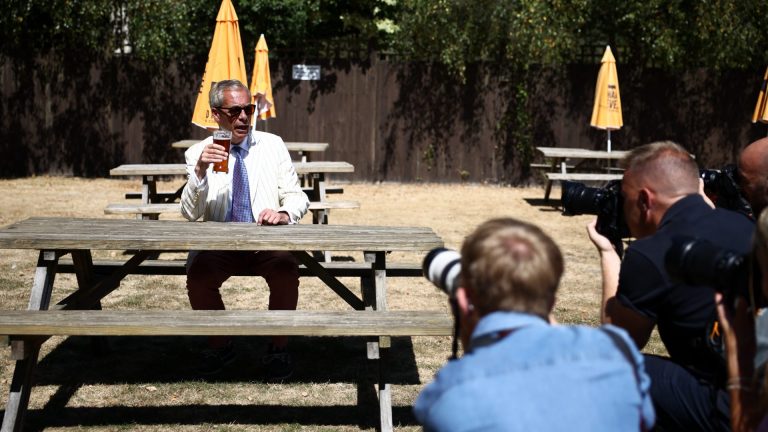
Whatever comes next, Nigel Farage is the man who led his party into this mess, and whose top team got utterly and comprehensively stung by the oldest trick in the journalistic book. For all that Nigel Farage likes to say he loves a laugh, he cannot stand to be the butt of the joke.
Today, and for the next week, he will be the laughingstock of Westminster. For months after that, he and everyone around him will face serious investigation. As he’s got closer to power, Nigel Farage has looked increasingly exhausted and miserable. Might this be the final straw for him?
 Most popular
My truly deranged encounter with Trump apologist Kellyanne Conway

Suella Braverman’s book has sold only 106 copies. This is why
The moral depravity of Robert Jenrick
Hungary’s lesson to the world: Populism isn’t permanent